
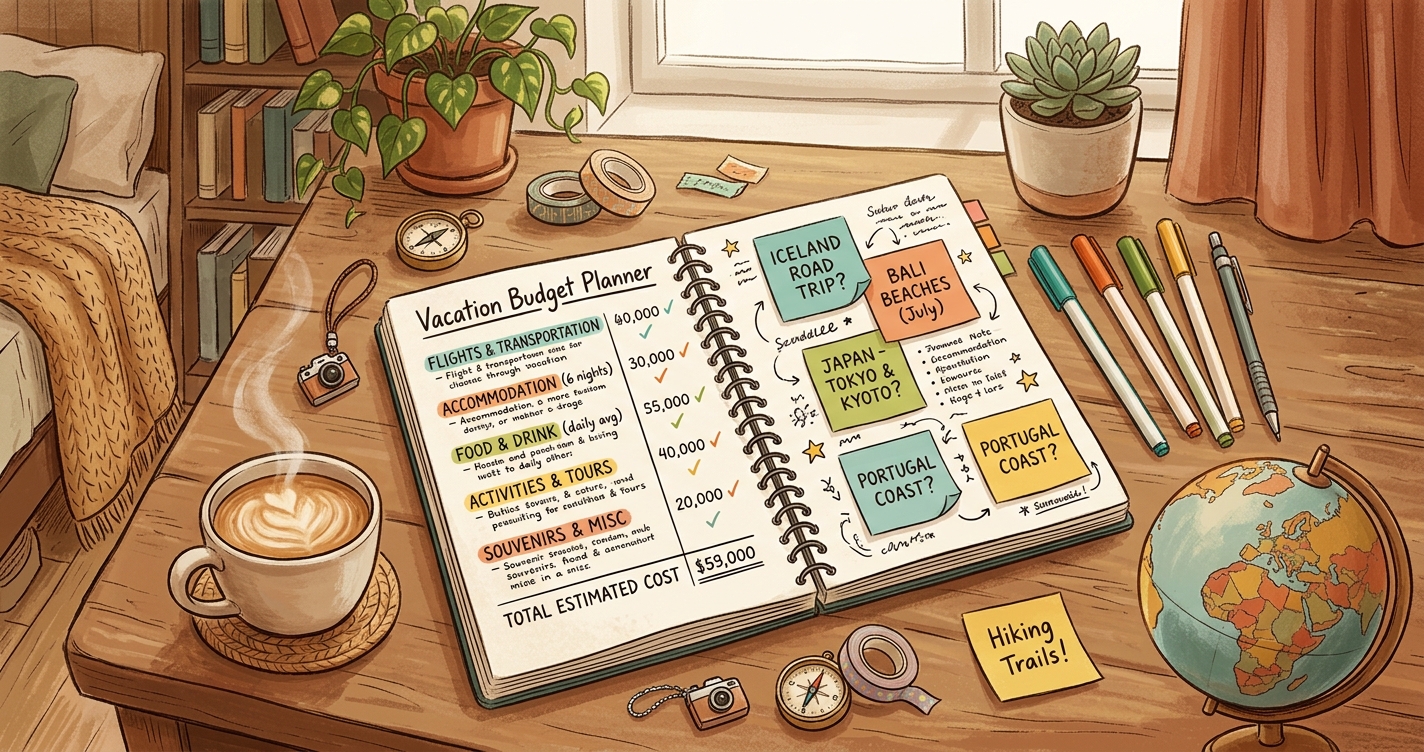
Planning a vacation is exciting, but the financial aspect can often feel daunting. As we look towards 2026, creating a robust vacation budget planner is more crucial than ever. The global travel landscape is shifting, with costs continuing to rise, making smart financial planning the cornerstone of a stress-free trip.
At AZTrav, our team of dedicated travel finance analysts synthesizes and interprets complex travel cost data, employing advanced econometric modeling and trend analysis. Leveraging comprehensive datasets from leading travel cost aggregators, such as Kayak and Skyscanner, alongside detailed industry reports from organizations like the World Travel & Tourism Council (WTTC) and economic analyses from the International Monetary Fund, AZTrav has meticulously analyzed daily expenses across more than 30 destinations for 2024–2026. This rigorous analysis informs our insights, which we share to help you navigate these dynamic changes effectively and make informed, data-driven financial decisions for your upcoming travels.
Why Your 2026 Vacation Needs a Smart Budget (More Than Ever)
Travel remains a deeply cherished priority for many. A recent survey conducted by Talker Research for CheapCaribbean Vacations in 2024 revealed that a remarkable 93% of Americans are planning to travel in 2026, with 71% actively budgeting for their upcoming adventures. This enthusiasm, however, is met with a challenging reality: soaring travel costs across various categories, driven by persistent global inflation, increased post-pandemic demand, and supply chain disruptions affecting everything from aviation fuel to hospitality labor.
The average vacation is projected to reach $7,249 in 2025, an 11% increase from 2024 and more than double the average cost in 2022, according to SquareMouth's 2024 analysis of over 11 million travel insurance policy purchases. For those dreaming of international getaways, the figures are even higher, with an estimated average cost of $9,922 in 2025 (SquareMouth, 2024). This upward trend has left many travelers feeling the pinch, with 75% reporting that their budgets no longer stretch as far as they once did due to higher prices (Talker Research for CheapCaribbean Vacations, 2024). These projections underscore the critical need for a proactive and detailed financial plan.
This comprehensive guide provides a practical, step-by-step framework, informed by current market data, established financial planning principles, and insights from leading travel economists, to help you navigate these rising costs and build a realistic, effective travel budget for 2026. Let's make your travel dreams a financial reality.
The Evolving Landscape of Travel Costs in 2026
Understanding the forces shaping travel expenses is the first step in mastering your vacation budget. Persistent global inflation, increased post-pandemic demand, and shifting consumer behaviors are all playing a significant role in the current economic climate for travel, impacting everything from airline fuel costs and airport operational fees to hotel staffing wages and the cost of local goods and services.
Understanding Current Travel Spending Trends
The numbers speak for themselves: the average 2025 travel budget for Americans is projected at $10,244, nearly double the average budget of $5,300 in 2024, according to the Bank of America Institute's 2024 Consumer Spending Trends Report, which analyzes aggregated and anonymized credit and debit card data from millions of customers. Despite these significant increases, the desire for travel remains strong. Nearly 1 in 5 Americans (17%) would even consider going into debt for a vacation in 2026, with the average amount being $2,525 (Chime, 2024, based on a survey of U.S. adults).
While some travelers are planning to spend less overall—58% of Americans intend to decrease their travel spending by an average of 23% in 2026 (Talker Research for CheapCaribbean Vacations, 2024)—the underlying costs per trip continue to climb. This divergence highlights the critical need for a well-structured vacation budget planner that accounts for both individual spending habits and market realities, such as the erosion of purchasing power due to inflation.
The overall upward trend in travel costs compared to a decade ago is largely driven by persistent global inflation, impacting everything from aviation fuel prices and airline operational costs to labor costs in the hospitality sector and the cost of goods and services at destinations. This is consistently reported by industry bodies like the International Air Transport Association (IATA) and detailed in economic analyses such as the International Monetary Fund's (IMF) 2024 World Economic Outlook reports and Statista's 2024 Travel & Tourism Market Report. This means that a budget that worked just a few years ago might no longer be sufficient for the same trip today, necessitating a forward-looking and adaptable approach to financial planning.
Key Cost Categories: Where Your Money Goes
When creating your vacation budget planner, it's essential to break down your expenses into manageable categories. AZTrav's analysis of industry data, consistent with findings from reputable travel cost aggregators and financial planning resources, reveals where most of your travel funds typically go:
- Accommodation: This is often the largest single expense. According to Budget Your Trip (2024), it accounts for almost half of the daily travel budget, averaging $102 per person per day across various destinations. The average nightly cost for a vacation rental is $314, while a single hotel room averages $129 per night (and $259 for double occupancy), as reported by IPX1031 and Budget Your Trip (2024). These figures can vary significantly based on destination popularity, seasonality, booking lead time, the specific amenities offered, and the dynamic pricing strategies employed by hotels and rental platforms.
- Flights: For domestic round-trip flights within the U.S., the average cost is around $378 per person. International round-trip flights, however, jump significantly to an average of $1,217 per person (NerdWallet, 2024, based on an analysis of airfare data). These averages are subject to dynamic pricing models, which means prices can fluctuate dramatically based on demand, booking window (often optimized by airline revenue management systems), airline algorithms, competitive pricing, and even the day of the week you search or book.
- Food & Dining: Dining out can quickly add up. While highly variable, this category often comes in second or third after accommodation and flights. A typical daily food budget can range from $40-$100+ per person depending on dining preferences (e.g., fine dining vs. casual eateries), the cost of living in the destination (which can be researched on sites like Numbeo), and whether you opt for self-catering options.
- Local Transportation: Getting around your destination adds an average of $36 to daily expenses (Budget Your Trip, 2024). This can include taxis, ride-shares, public transport (buses, trains, subways), or rental cars. If renting a vehicle, remember to factor in additional costs such as fluctuating fuel prices, parking fees, potential tolls, and various insurance options (e.g., collision damage waiver, liability).
- Activities & Entertainment: From museum tickets and guided tours to adventure sports and live performances, these costs can range widely depending on your interests and the destination's offerings. Researching entry fees for specific attractions and considering city passes or bundled tickets in advance is crucial, as is checking for timed entry requirements or booking discounts.
- Shopping & Souvenirs: Personal spending on gifts, clothing, or other discretionary items can be a major budget buster if not planned for. Setting a strict limit for this category is advisable to prevent overspending, and for international travel, remember to account for potential customs duties or taxes on purchases.
By understanding these categories and their typical expenditure proportions, informed by current market data, you can begin to see where your money will be allocated and identify potential areas for strategic savings and optimization, ensuring a more balanced and realistic vacation budget planner.
The AZTrav 7-Step Vacation Budget Planner Framework
Building a comprehensive vacation budget planner doesn't have to be complicated. Drawing upon extensive research and analysis of travel finance best practices, including insights from certified financial planners and leading travel economists, the AZTrav Editorial Team has developed a straightforward, 7-step framework to guide you through the process, ensuring you cover all bases for your 2026 trip.
Step 1: Define Your Travel Vision & Priorities
Before you crunch any numbers, clarify what kind of trip you envision. This foundational step dictates all subsequent cost estimates and aligns your financial plan with your travel aspirations, ensuring your budget supports your desired experience.
- Destination: Where do you want to go? The cost of living and tourism infrastructure vary wildly between, say, Tokyo and a small town in rural Portugal. Researching the average cost of living index for your chosen destination, using resources like Numbeo or Expatistan, provides a critical baseline for estimating daily expenses.
- Duration: How long will you be away? A one-week trip will have vastly different costs than a month-long adventure. Longer trips often allow for slower, potentially more budget-friendly travel styles, but also accumulate daily costs over a longer period.
- Travel Style: Are you aiming for luxury, mid-range comfort, or a budget-friendly backpacking experience? This influences everything from accommodation choices (e.g., five-star resorts with concierge services vs. hostels with shared dorms) to dining (fine dining vs. local street food). For example, a family of four planning a week at a theme park in Orlando will have a very different budget profile than a solo traveler backpacking through Southeast Asia for two weeks.
- Travelers: Are you traveling solo, as a couple, with family, or a group of friends? Group travel can sometimes offer economies of scale (e.g., shared accommodation, rental car costs) but also requires careful expense splitting and the use of collaborative budgeting tools to manage individual contributions effectively.
Having a clear vision helps you set realistic expectations and allocate funds appropriately, preventing budget overruns driven by mismatched expectations or unforeseen expenses. This initial clarity is a hallmark of effective financial planning.
Step 2: Research & Estimate Core Expenses
Now that your vision is clear, it's time to dig into the main cost categories. Our free trip cost estimator tool at aztrav.com/estimate can give you a great starting point for many destinations by providing average daily costs based on travel style and location data, drawing from extensive aggregated travel data.
- Flights: Start by checking flight prices well in advance (typically 2-3 months for domestic, 3-6 months for international, though optimal booking windows can vary by route, airline, and demand patterns). Remember, domestic round-trip flights average $378 per person, while international flights average $1,217 (NerdWallet, 2024). Flexibility with dates, departure/arrival airports, and even considering budget airlines can yield significant savings. Utilize flight comparison websites like Google Flights, Skyscanner, or Kayak, and set price alerts to monitor fluctuations. Understand that different fare classes (e.g., economy, premium economy, business) come with varying price points and amenities.
- Accommodation: Research hotel prices (average $129/night for a single, $259 for double) or vacation rentals (average $314/night) (IPX1031, Budget Your Trip, 2024). Consider factors like location (e.g., city center vs. outskirts, which can impact local transport costs), amenities (e.g., free breakfast, kitchen access for self-catering), and cancellation policies. Booking directly with hotels or through trusted Online Travel Agencies (OTAs) can sometimes offer better deals or loyalty points, but always compare across multiple platforms for the best value.
- Local Transportation: Budget for getting around. This could be rental cars (including fluctuating fuel prices, various insurance options, and parking), public transport passes, taxis, or ride-shares, averaging $36 per day (Budget Your Trip, 2024). Don't forget airport transfers, which can be a significant upfront cost; research options like shared shuttles, public transit, or pre-booked private transfers for potential savings.
- Food & Dining: This is where many budgets go awry. Don't underestimate the cost of dining out for every meal. Factor in breakfasts, lunches, dinners, snacks, and drinks. Consider a mix of restaurant meals, grocery store purchases for self-catering, and local street food to manage costs effectively. Research typical restaurant prices in your destination using online menus, travel forums, or local review sites.
- Activities & Entertainment: List out must-do attractions and estimate their entry fees. Are there any free activities you can enjoy (e.g., public parks, free museums on certain days, self-guided walking tours)? Look for city passes or bundled tickets that might offer savings, and check for student, senior, or family discounts if applicable. Booking popular attractions in advance often secures timed entry and avoids long queues.
- Shopping & Souvenirs: Allocate a realistic amount for personal spending and gifts. Consider setting a daily or weekly discretionary spending limit for this category to prevent impulse purchases from derailing your budget. For international travel, be mindful of customs allowances and potential duties on items brought back home.
Be as specific as possible. Look up actual prices for specific tours, museum entries, and even typical meal costs in your chosen destination using reputable travel forums, recent visitor reviews, and official attraction websites to ensure your estimates are grounded in current data.
Step 3: Account for Hidden Costs & Contingencies
This step is vital for preventing budget surprises and is a cornerstone of responsible financial planning. Many travelers overlook these "small" expenses that can quickly accumulate and lead to unexpected financial strain, as frequently highlighted in consumer finance reports.
- Airport Taxes & Tourist Fees: Many cities, regions, and countries impose these, often added to accommodation or flight costs, or collected upon arrival/departure. For example, a traveler to Rome might forget to factor in the city's occupancy tax, which is added per night, or a departure tax levied by certain countries. Research these specific fees for your destination, as they can include environmental levies, resort fees, or service charges.
- Visa Costs: If traveling internationally, research visa requirements and their associated fees well in advance through official government embassy or consulate websites for *your specific nationality*. A visa for Vietnam, for instance, can add a significant unexpected cost if not planned for, ranging from $25 to over $100 depending on the type and processing speed.
- Foreign Transaction Fees: Your bank or credit card company might charge a percentage (typically 1-3%) for purchases made in a foreign currency. Look for travel-specific credit cards with no foreign transaction fees or consider using a multi-currency travel card or a debit card from an institution that waives ATM fees abroad. These fees can erode your budget over many small transactions.
- Cell Phone Roaming: High roaming charges for data, calls, and texts can be a nasty surprise. Consider an international plan from your current provider, purchasing a local SIM card upon arrival, or utilizing an eSIM (embedded SIM) for more flexible and often cheaper data options. Rely primarily on Wi-Fi and communication apps (like WhatsApp) to avoid excessive data costs.
- Travel Insurance: While an upfront cost, travel insurance is a crucial safeguard against unexpected medical emergencies, trip cancellations, lost luggage, or travel delays. Policies vary widely, so compare coverage for medical expenses (including emergency medical evacuation), trip interruption, and baggage loss from reputable providers, checking their A.M. Best ratings for financial strength. The U.S. State Department and other government bodies often strongly recommend comprehensive travel insurance for international trips.
- Emergency Fund: Financial planning organizations, such as the Financial Planning Association (FPA) and consumer finance experts widely cited in publications like Forbes and The Wall Street Journal, consistently recommend allocating 10-20% of your total budget for an emergency fund. This buffer covers unforeseen expenses, like a sudden need for a doctor, a missed connection requiring an extra night's stay, or an unexpected repair to a rental car. This fund should ideally be liquid and easily accessible, separate from your main spending money.
By diligently including these in your initial vacation budget planner, you'll avoid unwelcome financial shocks and significantly enhance your overall travel security and peace of mind, transforming potential stressors into manageable contingencies.
Step 4: Track, Adjust, and Optimize Your Budget
A budget isn't a static document; it's a living plan. Regularly reviewing and adjusting it is key to staying on track, especially in a dynamic travel market where prices can fluctuate rapidly and unexpected opportunities or expenses may arise.
- Utilize Tools: Whether it's a simple spreadsheet, a dedicated budgeting app (e.g., Mint, You Need A Budget (YNAB), Splitwise for groups), or our AZTrav trip cost estimator, use a tool that allows you to track your spending against your plan in real-time. Digital tools often offer categorization, visual reporting features, and even automatic transaction syncing that simplify expense management and provide clear insights into your spending patterns.
- Be Flexible: If initial estimates are too high, look for ways to optimize. Can you travel during the shoulder season (e.g., April-May or September-October in many regions) instead of peak season to leverage lower demand and typically lower prices? Are there alternative, more affordable destinations that offer a similar experience? Shifting your travel dates by even a few days can sometimes unlock significantly cheaper flights or accommodation due to airline and hotel dynamic pricing algorithms and revenue management strategies.
- Review Regularly: Before booking major components, during the planning phase, and even while traveling, consistently check your spending against your allocated budget. If you splurge on one category (e.g., a special dining experience), find an area to cut back on another (e.g., choosing public transport over taxis) to maintain overall balance and prevent overspending. Proactive adjustments are far more effective than reactive damage control.
Step 5: Leverage Technology: AI and Digital Budgeting Tools
The digital age offers powerful allies for your vacation budget planner. AI, in particular, is revolutionizing how we plan and save, offering unprecedented data analysis capabilities and personalized insights that were previously unavailable to the average traveler.
- AI for Travel: It's estimated that 30% of Americans will use AI to plan travel in 2026 (Deloitte, 2024, based on consumer surveys). AI tools, powered by machine learning and predictive analytics, can analyze vast amounts of real-time and historical data to predict optimal booking times for flights and hotels, identify the best deals across multiple platforms, suggest personalized activities within your specified budget parameters, and even identify potential cost-saving alternative routes or destinations. These systems learn from user preferences and market trends to offer highly tailored recommendations, effectively acting as a sophisticated personal travel assistant, streamlining research, and optimizing financial allocations.
- Interactive Planners: Look for digital budgeting tools that offer features like automatic currency conversion, real-time expense tracking synchronized across devices, and even group expense splitting functionalities if you're traveling with others (e.g., Splitwise). Many apps integrate with banking services to automatically categorize transactions, providing a clear visual representation of your spending patterns and helping you make informed decisions on the go. Some even offer predictive analytics to forecast future spending based on your habits, allowing for proactive adjustments.
Embrace these technologies to streamline your budgeting process, uncover efficiencies, and potentially unlock savings you might otherwise miss through manual research alone, democratizing access to advanced travel planning strategies and making sophisticated budgeting more accessible to all travelers.
Step 6: Smart Saving Strategies Before You Go
The best way to stick to your budget is to have enough money saved before you even leave. Here are some proactive financial strategies, consistent with advice from consumer finance experts, to build your travel fund effectively:
- Maximize Loyalty Programs & Travel Credit Cards: Savvy travelers often leverage points and miles to significantly reduce costs. Sign up for airline and hotel loyalty programs to accrue points from everyday spending or specific travel activities. Consider a travel-specific credit card that offers generous rewards points, sign-up bonuses, and perks like free checked bags, lounge access, or built-in travel insurance. Always ensure you pay off balances in full to avoid high interest charges, which can quickly negate any travel rewards.
- Set Dedicated Savings Goals: Create a separate, high-yield savings account specifically for your vacation fund. Set up automatic transfers each payday to build your travel fund steadily and consistently, treating it as a non-negotiable expense. Financial planning experts often advise automating savings to remove the temptation to spend and ensure consistent progress towards your goal, a concept often referred to as "sinking funds."
- Consider Off-Peak Travel: Traveling during the shoulder season (just before or after peak season) or off-peak periods can lead to substantial savings on flights, accommodation, and even activities due to lower demand. Research the "best time to visit" your destination for a balance of good weather and lower costs, often finding better value in months like April, May, September, or October for many popular destinations, when demand-driven pricing is less aggressive.
- Alternative Destinations: Be open to destinations that offer great value. Some emerging destinations provide incredible experiences at a fraction of the cost of more popular, established tourist spots. Researching destinations with a lower cost of living index, particularly in regions known for strong exchange rates against your home currency, can significantly extend your budget, allowing for longer trips or more experiences within the same financial envelope.
Step 7: Stick to Your Budget While Traveling
The planning is done, the savings are in place—now it's time to enjoy! But the budgeting doesn't stop once you're on your trip; active management is crucial for success and preventing overspending, ensuring your financial discipline translates into a stress-free experience.
- Daily Cash Limits: Withdraw a set amount of local currency for daily spending and try to stick to it. This tangible limit can prevent impulse purchases and provide a clearer, immediate sense of your remaining funds, especially in cash-centric economies where digital tracking might be less practical.
- Pre-Pay for Major Activities: If possible, book and pay for tours, excursions, and major attractions in advance. This locks in prices, often at a discount, and prevents you from dipping into your daily spending money for these larger items, helping you manage cash flow during your trip and potentially securing a favorable exchange rate at the time of booking.
- Conscious Prioritization: Before buying a souvenir or an extra drink, ask yourself if it aligns with your vacation priorities and overall budget. Often, the most memorable parts of a vacation—a stunning sunset, a leisurely walk through a new city, a deep conversation with a local—are completely free and don't require additional expenditure. Prioritizing experiences over material purchases can enhance satisfaction.
- Track On-the-Go: Use a budgeting app or a small notebook to jot down expenses as you incur them. This keeps you accountable, aware of your remaining funds, and allows for immediate adjustments if you find yourself overspending in one category, enabling proactive financial management and preventing budget blowouts.
Common Budgeting Pitfalls to Sidestep
Even with the best intentions, it's easy to fall into common budgeting traps. Being aware of these pitfalls can help you avoid them and keep your vacation budget planner on track, ensuring a financially sound and stress-free trip.
Overlooking the 'Small' Expenses
It's often the accumulation of minor costs that derails a budget. Travelers frequently overlook hidden fees like airport taxes, mandatory tourist fees (e.g., city occupancy taxes, environmental levies), cell phone roaming charges, foreign transaction fees from their bank, and visa application costs. Forgetting to factor in dynamic exchange rates for international travel can also lead to unexpected expenses, as currency fluctuations can impact your purchasing power. These seemingly small amounts can quickly add up, leaving you short on funds for planned activities or necessities, as consistently highlighted by consumer travel surveys and financial literacy reports.
Underestimating the Power of Inflation
Many travelers make the mistake of expecting their past travel budgets to stretch as far as they once did. However, as 75% of travelers in 2026 report, their budgets no longer cover as much due to higher prices (Talker Research for CheapCaribbean Vacations, 2024). Inflation is a real and persistent factor, impacting costs across all categories—from flights and accommodation to food and local transportation. Failing to account for these rising costs in your 2026 budget is a significant pitfall that can lead to underfunding your trip and experiencing financial stress. Always use current year projections and data for your planning, and consider adding an inflation buffer to your estimates.
The Danger of Unplanned Spontaneity
While spontaneity can be part of the adventure, completely unplanned spending can be disastrous for your budget. This includes underestimating the true cost of dining out for every meal, booking too many last-minute activities without budgeting for them, or choosing cheap accommodation in remote areas without factoring in increased transport costs to reach attractions. The allure of "just one more souvenir" or an impromptu expensive tour can quickly deplete your funds, contributing to the statistic that 17% of Americans would go into debt for a vacation (Chime, 2024). A balance between planned activities and a small discretionary fund (or "fun money" envelope) for spontaneous moments is key to maintaining financial control and avoiding unnecessary debt.
Other common missteps include not setting a realistic overall budget from the outset, failing to save enough money before the trip begins, not including an emergency fund (which should be 10-20% of your total budget), and mistiming flight bookings (booking too late or too early can result in higher prices due to dynamic pricing models and demand fluctuations, as analyzed by airfare specialists).
Expert Perspectives & The Future of Travel Spending
Our AZTrav Editorial Team consistently monitors industry trends and expert analyses to provide the most current and authoritative advice. Here's what leading financial advisors, travel economists, and industry specialists are saying about the future of travel finance and planning.
The Imperative of Pre-Planning
There's a strong consensus among financial and travel experts: effective budgeting and meticulous pre-planning are more critical than ever. Travel costs are consistently rising due to a combination of global inflation and increased post-pandemic demand, as highlighted by various industry reports from organizations like the World Travel & Tourism Council (WTTC) and economic analyses from major financial institutions such as the International Monetary Fund (IMF) in their World Economic Outlook reports. This makes early booking, especially for international flights and popular accommodations, a key strategy to secure better deals and avoid last-minute price surges driven by demand and limited availability. As Unit Trust Corporation (2024) emphasizes in its financial planning guides, proactive financial planning, including setting clear financial goals and automating savings, is the bedrock of stress-free travel.
Financial planning organizations and consumer finance experts universally recommend allocating an emergency fund of 10-20% of the total budget to cover unforeseen expenses, providing a crucial safety net for any trip and mitigating potential financial distress (consistent advice across financial planning guides from institutions like the Financial Planning Association and consumer advocacy groups such as the National Consumer Law Center).
Flexibility and Value-Driven Travel
A recurring theme in expert advice, particularly from travel economists and consumer behavior analysts (e.g., from research firms like Skift and Phocuswright), is the importance of flexibility. Being open to adjusting travel dates, exploring alternative destinations (e.g., less-traveled regions that offer similar experiences at a lower cost, or destinations with favorable exchange rates), and considering different types of accommodation (e.g., a charming guesthouse or boutique apartment rental instead of a luxury hotel chain) are consistently highlighted as primary strategies for saving money. This approach allows travelers to seek out value without compromising on the quality or authenticity of their experience.
There's also a growing trend towards valuing simpler, more meaningful travel experiences over costly luxuries (observed by cultural tourism researchers and reflected in traveler surveys). Many travelers are realizing that authentic connections, cultural immersion, and natural beauty often provide the most profound and lasting memories, and these don't always come with a hefty price tag, encouraging a shift towards experiential rather than purely consumption-based travel.
The Rise of AI in Travel Finance
The integration of Artificial Intelligence into travel planning is no longer a futuristic concept; it's a present reality. AI is rapidly emerging as a significant tool, with a growing number of travelers leveraging it for budgeting, finding destinations, discovering activities, and comparing prices (insights from technology and travel innovation experts, such as those at IBM and Google). Deloitte's 2024 research indicates that 30% of Americans will use AI to plan travel in 2026, underscoring its increasing role in optimizing travel costs and personalizing itineraries. AI-powered platforms can analyze complex data sets, predict optimal booking windows, identify hidden deals, and even suggest dynamic pricing adjustments based on real-time market conditions, offering a sophisticated layer of financial optimization through machine learning and natural language processing.
This technological shift empowers travelers to make more informed decisions, find efficiencies, and potentially unlock savings that were previously difficult to uncover through manual research alone, democratizing access to advanced travel planning strategies and making sophisticated budgeting more accessible to a wider audience.
Essential Travel Regulations & ID Requirements for 2026
Beyond financial planning, understanding key travel regulations and identification requirements is paramount for a smooth journey. These are non-negotiable elements of your travel preparation and can significantly impact your ability to travel, especially for U.S. domestic air travel and federal employees.
REAL ID Compliance
For U.S. residents, a significant change is coming. As mandated by the REAL ID Act of 2005, and strictly enforced by the U.S. Department of Homeland Security (DHS), as of May 7, 2025, every U.S. resident aged 18 and older will need a REAL ID compliant driver's license or other acceptable identification (such as a passport or military ID) to board commercial airplanes for domestic flights. This regulation is crucial for enhancing airport security and standardizing identification documents. If your state-issued driver's license or ID card does not have a star symbol (typically in the upper right corner), it is likely not REAL ID compliant. Ensure you have the correct documentation well in advance of your 2026 trip by checking your state's Department of Motor Vehicles (DMV) or equivalent agency's website for specific requirements and application procedures, as processing times can vary significantly. A valid U.S. passport remains an acceptable form of identification for domestic air travel.
Understanding Federal Travel Regulations (FTR) for Combined Trips
For those who might combine personal vacation time with official business travel, it's important to understand the Federal Travel Regulation (FTR). The FTR, administered by the U.S. General Services Administration (GSA) under 41 CFR Chapter 301, governs official travel and related expenses for federal employees. If you're a federal employee, reimbursement for a combined trip is strictly limited to the least expensive and most reasonable means to the business location. Additionally, meals and lodging costs are restricted to only the business portion of the trip. This means your personal expenses will not be reimbursed, and careful documentation, including cost comparisons for business-only travel, is essential to differentiate between the two. Consult your agency's specific travel policy and the official FTR guidelines (available on GSA.gov) for detailed compliance requirements and to ensure proper expense allocation and avoid audit issues.
Regardless of whether your trip involves business, always check destination-specific visa requirements, entry regulations, and any health declarations or vaccination mandates well in advance through official government websites (e.g., U.S. Department of State, the embassy or consulate websites of your destination country, or the IATA Travel Centre for general requirements). These can change frequently and vary significantly by nationality, current global health situations, and geopolitical developments, necessitating continuous monitoring.
Your Journey to a Stress-Free Vacation Starts Now
Building a robust vacation budget planner for 2026 is much more than just saving money; it's about maximizing your experience and minimizing financial stress. With the rising costs and evolving travel landscape, a well-thought-out budget becomes your indispensable roadmap to a truly enjoyable and memorable trip.
By following the 7-step framework outlined by our AZTrav Editorial Team, grounded in comprehensive data analysis, practical financial planning principles, and insights from leading industry experts, you can confidently plan, save, and enjoy your adventure without the unwelcome surprise of unexpected financial burdens. Start early, stay flexible, and leverage the powerful tools and insights available to you, including our trip cost estimator at aztrav.com/estimate, to make your travel dreams a reality. Your stress-free vacation journey begins with a smart financial plan and proactive preparation.
Frequently Asked Questions (FAQ)
How much should I budget for a one-week vacation in the U.S. in 2026?
Based on 2024 projections from Budget Your Trip, the average cost for a one-week vacation in the U.S. is projected to be about $1,991 per person, or $3,982 for two people, in 2026. These are averages and can vary significantly based on destination, travel style (e.g., budget, mid-range, luxury), and seasonality. For precise estimates tailored to your trip, considering current market conditions, use AZTrav's free trip cost estimator.
What are the biggest expenses in a travel budget?
Accommodation typically accounts for almost half of the daily budget, averaging $102 per person per day, making it the largest single expense according to Budget Your Trip (2024). Flights and food are also major categories, with international flights averaging $1,217 per person (NerdWallet, 2024). These categories often represent the largest portion of overall travel expenditure, influenced by dynamic pricing and demand.
How much should I set aside for unexpected costs?
Financial experts and planning organizations, such as the Financial Planning Association, consistently recommend allocating an emergency fund of 10-20% of your total vacation budget. This buffer is crucial to cover unforeseen expenses, such as medical emergencies, trip cancellations, unexpected repairs to a rental car, or unforeseen travel delays, ensuring financial security during your trip.
Can AI really help with my vacation budget?
Yes, AI can significantly assist your vacation budget planner. Leveraging machine learning and predictive analytics, it can help compare real-time prices for flights and hotels, suggest personalized alternatives based on your preferences and budget, predict future expenses using historical data, and optimize itineraries for maximum cost savings. Deloitte (2024) estimates that 30% of Americans will use AI for travel planning in 2026, leveraging its ability to process vast amounts of data for smarter financial decisions.
What are common hidden costs to watch out for?
Common hidden costs include airport taxes, local tourist fees (e.g., occupancy taxes), visa costs for international travel, foreign transaction fees from your bank or credit card, and excessive cell phone roaming charges. Always research these potential expenses thoroughly in advance of your trip by checking official government and tourism websites for your destination, as these can significantly impact your overall budget.
About the Author
This article was developed by the AZTrav Editorial Team, a group of dedicated travel finance researchers and analysts. They synthesize data from reputable travel cost aggregators (such as Kayak and Skyscanner), economic reports from institutions like the International Monetary Fund and the World Travel & Tourism Council, and industry studies from organizations like IATA, to provide current and forward-looking insights into daily travel expenses across over 30 destinations for 2024–2026. Their expertise, grounded in comprehensive data analysis, advanced econometric modeling, and practical financial planning principles, ensures that AZTrav's advice is authoritative, actionable, and reflective of global travel trends, helping travelers make informed and confident financial decisions.
Sources & References
- Talker Research for CheapCaribbean Vacations. (2024). 93% of Americans Planning to Travel in 2026: Survey Reveals Budgeting Habits and Concerns.
- SquareMouth. (2024). Average Cost of Vacation 2025 Projections: Analysis of Travel Insurance Policy Purchases.
- Bank of America Institute. (2024). Consumer Spending Trends Report: Analysis of Aggregated Credit and Debit Card Data.
- Chime. (2024). Vacation Spending Habits Survey: U.S. Adults' Willingness to Incur Debt for Travel.
- Budget Your Trip. (2024). Average Daily Travel Costs by Destination: Global Data Analysis.
- NerdWallet. (2024). Flight Cost Analysis 2024-2025: Trends in Domestic and International Airfare.
- IPX1031. (2024). Vacation Rental vs. Hotel Cost Comparison: An Investment Property Exchange Services Analysis.
- Statista. (2024). Travel & Tourism Market Report: Impact of Inflation on Sector Costs.
- Deloitte. (2024). The Future of Travel: AI and Consumer Trends in Travel Planning.
- Unit Trust Corporation. (2024). Financial Planning for Travel: Strategies for Budgeting and Saving.
- World Travel & Tourism Council (WTTC). (Ongoing). Economic Impact Research: Global Travel & Tourism Sector Analysis.
- International Monetary Fund (IMF). (2024). World Economic Outlook Reports.
- U.S. Department of Homeland Security (DHS). (Ongoing). REAL ID Act Information and Compliance Guidelines.
- U.S. General Services Administration (GSA). (Ongoing). Federal Travel Regulation (FTR) Guidelines (41 CFR Chapter 301).
- International Air Transport Association (IATA). (Ongoing). Industry Economic Analysis & Travel Centre.
- Financial Planning Association (FPA). (Ongoing). Consumer Resources: Financial Planning Guides.
- Numbeo. (Ongoing). Cost of Living Index by City and Country.