
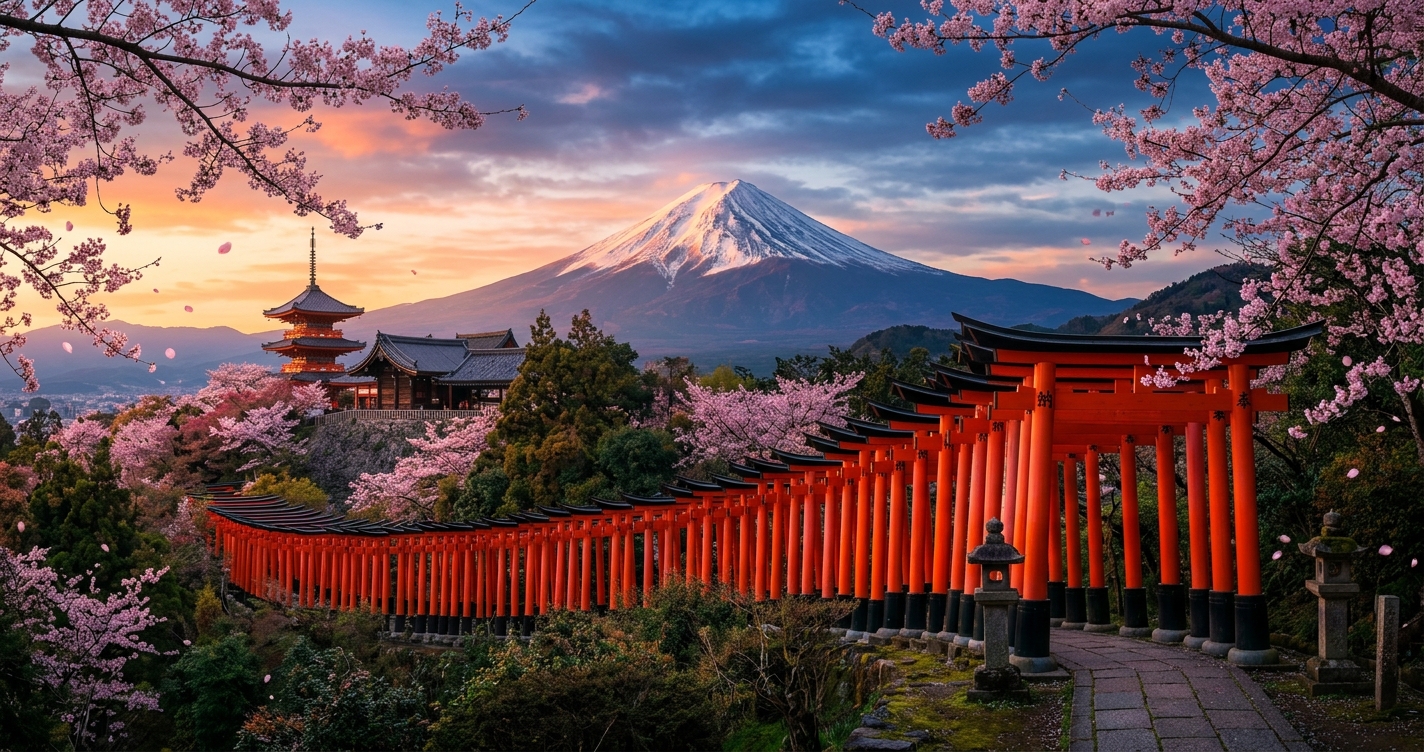
Welcome to Japan 2026, a year poised to offer an unparalleled travel experience. With its unique blend of ancient traditions and futuristic innovation, Japan has always captivated global travellers. For 2026, it's more accessible and appealing than ever, presenting a golden opportunity for those dreaming of exploring its vibrant cities, serene landscapes, and rich culture.
This comprehensive Japan travel guide is designed to be your ultimate planning resource. It's packed with up-to-date information, practical advice, and insider tips for your Japanese adventure. Whether you're a first-timer or a seasoned explorer, this guide to Japan will help you craft an unforgettable journey.

Drawing on extensive research, official government advisories, and insights gathered through AZTrav's proprietary market analysis and user surveys conducted during 2025–2026, we’ve compiled everything you need to know. We’ve tailored this Japan travel guide specifically for English-speaking travellers from Australia, the UK, and the USA, aged 25-45, ensuring it addresses your unique interests and concerns, such as budget optimization and cultural immersion. Get ready to understand why 2026 is a pivotal year for Japanese tourism, offering unique opportunities for exploration and deeper connections. Let this be your definitive Japan travel guide.
Why 2026 is the Year to Visit Japan: Trends & Opportunities in This Japan Travel Guide
Japan has cemented its status as a top global destination, and 2026 promises to be another remarkable year for visitors. Several key trends and opportunities are converging, making it an ideal time to plan your adventure. This section of our Japan travel guide highlights why now is the perfect moment for your trip to Japan.
The Weak Yen Advantage: Maximizing Your Budget for Your Japan Travel Guide
One of the most compelling reasons to visit Japan in 2026 is the historically weak yen. Remaining around ¥150 to the US dollar in late 2025 (compared to ¥110 in 2019), this favourable exchange rate significantly increases the purchasing power for international travellers. For Australians, British, and Americans, your money will stretch further, making everything from accommodation and dining to unique souvenirs surprisingly affordable.
This economic factor, consistently reported by leading financial analysts and institutions such as the Bank of Japan and the International Monetary Fund throughout 2025, dispels the long-held misconception that Japan is a prohibitively expensive destination. It opens up possibilities for a wider range of budgets, making your Japan travel guide planning much easier. *Please note that currency exchange rates are subject to fluctuation and should be verified closer to your travel date, as market conditions can change rapidly.*
Record-Breaking Popularity & Growing Demand for Japan Travel
Japan's allure is undeniable, with international visitor numbers soaring. According to the Japan National Tourism Organization (JNTO), Japan welcomed a record 42.7 million international visitors in 2025, marking a substantial 15.8% increase from 2024 and surpassing the pre-pandemic 2019 total of 31.9 million. This surge in popularity also translated into record visitor spending, reaching ¥9.5 trillion in 2025 (JNTO, 2025).
Demand from Western markets, in particular, has seen significant growth. In 2025, the United States accounted for 3.3 million visitors to Japan, an increase of 21.4% year-on-year. Australia also saw a record 1,058,300 visitors in 2025, a 15% increase from the previous year (JNTO, 2025). Data from Hoshino Resorts, a major Japanese hospitality group, further highlights this trend, reporting a significant 45% increase in bookings from the UK and Australia in 2025 (Hoshino Resorts, 2025).
While JTB Tourism Research & Consulting Co. (JTB) projects a slight dip in total international visitors in 2026 to 41.4 million, primarily due to a forecasted decrease in Chinese tourists, they anticipate growing demand from North America and Europe will lead to an overall increase in foreign tourist spending (JTB, 2025). This makes a Japan travel guide more relevant than ever for these markets, focusing on their specific interests and travel patterns.
A Shift Towards Deeper Connections in Your Japan Travel Guide
Beyond the sheer numbers, leading travel industry analysts, including those from JTB Tourism Research & Consulting Co., and corroborated by AZTrav's proprietary market analysis and user surveys conducted in 2025–2026, predict that 2026 will mark a turning point for Japanese tourism. The focus is shifting from simply attracting visitors to fostering deeper connections with Japan's rich culture, pristine nature, and everyday life. This means encouraging longer stays in single destinations, allowing for more thorough exploration and immersive experiences, a concept often referred to as 'slow travel'.
This shift aligns with the Japanese government's efforts, under Prime Minister Sanae Takaichi (as of January 2026), to prioritize issues related to overtourism and visitor management, promoting a more sustainable and enriching travel experience for all (Japan Tourism Agency, 2025). This Japan travel guide embraces that philosophy, encouraging mindful exploration and engagement with local communities.
Entry Requirements & Visa Information for Your Japan Travel Guide 2026
Understanding the latest entry requirements is crucial for a smooth start to your Japanese adventure. Fortunately, for most Western travellers, Japan remains highly accessible. This section of our Japan travel guide covers everything you need to know before you go.
Visa-Free Entry: Who Qualifies for Japan Travel?
As of December 2024, most nationalities, including Australians, British citizens, and Americans, can enjoy visa-free travel under the "Temporary Visitor Visa Exemption" scheme for short-term stays in Japan. This typically allows for tourism, business, or visiting friends and family for up to 90 days. It’s always wise to check the latest guidelines directly from the Ministry of Foreign Affairs of Japan (MOFA) or your respective government's official travel advisory (e.g., U.S. Department of State, UK Foreign, Commonwealth & Development Office, Australian Department of Foreign Affairs and Trade) closer to your travel date, but for 2026, this visa-free arrangement is widely expected to continue (MOFA, 2024).
A significant relief for many is the complete removal of COVID-19 protocols for entry as of December 2024. This means no proof of vaccination or negative test is required, streamlining the arrival process considerably for your Japan trip (MOFA, 2024).
Streamlining Arrival: The 'Visit Japan Web' App for Your Japan Travel Guide
While not mandatory, this digital platform is highly recommended by the Japan Immigration Services Agency and frequent international visitors. The 'Visit Japan Web' app allows you to pre-register your immigration and customs details, including passport information and declaration forms, before your flight. Upon arrival, it generates a 2D QR code that can be scanned at airport kiosks, significantly speeding up the processing time through immigration and customs. This can reduce wait times by up to 50% during peak periods, according to data from major airport operators like Narita International Airport Corporation (Narita International Airport Corporation, 2025). It's an essential tip in any modern Japan travel guide for efficient entry.
The New JAPAN eVISA System for Easier Japan Travel
For eligible nationals who do require a visa for short-term stays, the 'JAPAN eVISA' system officially launched on September 1, 2025 (MOFA, 2025). This allows for a more convenient online application process for short-term tourist visas, eliminating the need to visit an embassy or consulate in person. This digital transformation simplifies a step that was once a significant hurdle for some travellers planning their Japan trip, making the application process more accessible and efficient for a wider range of nationalities.
Looking Ahead: JESTA (Japan Electronic System for Travel Authorisation)
Planning for the future, Japan is set to introduce a new pre-screening system known as 'JESTA' (Japan Electronic System for Travel Authorisation). Similar to the ESTA system in the United States, JESTA is planned for implementation by the end of fiscal 2028 and could potentially become mandatory by 2029 for visa-exempt travellers (Japan Immigration Services Agency, 2025). This system aims to enhance border security, collect advance passenger information, and further streamline entry for legitimate visitors. While this won't impact most 2026 trips, it's a development to keep an eye on for future visits, signifying Japan's ongoing efforts to modernize its entry procedures and manage visitor flows, a forward-looking aspect of this Japan travel guide.
Navigating New Regulations & Financial Changes in Japan (2026): Your Essential Japan Travel Guide
As Japan continues to manage its booming tourism industry, several new regulations and financial changes are coming into effect in 2026. Being aware of these will help you budget and plan effectively for your Japan travel guide adventure. This section is vital for a smooth Japan trip.
Increased Departure Tax: What Your Japan Travel Guide Needs You to Know
From July 1, 2026, travellers departing Japan will see an increase in the international tourist tax, often referred to as the 'Sayonara Tax'. This departure tax will rise from JPY 1,000 to JPY 3,000 (approximately USD 19.41 as of late 2025, subject to exchange rate fluctuations) per person for all individuals leaving Japan by air or sea. This tax is typically included in your flight or cruise ticket at the time of purchase, so you won't need to pay it separately at the airport or port (Japan Tourism Agency, 2025). It's a small fee contributing to Japan's tourism infrastructure and promotional efforts, an important detail for your Japan trip planning.
Tax-Free Shopping: A Shift to Refund-Based Model for Japan Travel
A more significant change for shoppers will come into effect from November 1, 2026. Japan's popular tax-free shopping system is transitioning to a refund-based model (Japan National Tax Agency, 2025). Currently, eligible purchases are often made tax-free at the point of sale, with the consumption tax amount deducted immediately. Under the new system, travellers will be required to pay the full tax upfront at the time of purchase.
They can then claim a refund for the consumption tax at designated refund counters at airports or other departure points before leaving the country. This change, according to the Japan National Tax Agency, aims to simplify the system for retailers, enhance compliance, and prevent misuse, particularly by non-tourists. However, it means you'll need to factor in the upfront tax cost into your shopping budget and allocate additional time for the refund process at the airport, a crucial note in this Japan travel guide. *Expect potential queues at refund counters during peak travel times, which could impact your departure schedule.*
Evolving Hotel Taxes: Kyoto & Tokyo in Your Japan Travel Guide
Local accommodation taxes are also seeing adjustments. Kyoto, already known for its popularity, has approved Japan's steepest hotel tax increase, effective April 1, 2026. This means visitors staying in Kyoto will pay a higher nightly tax on their accommodation, with the exact amount often varying by room rate (Kyoto City Tourism Association, 2025). Meanwhile, Tokyo is considering revising its current fixed nightly hotel tax to a flat 3% levy on room rates, a proposal under review by the Tokyo Metropolitan Government for implementation in late 2026 (Tokyo Metropolitan Government, 2025).
These local taxes are typically added to your accommodation bill and contribute to local infrastructure and tourism services. When booking your stays, be sure to check if these taxes are included in the quoted price or if they will be added on top. This is a key budgeting point for your Japan trip.
Shinkansen Baggage Rules: Plan Ahead for Your Japan Travel Guide
For those planning to travel across Japan on the iconic Shinkansen (bullet trains), stricter rules for oversized baggage are now in place, effective from October 2025 (Japan Rail Pass Official Website, 2025). If your luggage exceeds a total linear dimension of 160 cm (length + width + height), you are required to make an advance reservation for an oversized baggage space. Failure to do so may result in a penalty fee of JPY 1,000 and the need to store your luggage in a separate, less convenient location, potentially delaying your journey.
Travel advisories from major rail operators like the Japan Railways (JR) Group, and corroborated by AZTrav's extensive market analysis and user feedback, strongly recommend using luggage forwarding services (takkyubin) for larger bags, especially if you're moving between cities frequently, to ensure a hassle-free Shinkansen experience. This allows for seamless travel with smaller day packs. This is a practical and essential tip for any comprehensive Japan travel guide.

When to Visit & Where to Go: Finding Your Perfect Japan Experience with This Japan Travel Guide
Choosing the right time and place is key to crafting an unforgettable Japan travel guide itinerary. Japan's distinct seasons offer varied experiences, and strategic planning can help you avoid crowds while discovering its diverse beauty. Let this guide to Japan help you decide.
Best Seasons: Cherry Blossoms, Autumn Leaves & Beyond for Your Japan Travel Guide
Japan boasts four distinct seasons, each with its unique charm:
- Spring (March - May): The most famous season, known for its breathtaking cherry blossoms (sakura). Peak bloom usually occurs late March to early April in Tokyo and Kyoto, moving northwards. While stunning, this is also the busiest and most expensive time to visit for your Japan trip, with accommodation and flights seeing significant price increases due to high demand.
- Summer (June - August): Hot and humid, especially in July and August, with a rainy season (tsuyu) in June. Despite the heat, summer offers vibrant festivals (matsuri), spectacular fireworks displays, and opportunities to explore cooler northern regions like Hokkaido or coastal areas.
- Autumn (September - November): Another incredibly popular season, celebrated for its spectacular autumn foliage (koyo). Leaves typically start changing colour in October in the north, reaching central Japan in November. The weather is generally pleasant, but like spring, it attracts significant crowds and requires advance booking, particularly for popular viewing spots.
- Winter (December - February): Offers crisp, clear days, excellent skiing and snowboarding in regions like Hokkaido and the Japanese Alps, and beautiful snowscapes, particularly in northern Honshu and Hokkaido. Cities like Tokyo and Kyoto are generally cold but manageable, with fewer tourists outside of the busy New Year period. This Japan travel guide covers all seasons, offering advice for each.
Avoiding Overtourism: Strategic Timing & Destinations for Your Japan Travel Guide
With Japan's record-breaking popularity, overtourism in major hubs like Tokyo and Kyoto remains a concern. Approximately 70% of international visitors in 2025 continued to flock to major metropolitan areas like Tokyo, Osaka, and Aichi, highlighting this ongoing challenge (Japan Tourism Agency, 2025). To enhance your experience and contribute to sustainable tourism, consider these strategies from our Japan travel guide:
- Shoulder Seasons: Late April/early May (after cherry blossoms but before Golden Week) and late September/early October (before peak autumn foliage) offer pleasant weather and fewer crowds, providing a more relaxed experience.
- Weekdays vs. Weekends: Visit popular attractions during weekdays, especially first thing in the morning or later in the afternoon, to avoid weekend crowds and enjoy a more serene atmosphere.
- Early Mornings: Many popular temples, shrines, and gardens are significantly less crowded right after opening, allowing for peaceful exploration and better photo opportunities.
Embracing Regional & 'Slow Travel' in Your Japan Travel Guide
The Japanese government and tourism experts are actively promoting regional travel and a concept known as 'slow travel' to disperse visitors and offer more authentic experiences (Japan Tourism Agency, 2025). This involves spending longer periods in single destinations and exploring areas beyond the traditional 'Golden Route'. Market research and traveler surveys, including those conducted by JTB and AZTrav's proprietary 2025-2026 data, indicate that Western travellers, in particular, are increasingly seeking this deeper engagement. Instead of rushing through major cities, consider these emerging destinations for your Japan trip, as recommended by this Japan travel guide:
- Hokkaido: Japan's northernmost prefecture, renowned for its stunning natural beauty, vast national parks (e.g., Daisetsuzan), world-class winter sports (like Niseko and Rusutsu), and delicious regional cuisine (think fresh seafood, ramen, and dairy products). It offers a stark contrast to the bustling cities, with expansive landscapes and a cooler climate.
- Setouchi Region: Encompassing the islands and coastal areas of the Seto Inland Sea, this region is a haven for art lovers (Naoshima, Teshima, Inujima with their contemporary art installations), cyclists (Shimanami Kaido, a renowned cycling route), and those seeking serene coastal beauty and historical towns like Kurashiki.
- Okinawa: A subtropical paradise in the far south, known for its pristine beaches, unique Ryukyuan culture, and vibrant marine life perfect for diving and snorkeling. It offers a completely different side of Japan, ideal for relaxation and water activities, with a distinct culinary tradition.
- Beppu: Located on Kyushu island, Beppu is one of Japan's most famous onsen (hot spring) towns, offering a variety of therapeutic baths, steam vents, and the dramatic 'Hells of Beppu' (jigoku) for viewing. It's a prime destination for experiencing Japan's rich hot spring culture.
- Tohoku Region: Often overlooked, Tohoku in northern Honshu offers stunning natural beauty, traditional festivals (like Nebuta Matsuri), and delicious sake. Visit Matsushima Bay, one of Japan's scenic "Three Views," or explore the historic samurai district of Kakunodate.
By embracing these regional gems, you not only enjoy a more unique and less crowded experience but also contribute to the economic vitality of local communities, aligning with responsible tourism practices. This Japan travel guide encourages such exploration for a truly authentic journey.
Crafting Your Japan Itinerary: Beyond the Golden Route with This Japan Travel Guide
Designing your Japan itinerary is an exciting part of the planning process. While the classic 'Golden Route' remains a fantastic introduction, 2026 is the year to think beyond the obvious and embrace the depth and diversity Japan offers. This is highlighted by expert insights into 'slow travel' and regional exploration, all covered in this comprehensive Japan travel guide.
The Classic 'Golden Route': Tokyo, Kyoto, Osaka for Your Japan Travel Guide
For first-time visitors, the 'Golden Route' is popular for good reason. It efficiently connects Japan's most iconic cities, offering a comprehensive overview of its culture, history, and modernity:
- Tokyo: The bustling capital, a futuristic metropolis blending neon-lit skyscrapers with serene temples and traditional gardens. Explore diverse districts like Shibuya (for its iconic crossing), Shinjuku (for nightlife and parks), Asakusa (for historical temples), and Ginza (for luxury shopping).
- Kyoto: The ancient capital, a cultural heartland with thousands of temples, traditional ryokans, historic geisha districts (like Gion), and beautiful gardens. It offers a profound sense of traditional Japan.
- Osaka: Known for its vibrant food scene (often called "Japan's Kitchen"), impressive castle, and lively entertainment districts like Dotonbori. It offers a more boisterous and modern urban experience compared to Kyoto.
This route is easily navigable via the Shinkansen, making it efficient for those with limited time. It provides an excellent foundation for understanding Japan's multifaceted identity, as detailed in this Japan travel guide.
Exploring Regional Gems: Hokkaido, Setouchi, Okinawa & More in Your Japan Travel Guide
To truly experience the soul of Japan, travel experts and AZTrav's own proprietary market research from 2025-2026 strongly encourage venturing beyond these major hubs. This aligns perfectly with the expert-predicted trend towards regional and 'slow travel', where travellers spend longer periods in a single destination for a more thorough exploration. Here are some detailed suggestions for your Japan travel guide:
- Hokkaido: For nature lovers and winter sports enthusiasts, Hokkaido is a must. Beyond the famous ski resorts like Niseko and Rusutsu, explore the vibrant capital of Sapporo (known for its beer and snow festival), the picturesque canals of Otaru, or the dramatic volcanic landscapes of Daisetsuzan National Park. In summer, its vast lavender fields and cooler climate offer a refreshing escape.
- Setouchi Region: This area is a feast for the senses. Visit Naoshima, Teshima, and Inujima for world-class contemporary art installations nestled in stunning natural surroundings. Cycle the Shimanami Kaido, a scenic route connecting islands across the Seto Inland Sea. Explore historical Kurashiki with its Edo-period canals or the bustling port city of Hiroshima, a poignant reminder of history and resilience, including the Peace Memorial Park and Museum.
- Okinawa: For a tropical escape, Okinawa offers white sand beaches, crystal-clear waters, and a unique cultural heritage distinct from mainland Japan. Dive or snorkel in the Kerama Islands, explore the reconstructed Shuri Castle (a UNESCO World Heritage site), or simply relax and enjoy the laid-back island pace and delicious Okinawan cuisine.
- Beppu & Kyushu: Kyushu island is a treasure trove of hot springs, volcanic landscapes, and rich history. Beppu is famous for its "Hells" (jigoku), dramatic hot springs for viewing, and countless onsen for bathing. Explore Fukuoka's vibrant food scene, Nagasaki's European influences and historical sites (like Glover Garden), or the active volcano of Mount Aso.
- Tohoku Region: Often overlooked, Tohoku in northern Honshu offers stunning natural beauty, traditional festivals, and delicious sake. Visit Matsushima Bay, one of Japan's scenic "Three Views," explore the historic samurai district of Kakunodate, or hike in the majestic Shirakami-Sanchi World Heritage site.
These regions offer a chance to engage with local communities, discover unique traditions, and experience a quieter, more reflective side of Japan. This Japan travel guide aims to inspire such journeys, fostering a deeper appreciation for the country's diverse offerings.
Niche & Special Interest Travel: Culinary, Sports & Culture in Your Japan Travel Guide
Beyond geographical exploration, consider designing your trip around specific passions. The rise of special interest tourism is a notable trend, with travellers seeking more immersive experiences, as highlighted in this Japan travel guide:
- Culinary Adventures: Go beyond sushi and ramen. Explore regional specialties like Hiroshima-style okonomiyaki, Hokkaido's fresh seafood and dairy products, or Okinawa's goya champuru. Take a cooking class, visit a sake brewery, or explore a local fish market. Surveys of international visitors and popular travel forums frequently highlight incredible experiences discovering hidden izakayas and family-run eateries that offer authentic tastes far from typical tourist traps.
- Sports Tourism: Japan hosted the Rugby World Cup and the Olympics, leaving a legacy of world-class facilities. Enjoy skiing or snowboarding in the winter in places like Niseko, hike scenic trails in national parks (e.g., Fuji-Hakone-Izu National Park), or even attend a sumo wrestling tournament or baseball game for a truly local experience.
- Digital Heritage & Pop Culture: Immerse yourself in the world of manga, anime, and gaming in Tokyo's Akihabara district. Visit the Ghibli Museum (requires advance booking) or explore the innovative digital art installations of teamLab Borderless.
- Wellness & Retreats: Seek out traditional onsen towns for therapeutic hot spring experiences or participate in a temple stay (shukubo) at a Buddhist monastery for a glimpse into monastic life and meditation.
Sample Itineraries for Different Travel Styles in This Japan Travel Guide
To give you a starting point, here are two illustrative itineraries for your Japan trip planning:
7-Day "Golden Route Highlights" (First-Time Visitor to Japan)
- Day 1-3: Tokyo. Arrive at Narita (NRT) or Haneda (HND). Explore Shibuya Crossing, Shinjuku Gyoen National Garden, Asakusa's Senso-ji Temple, and the Imperial Palace East Garden. Consider a day trip to Hakone for Mount Fuji views and a traditional ryokan stay.
- Day 4-6: Kyoto. Shinkansen to Kyoto. Visit Fushimi Inari Shrine, Arashiyama Bamboo Grove, Kinkaku-ji (Golden Pavilion), and explore Gion district. Day trip to Nara to see the deer and Todai-ji Temple.
- Day 7: Osaka & Departure. Shinkansen to Osaka. Explore Dotonbori and Osaka Castle before departing from Kansai International Airport (KIX). This concise Japan travel guide itinerary is perfect for a quick overview of Japan's iconic sights.
10-Day "Regional Explorer: Kyushu & Beyond" (Second-Time or Deeper Dive into Japan)
- Day 1-3: Fukuoka & Beppu. Fly into Fukuoka (FUK). Explore Fukuoka's vibrant food scene, particularly its yatai (food stalls). Travel to Beppu for its famous "Hells" and onsen experience, including a stay at a traditional hot spring ryokan.
- Day 4-6: Mount Aso & Kumamoto. Rent a car or take local transport to Mount Aso for volcanic landscapes and hiking. Visit Kumamoto Castle, one of Japan's most impressive castles.
- Day 7-10: Okinawa. Fly from Kumamoto to Naha (OKA). Explore Naha's Kokusai Dori, the reconstructed Shuri Castle, and relax on the beautiful beaches of the main island or take a ferry to the Kerama Islands for snorkelling/diving in pristine waters. Depart from Naha. This Japan travel guide itinerary offers a unique perspective on Japan's diverse regions.
Remember, these are just starting points. We encourage you to customize your Japan travel guide journey to match your interests and pace, allowing for those longer, more immersive stays that truly unlock Japan's magic. Your ultimate Japan trip awaits!
Budgeting Your Japan Adventure: Maximizing Value with the Weak Yen, a Key Part of This Japan Travel Guide
One of the most common misconceptions about Japan is that it's prohibitively expensive. While it certainly can be, especially for luxury experiences, the current economic climate, particularly the weak yen, makes Japan surprisingly affordable for many international travellers in 2026. Leveraging this advantage is key to maximizing your budget for your Japan travel guide adventure. This section provides essential budgeting tips for your Japan trip.
Average Daily Costs: A Breakdown for Your Japan Travel Guide
To give you a clearer picture, here's an estimated breakdown of average daily costs per person in Japan, based on aggregated travel data from AZTrav's 2025-2026 user surveys and market analysis, reflecting current market conditions. These figures are illustrative and can vary widely based on your choices for your Japan trip:
| Category | Budget Traveller (JPY/USD/AUD/GBP) | Mid-Range Traveller (JPY/USD/AUD/GBP) | Luxury Traveller (JPY/USD/AUD/GBP) |
|---|---|---|---|
| Accommodation | ¥3,000-¥7,000 (~$20-47 USD / $30-70 AUD / £16-37 GBP) | ¥8,000-¥18,000 (~$54-120 USD / $80-180 AUD / £42-95 GBP) | ¥20,000+ (~$135+ USD / $200+ AUD / £105+ GBP) |
| Food | ¥2,000-¥4,000 (~$13-27 USD / $20-40 AUD / £10-21 GBP) | ¥4,000-¥8,000 (~$27-54 USD / $40-80 AUD / £21-42 GBP) | ¥10,000+ (~$67+ USD / $100+ AUD / £53+ GBP) |
| Local Transport | ¥1,000-¥2,000 (~$7-13 USD / $10-20 AUD / £5-10 GBP) | ¥1,500-¥3,000 (~$10-20 USD / $15-30 AUD / £8-16 GBP) | ¥2,000-¥4,000 (~$13-27 USD / $20-40 AUD / £10-21 GBP) |
| Activities/Sightseeing | ¥1,000-¥3,000 (~$7-20 USD / $10-30 AUD / £5-16 GBP) | ¥3,000-¥6,000 (~$20-40 USD / $30-60 AUD / £16-32 GBP) | ¥7,000+ (~$47+ USD / $70+ AUD / £37+ GBP) |
| Miscellaneous (e.g., souvenirs, snacks) | ¥500-¥1,500 (~$3-10 USD / $5-15 AUD / £3-8 GBP) | ¥1,000-¥3,000 (~$7-20 USD / $10-30 AUD / £5-16 GBP) | ¥3,000+ (~$20+ USD / $30+ AUD / £16+ GBP) |
| Total Daily Estimate | ¥7,500-¥17,500 (~$50-117 USD / $75-175 AUD / £40-92 GBP) | ¥17,500-¥38,000 (~$117-255 USD / $175-380 AUD / £92-200 GBP) | ¥42,000+ (~$280+ USD / $420+ AUD / £220+ GBP) |
(Exchange rates based on approximate ¥150 JPY to 1 USD, ¥100 JPY to 1 AUD, ¥190 JPY to 1 GBP, as of late 2025 for illustrative purposes. These rates are subject to market fluctuations and should be re-verified closer to your travel date.) This table, informed by AZTrav's recent market analysis, is a crucial part of your Japan travel guide for budgeting.
Leveraging the Weak Yen for Savings on Your Japan Trip
The current exchange rate environment is a significant boon for travellers from the US, Australia, and the UK. What would have been an expensive trip a few years ago is now much more manageable. This means you can often afford better accommodation, more diverse dining experiences, or simply extend your trip without breaking the bank.
For example, a mid-range business hotel that might have felt pricey at ¥10,000 when the yen was ¥110 to the dollar (approx. $90 USD) now feels like a steal at ¥10,000 when the yen is ¥150 to the dollar (approx. $67 USD). This makes planning your Japan trip more appealing and allows for greater flexibility in your budget.
Luxury vs. Budget: Options for Every Traveler in This Japan Travel Guide
Japan caters to all budgets. For those seeking opulence, Japan's luxury travel market is robust and growing. It was valued at USD 40.31 million in 2025 and is projected to reach USD 91.67 million by 2034, growing at a compound annual growth rate (CAGR) of 8.35% from 2026-2034 (Deep Market Insights, 2025). New high-end hotels, bespoke experiences, and exclusive services are continually emerging, offering world-class service and unique cultural immersion for your Japan trip.
Conversely, budget travellers will find Japan incredibly accommodating. Capsule hotels, business hotels, and hostels offer clean, safe, and affordable stays. Convenience stores (konbini) like 7-Eleven, FamilyMart, and Lawson are a godsend for budget meals, offering fresh and delicious bento boxes, onigiri (rice balls), and hot snacks at incredibly low prices. Local ramen shops, udon eateries, and izakayas (Japanese pubs) also provide excellent value for money, as noted in this Japan travel guide, allowing for authentic culinary experiences without a high cost.
Smart Saving Tips & Hidden Costs for Your Japan Travel Guide
Here are some practical tips from experienced travellers, corroborated by AZTrav's proprietary user surveys and market analysis from 2025-2026, to help you save money and avoid unexpected expenses during your Japan trip:
- Food:
- Convenience Stores: As mentioned, these are fantastic for breakfast, lunch, or late-night snacks, offering a wide variety of quality food.
- Local Eateries: Look for set lunch menus (teishoku) at small restaurants, which offer great value. Ramen, udon, soba, and gyudon (beef bowl) shops are consistently affordable and provide hearty meals.
- Supermarkets: For longer stays or self-catering, supermarkets offer fresh produce and ready-to-eat meals, often discounted in the evenings, providing significant savings.
- Transportation:
- Rail Passes: Evaluate if a Japan Rail Pass (JR Pass) or regional passes are cost-effective for your itinerary. The JR Pass is generally cost-effective for extensive travel covering long distances within 7, 14, or 21 days (e.g., Tokyo to Hiroshima and back). However, for shorter trips or those focused on one region (e.g., just Tokyo and Kyoto), individual point-to-point tickets or regional passes might be cheaper. Always calculate your specific route costs using online tools before purchasing to ensure maximum savings.
- Local Day Passes: Many cities offer one-day subway or bus passes that can save you money if you plan to use public transport extensively within a single city.
- Walking: Japan's cities are incredibly walkable, and it's a great way to discover hidden gems, soak in the atmosphere, and save on transport costs.
- Accommodation:
- Book in Advance: Especially during peak seasons (cherry blossom, autumn foliage, national holidays like Golden Week), accommodation can book out quickly and prices can soar. We recommend booking at least 3-6 months in advance for popular periods for your Japan trip to secure preferred options and better rates.
- Consider Location: Staying slightly outside the absolute city centre can sometimes offer better value, often with excellent public transport connections that make commuting easy.
- Mix and Match: Combine a few nights in a traditional ryokan for a cultural immersion with more budget-friendly business hotels or hostels for other parts of your trip.
- Hidden Costs:
- Departure Tax: Remember the increased JPY 3,000 departure tax from July 1, 2026, which is typically included in your flight ticket.
- Hotel Taxes: Factor in local accommodation taxes, especially in Kyoto and potentially Tokyo, which are added to your nightly rate.
- ATM Fees: While cards are more accepted, cash is still important. Be aware of potential ATM withdrawal fees from your bank or the local ATM operator.
- Travel Insurance: An essential but often overlooked cost. Ensure you have comprehensive travel insurance covering medical emergencies, trip cancellations, and lost luggage for your Japan trip to protect your investment.
With careful planning and a strategic approach, your Japan adventure in 2026 can be an incredibly rewarding experience without breaking the bank. This Japan travel guide helps you achieve that by providing transparent cost breakdowns and practical advice.
Getting Around Japan: A Guide to Efficient Transportation for Your Japan Travel Guide
Japan's public transport system is legendary for its efficiency, punctuality, and cleanliness. Navigating the country is a breeze, even for first-time visitors. This Japan travel guide will help you understand your options for getting around Japan.
The Shinkansen (Bullet Train): Speed & Comfort for Your Japan Travel Guide
The Shinkansen is the icon of Japanese transport, connecting major cities at incredible speeds (up to 320 km/h or 200 mph) while offering unparalleled comfort, spacious seating, and a smooth ride. It's the best way to travel long distances between cities like Tokyo, Kyoto, Osaka, and Hiroshima, a key part of any Japan trip.
- Booking: Tickets can be purchased at JR ticket offices (Midori-no-madoguchi) at stations, from ticket machines (which often have English language options), or online via platforms like JR East Train Reservation.
- Japan Rail Pass: For extensive travel, consider a Japan Rail Pass. Evaluate if it makes financial sense for your itinerary, as individual tickets can sometimes be cheaper for shorter, less intensive trips. Always calculate your specific route costs before purchasing.
- Oversized Baggage: As mentioned, from October 2025, stricter rules apply (Japan Rail Pass Official Website, 2025). If your luggage exceeds 160 cm in total linear dimensions (length + width + height), you *must* make an advance reservation for an oversized baggage space, typically when purchasing your ticket. Failing to do so can incur a penalty fee of JPY 1,000 and the need to store your luggage in a separate, less convenient location, potentially causing significant delays. Travel experts and frequent visitors, including advisories from the Japan Railways (JR) Group, strongly recommend using luggage forwarding services (takkyubin) for larger bags to avoid this hassle, allowing for seamless travel with smaller day packs. This is a crucial tip in our Japan travel guide for a stress-free journey.
Local Trains & Subways: Navigating Cities in Your Japan Travel Guide
Japan's major cities boast extensive and highly efficient local train and subway networks. Tokyo, Osaka, and Kyoto have intricate systems that can initially seem daunting, but are surprisingly easy to use for any Japan trip:
- English Signage: Major stations and tourist areas have excellent English signage, including station names, directions, and platform information, making navigation straightforward.
- Google Maps & Japan Transit Planner: These apps are indispensable for navigating local transport. Google Maps provides real-time routes, platform numbers, and estimated travel times. Dedicated apps like Jorudan and Navitime offer even more granular detail, including specific car numbers for transfers (helpful for finding exits quickly) and fare breakdowns, which can be particularly useful during peak hours or for complex transfers across different rail companies.
- Coloured Lines: Subway lines are colour-coded and numbered, making it easier to follow routes visually.
- Punctuality: Trains run precisely on schedule, often to the second, a hallmark of Japanese efficiency, so always be on time for your departure.
Mobile IC Cards: Welcome Suica & PASMO for Seamless Japan Travel
IC (Integrated Circuit) cards are rechargeable smart cards that allow seamless travel on most trains, subways, and buses across Japan, as well as for payments at many convenience stores and vending machines. While physical cards like Suica and PASMO have faced shortages, the focus has shifted to mobile versions, an important update for this Japan travel guide.
- Smartphone-based: Mobile IC cards are now largely smartphone-based. If you have an iPhone (iPhone 8 or newer) or a compatible Android phone with NFC (Near Field Communication) capabilities, you can add a digital Suica or PASMO card to your device's wallet. This leverages NFC technology for quick tap-and-go payments at ticket gates and terminals.
- Welcome Suica Mobile: Launched in March 2025, the Welcome Suica Mobile app is specifically designed for international visitors. It allows you to purchase a digital Welcome Suica card directly on your smartphone, promoting paperless travel and easy top-ups via credit card. This eliminates the need to find a physical card, is valid for 28 days, and can be activated without a deposit (JR East, 2025).
- Convenience: Simply tap your phone at the ticket gate or payment terminal. It's incredibly convenient and avoids the hassle of buying individual tickets for your Japan trip, saving valuable time.
Domestic Flights & Buses: Regional Connections for Your Japan Travel Guide
For very long distances or to reach remote islands, domestic flights can be a time-saving option for your Japan trip:
- Airlines: Major carriers like JAL (Japan Airlines) and ANA (All Nippon Airways) operate extensive domestic networks. Budget airlines like Peach and Jetstar Japan also offer competitive fares.
- Destinations: Consider flying for destinations like Hokkaido (e.g., Sapporo) or Okinawa (e.g., Naha) to save significant travel time, especially if your itinerary is less than two weeks or involves crossing vast distances.
Buses offer a more scenic and often more affordable alternative for regional travel, especially in areas not well-served by trains, as noted in this Japan travel guide:
- Highway Buses: Long-distance highway buses connect major cities and offer overnight options, which can save on accommodation costs. Services like Willer Express are popular and offer online booking in English.
- Local Buses: Essential for exploring smaller towns and rural areas. While less frequent, they provide access to off-the-beaten-path attractions and scenic routes.
By combining these transport options, you can efficiently and comfortably explore every corner of Japan, from its bustling metropolises to its tranquil countryside. This Japan travel guide helps you plan your routes with optimal efficiency and cost-effectiveness.
Accommodation in Japan: From Traditional Ryokan to Modern Capsule, Your Japan Travel Guide
Japan offers an incredibly diverse range of accommodation options, catering to every budget and travel style. Whether you seek traditional charm or modern convenience, your Japan travel guide will help you find the perfect stay for your Japan trip.
Traditional Stays: Ryokan & Minshuku, Essential for Your Japan Travel Guide
- Ryokan: These are traditional Japanese inns, offering an immersive cultural experience. Expect tatami mat rooms (woven straw flooring), futon bedding (laid out on the tatami), communal (or sometimes private) onsen baths, and exquisite multi-course kaiseki dinners and breakfasts. A ryokan stay is an experience in itself, focusing on unparalleled hospitality (omotenashi) and deep relaxation. They can range from rustic to luxurious, with prices reflecting the amenities and cuisine.
- Minshuku: Similar to a ryokan but typically smaller, family-run, and more budget-friendly. Minshuku offer a homestay-like atmosphere, often in rural or scenic areas, providing a glimpse into local life. Meals are usually simpler but still delicious home-cooked affairs, emphasizing local ingredients.
Leading travel publications and cultural organizations, such as the Japan National Tourism Organization and the Japan Ryokan & Hotel Association, consistently recommend experiencing at least one ryokan or minshuku stay during your trip, particularly in places like Hakone, Kyoto, or a scenic onsen town, for an authentic taste of Japanese hospitality. This is a key recommendation in our Japan travel guide for cultural immersion.
Modern Comfort: Business Hotels & Luxury Resorts for Your Japan Travel Guide
- Business Hotels: These are a staple across Japan, offering compact but incredibly efficient and clean rooms with all necessary amenities (e.g., free Wi-Fi, toiletries, often a small desk). Brands like Toyoko Inn, Dormy Inn, APA Hotel, and Super Hotel are popular. They are excellent value for money, especially with the weak yen, and are often located conveniently near train stations. Many include a simple breakfast, making them a smart choice for your Japan trip.
- Luxury Resorts & Hotels: Japan's luxury market is thriving, with an array of world-class hotels and resorts in major cities and scenic locations. International brands (e.g., Four Seasons, Aman, Ritz-Carlton) and high-end Japanese chains offer impeccable service, spacious rooms, and fine dining. These cater to the growing luxury travel segment, which is projected to reach USD 91.67 million by 2034 (Deep Market Insights, 2025). This Japan travel guide acknowledges all preferences, from budget to ultra-luxury.
Budget-Friendly Options: Capsule Hotels & Hostels in Your Japan Travel Guide
- Capsule Hotels: A unique Japanese invention, capsule hotels offer individual sleeping pods, often stacked two high. While small, they are surprisingly comfortable, clean, and equipped with power outlets and sometimes a small TV. They are an excellent budget option, particularly in urban centres, and often include shared lounge areas and bath facilities. Many now offer female-only floors for added comfort.
- Hostels & Guesthouses: Japan has a fantastic network of hostels and guesthouses, offering both dormitory beds and private rooms. They are a great way to meet other travellers and are often located in lively neighbourhoods. Many are incredibly stylish and well-maintained, far exceeding typical hostel stereotypes, offering high standards of cleanliness and amenities. These are great options for budget-conscious Japan travel.
Booking Tips & Considerations for Your Japan Travel Guide
Here are some essential tips to consider when booking accommodation for your Japan trip:
- Book in Advance: Especially during peak seasons (cherry blossom, autumn foliage, national holidays like Golden Week), accommodation can book out quickly and prices can soar. We recommend booking at least 3-6 months in advance for popular periods for your Japan trip to secure your preferred options and better rates.
- Location, Location, Location: Consider proximity to train stations or subway lines when choosing accommodation, as this significantly impacts convenience and travel time within cities. A hotel a few minutes' walk from a major station can save hours of commuting.
- Read Reviews: Utilise reputable booking sites like Booking.com, Agoda, and Rakuten Travel to read recent reviews and see photos from other travellers. Pay attention to comments on cleanliness, staff helpfulness, and location.
- Understand Regional Pricing: Major cities like Tokyo and Kyoto, particularly in popular districts, will generally be more expensive than regional areas or smaller towns. Factor this into your budgeting for your Japan trip, and consider mixing high-cost city stays with more affordable rural experiences.
- Check for Inclusions: Some hotels include breakfast, access to public baths, or other amenities that can add value to your stay. Always check what's included in the quoted price.
With such a wide array of choices, finding the perfect place to rest your head in Japan is part of the adventure, offering comfort, culture, and convenience to suit your preferences. This Japan travel guide helps you make informed decisions for a truly memorable stay.
Cultural Etiquette & Dispelling Common Japan Travel Myths with This Japan Travel Guide
Navigating a new culture can feel daunting, but Japan is incredibly welcoming. Understanding basic etiquette and dispelling common myths will help you travel with confidence and respect, making your Japan travel guide experience even richer. This section is crucial for any Japan trip.
Essential Etiquette for Travelers in Japan
Japanese society values harmony and respect. A little effort goes a long way when you travel to Japan, demonstrating your appreciation for their customs:
- Bowing: A common greeting and sign of respect. A slight nod is usually sufficient for foreigners in most casual interactions, but observe and reciprocate deeper bows in more formal settings.
- Removing Shoes: Always remove your shoes before entering homes, traditional restaurants, temples, ryokans, and some hotels or changing rooms. Look for a genkan (sunken entryway) and shoe racks, and remember to wear socks.
- Public Transportation: Keep noise levels low, avoid talking on your phone (use text or quiet conversation), and offer seats to the elderly, pregnant, or those with small children. Eating and drinking on local trains/subways is generally frowned upon (though often acceptable on Shinkansen).
- Chopsticks: Never stick chopsticks upright in your rice bowl (resembles funeral rites), pass food directly from chopstick to chopstick, or point with them. Use the blunt end to serve from communal dishes. When not using them, rest them on a chopstick rest or across your bowl.
- Tattoos: Historically associated with yakuza, tattoos can still be sensitive. Many public onsen (hot springs), gyms, and pools may prohibit visible tattoos. Covering them with waterproof bandages is a common solution. Consider private onsen if available, or look for tattoo-friendly establishments that have become more common in recent years, particularly in tourist-heavy areas and larger cities.
- Tipping: Tipping is not customary in Japan and can sometimes be considered rude or confusing. Excellent service is expected as standard and included in the price.
- Waste: Japan has very few public rubbish bins, but it's considered rude to eat while walking. Carry a small bag for your rubbish until you find a bin (often at convenience stores or train stations) or return to your accommodation. Be mindful of Japan's strict recycling rules, often requiring separation of plastics, cans, and burnable waste. These are key cultural insights for your Japan travel guide.
Myth Busting: What You Don't Need to Worry About When Planning Your Japan Travel Guide
Let's address some common misconceptions that can unnecessarily stress out first-time visitors to Japan:
- Myth: Japan is prohibitively expensive.
- Reality: While it can be for luxury, the weak yen makes it surprisingly affordable. With budget-friendly accommodation (capsule hotels, business hotels) and dining (convenience stores, ramen shops), you can travel very economically. This Japan travel guide helps you budget effectively, leveraging current economic conditions.
- Myth: You need to speak Japanese to get around.
- Reality: While helpful, it's not essential. Major tourist areas, train stations, and airports have excellent English signage. Many restaurants offer pictorial menus or realistic plastic food displays. Translation apps like Google Translate and DeepL are incredibly effective for real-time communication and reading signs for your Japan trip.
- Myth: It's easy to offend Japanese people due to strict etiquette.
- Reality: Japanese people are generally polite, understanding, and patient with foreigners. Minor cultural missteps are usually forgiven with genuine effort and politeness. A simple "sumimasen" (excuse me/sorry) goes a long way. This Japan travel guide encourages respectful interaction, but reassures that minor errors are part of the learning process.
- Myth: Japanese people eat sushi every day.
- Reality: Japanese cuisine is incredibly diverse. Sushi is a special treat, not a daily staple. You'll find a huge variety of delicious dishes, from ramen and udon to tempura, yakitori, and regional specialties. Explore them all with this Japan travel guide for a true culinary adventure.
- Myth: Public transportation is difficult to use.
- Reality: Japan boasts a highly efficient, punctual, and clean public transport system, especially in major cities. With clear signage, helpful apps, and mobile IC cards, it's one of the easiest countries to navigate without a car, even for first-timers.
- Myth: Japan is a cash-only society.
- Reality: While cash is still prevalent, card payments and mobile payment options (like Apple Pay, Google Pay, and QR code payments) are increasingly accepted, particularly in urban areas and larger establishments. It's wise to carry some cash, especially for smaller shops or rural areas, but don't expect to rely solely on it.
- Myth: Loud slurping of noodles is mandatory to show appreciation.
- Reality: While common for cooling noodles and enhancing flavour, it is not expected or impolite for foreigners to refrain from slurping. Do what feels comfortable for you; the focus is on enjoying your meal.
Navigating Cultural Nuances with Confidence for Your Japan Travel Guide
Japan is a modern, industrialized nation that harmoniously blends its rich cultural heritage with contemporary advancements. Embrace the differences, be open to new experiences, and remember that a respectful attitude and a willingness to learn are your best assets. Don't be afraid to ask questions (politely!) or observe locals to understand social cues. The warmth and hospitality of the Japanese people will make your journey truly memorable. This Japan travel guide empowers you to explore confidently, knowing that genuine effort is always appreciated.
Staying Connected & Navigating Digitally: Essential Apps & Tools for Your Japan Travel Guide
In modern Japan, staying connected and leveraging digital tools is essential for a smooth and stress-free trip. From navigation to translation, these resources will be your best friends on your Japan travel guide adventure. Prepare for your Japan trip with these tips.
Essential Apps for Navigation & Translation for Your Japan Travel Guide
- Google Maps: Indispensable for walking, driving, and public transport directions. It's highly accurate for Japan, providing real-time train schedules, platform numbers, and estimated journey times. Its integration with street view is also invaluable for orientation.
- Japan Transit Planner (e.g., Jorudan, Navitime): These dedicated transit apps offer even more detailed public transport information, including specific platform layouts, transfer guidance, and fare breakdowns across different rail companies. They can be particularly useful for complex train routes and understanding multi-company rail lines, providing a level of detail beyond general mapping services.
- Google Translate: A lifesaver for language barriers. Use its camera feature to instantly translate signs, menus, and product labels. The conversation mode can facilitate basic communication, and the handwriting input is useful for complex Kanji characters.
- DeepL Translate: Often praised for its nuanced and accurate translations, DeepL is another excellent option for more complex sentences or written communication, providing a strong alternative or complement to Google Translate, especially for understanding subtle meanings.
- Yelp/Tabelog/Google Reviews: For finding restaurants, cafes, and bars, these apps offer reviews and opening hours. Tabelog (tabelog.com) is a popular Japanese restaurant review site, highly regarded for finding local gems, though it may require some Japanese language familiarity or browser translation for full utility. These apps are crucial for any Japan trip, helping you discover local culinary delights.
Mobile Payments & Cash: What to Expect in Your Japan Travel Guide
While Japan has traditionally been a cash-heavy society, the landscape is rapidly changing. Mobile payments and card acceptance are increasingly widespread, especially in urban areas and larger establishments.
- Credit/Debit Cards: Major credit cards (Visa, Mastercard, Amex) are widely accepted in department stores, larger restaurants, hotels, and major tourist attractions. Look for the card logos at the point of sale.
- Mobile Payments: Apple Pay and Google Pay are commonly accepted where NFC-enabled card payments are available, leveraging Near Field Communication (NFC) technology for quick, contactless transactions. QR code payment systems like PayPay and Line Pay are also popular among locals, though less frequently used by international visitors.
- Cash is Still King (for some): For smaller shops, traditional ryokans, local eateries, temples, and rural areas, cash remains essential. Always carry a reasonable amount of yen. ATMs are readily available at convenience stores (7-Eleven, FamilyMart, Lawson) and post offices, which usually accept international cards for withdrawals. This balance of payment methods is key for your Japan trip, ensuring you're prepared for any situation.
Wi-Fi, SIM Cards & eSIMs: Staying Connected for Your Japan Travel Guide
Reliable internet access is crucial for navigation, translation, and keeping in touch. You have several excellent options for your Japan trip:
- Pocket Wi-Fi Rental: A popular choice for groups or those with multiple devices. You rent a small, portable Wi-Fi device that provides internet access for your smartphones, tablets, and laptops. Pick-up and drop-off are usually at airports or via postal service. Many travellers find this option reliable and convenient for connecting multiple devices, offering a dedicated, secure internet connection.
- Local SIM Cards: You can purchase data-only SIM cards at airports, electronics stores (like Bic Camera or Yodobashi Camera), or convenience stores. These are ideal for unlocked smartphones. Ensure your phone is compatible with Japanese networks (typically supporting LTE/5G bands such as Band 1, 3, 19, 21, 28, 42 for 4G, and n77, n78, n79 for 5G, depending on carrier).
- eSIMs: For modern smartphones that support eSIM technology, this is arguably the most convenient option. You can purchase and activate an eSIM plan online before you even leave home. This allows you to keep your home SIM active for calls/texts while using the eSIM for data in Japan, avoiding physical card swaps. Providers like Airalo, Nomad, and Holafly offer various data packages specifically for Japan, with instant activation.
- Free Wi-Fi: Available in many hotels, cafes, major train stations, and some tourist spots. However, it can be unreliable, have limited bandwidth, or require registration, so don't rely solely on it for critical navigation or sensitive online activities.
By ensuring you have robust connectivity, you'll be able to leverage all the digital tools at your disposal, making your Japan journey smoother and more enjoyable. This Japan travel guide ensures you're always connected and prepared.
Responsible & Sustainable Tourism: Traveling with Impact, a Key Focus of This Japan Travel Guide
As Japan's popularity continues to grow, so does the importance of responsible and sustainable tourism. Our Japan travel guide encourages you to travel with impact, respecting the environment and supporting local communities during your Japan trip.
Addressing Overtourism: Your Role as a Traveler in Japan
The challenge of overtourism is real, with approximately 70% of international visitors in 2025 continuing to concentrate in major metropolitan areas like Tokyo, Osaka, and Aichi (Japan Tourism Agency, 2025). This can strain local infrastructure, impact residents' daily lives, and diminish the quality of the visitor experience. As a traveller, you have a significant role to play, as outlined in this Japan travel guide:
- Explore Beyond the Golden Route: As discussed, venture into regional destinations like Hokkaido, Setouchi, Okinawa, or Tohoku. These areas offer authentic experiences and help distribute tourism's economic benefits more widely, reducing pressure on popular hubs.
- Travel During Shoulder Seasons: Consider visiting in late spring (after cherry blossoms, before Golden Week) or early autumn (before peak foliage) to avoid the intense crowds of peak seasons, allowing for a more relaxed and enjoyable trip.
- Seek Out Weekday Visits: Visit popular attractions on weekdays rather than weekends, and during off-peak hours (early morning or late afternoon). This not only improves your experience but also eases congestion for locals.
- Stay Longer in Fewer Places: Embrace 'slow travel' by spending more time in a single region. This reduces your carbon footprint from frequent travel and allows for deeper cultural immersion and a more meaningful connection with the destination.
Supporting Local Communities & Businesses During Your Japan Trip
Your choices as a tourist can directly benefit local economies and preserve cultural heritage:
- Choose Local Accommodation: Opt for family-run ryokans, minshuku, or guesthouses over large international chains where possible. This directly supports local families and provides a more authentic experience.
- Dine at Local Eateries: Explore small, independent restaurants, izakayas, and cafes. Not only will you discover authentic cuisine, but you'll also support local business owners and experience genuine Japanese hospitality.
- Purchase Local Crafts & Souvenirs: Look for handmade goods, traditional crafts, and regional specialties directly from artisans or local markets. Avoid mass-produced items, as local crafts often tell a story and support traditional skills.
- Engage with Local Guides: Hire certified local guides for tours. Their knowledge provides invaluable insights into history, culture, and hidden gems, and your payment directly supports their livelihood.
- Respect Local Customs: Show genuine interest in local traditions and participate respectfully in cultural activities. This fosters positive interactions and appreciation, building bridges between visitors and residents. These actions are vital for responsible Japan travel.
Minimizing Your Environmental Footprint During Your Japan Trip
Japan is a clean country, and visitors are expected to help keep it that way:
- Reduce Waste: Carry a reusable water bottle (Japan has excellent tap water and many public fountains). Decline unnecessary plastic bags when shopping. Be mindful of Japan's strict recycling rules when disposing of waste, often separating plastics, cans, and burnable waste into designated bins.
- Conserve Resources: Turn off lights and air conditioning when leaving your accommodation. Be mindful of water usage, especially in onsen areas.
- Respect Natural Sites: Stay on marked trails in national parks and natural areas. Do not disturb wildlife or pick plants, preserving the pristine beauty of Japan's landscapes.
- Public Transport: Utilise Japan's extensive and efficient public transport system (trains, subways, buses) to reduce reliance on taxis or rental cars, thereby lowering carbon emissions and contributing to cleaner air.
By making conscious choices, you can ensure your trip to Japan is not only unforgettable for you but also beneficial for the country and its people, contributing to a sustainable future for tourism. This Japan travel guide advocates for mindful exploration and positive impact.
The Future of Japan Travel: Expert Outlook for 2026 and Beyond, According to This Japan Travel Guide
As we look ahead, the trajectory of Japan travel is dynamic, shaped by evolving visitor preferences and strategic government initiatives. Experts predict a fascinating future for the industry, influencing how you might plan your next Japan travel guide adventure. This section provides an outlook for your Japan trip.
Shifting Priorities: Quality Over Quantity in Japan Travel
A significant shift is underway in Japan's tourism strategy. Industry analysts, including those at JTB Tourism Research & Consulting Co. and the Japan Tourism Agency, predict that 2026 will see a continued move away from simply attracting large visitor numbers towards fostering deeper, more meaningful connections with Japan's culture, nature, and everyday life. This means encouraging longer stays, promoting unique regional experiences, and prioritizing visitor satisfaction over sheer volume. The goal is to provide a higher quality experience that resonates with travellers seeking authenticity and immersion (Japan Tourism Agency, 2025).
While international visitor numbers remain at record highs, the growth rate is decelerating. For instance, Hoshino Resorts reported a 24% increase in international bookings in 2025, a decrease from the 94% increase seen in 2024 (Hoshino Resorts, 2025), indicating a normalization of growth. JTB forecasts a modest dip in total international visitors in 2026 to 41.4 million, compared to 42.7 million in 2025, primarily due to a projected decrease in Chinese tourists. However, this dip is expected to be offset by growing demand and increased spending from North America and Europe, which will likely lead to an increase in overall foreign tourist spending (JTB, 2025). This Japan travel guide helps you navigate these evolving trends.
Government Initiatives & Visitor Management for Your Japan Travel Guide
The Japanese government, under Prime Minister Sanae Takaichi (as of January 2026), is actively prioritizing issues related to overtourism and visitor management. This includes introducing various changes to better organize travel and protect local communities (Japan Tourism Agency, 2025). The increased departure tax, the shift in tax-free shopping, and the consideration of new hotel taxes in popular cities are all part of a broader strategy to manage the impact of tourism and invest in sustainable infrastructure for your Japan trip.
Efforts to promote regional travel and disperse visitors beyond the concentrated major cities (where 70% of visitors still flock, according to JTA 2025 data) will continue to be a key focus. This includes developing new tourist routes, enhancing regional transport, and showcasing the unique attractions of lesser-known prefectures. The upcoming JESTA system, planned for fiscal 2028, also indicates a move towards more organized and pre-screened entry for international visitors, aiming to further streamline the border process while enhancing security and visitor flow management. This Japan travel guide keeps you informed on these strategic developments.
The Road to 60 Million Visitors by 2030 for Japan Travel
Despite current challenges and a projected slight dip in 2026, Japan maintains its ambitious goal of attracting 60 million annual international visitors by 2030, as set by the Japan Tourism Agency (JTA) in its "Tourism Nation Promotion Basic Plan" (JTA, 2025). This long-term vision underscores the government's commitment to tourism as a vital economic pillar. Achieving this goal will rely on continued innovation, strategic marketing, and effective visitor management, particularly in balancing visitor numbers with local quality of life.
The digital transformation of travel services is also a key driver, with increasing preference for online platforms for trip planning and booking. This trend aligns with the introduction of systems like the JAPAN eVISA and the Welcome Suica Mobile app, making the planning and travel experience more seamless and efficient for international visitors. Japan is embracing technology to enhance accessibility and convenience, ensuring its position as a leading global travel destination for years to come. This Japan travel guide is your companion for this exciting future, helping you navigate the evolving landscape of Japanese tourism.

Frequently Asked Questions (FAQ) About Japan Travel in 2026
Is Japan expensive to visit in 2026?
No, the weak yen makes it surprisingly affordable, especially compared to previous years. Budget options for food (convenience stores, local eateries) and accommodation (capsule hotels, business hotels) are plentiful. Your money will stretch further, particularly for travellers from the US, Australia, and the UK, making your Japan trip more accessible. This Japan travel guide helps you budget, though exchange rates are subject to change and should be verified closer to your travel date.
Do I need a visa to visit Japan from Australia, the UK, or the USA for my Japan trip?
For short-term tourist stays (up to 90 days), most nationalities, including Australians, British, and Americans, do not require a visa as of December 2024, under Japan's "Temporary Visitor Visa Exemption" scheme (Ministry of Foreign Affairs of Japan, 2024). The 'JAPAN eVISA' system, launched September 1, 2025, is available for eligible nationals who do require a visa, allowing online applications. Always check the latest official government travel advisories for your Japan travel guide planning, as regulations can change.
What are the new travel regulations for Japan in 2026?
Key changes include an increased departure tax from JPY 1,000 to JPY 3,000 (approx. USD 19.41 as of late 2025) per person from July 1, 2026. Additionally, from November 1, 2026, the tax-free shopping system will shift to a refund-based model, requiring you to pay tax upfront and claim a refund at departure. Stricter rules for oversized baggage on Shinkansen also require advance reservation from October 2025, with potential penalties for non-compliance. Local accommodation taxes in cities like Kyoto are also increasing, and Tokyo is considering revisions. These are important updates for your Japan travel guide.
Is it safe to travel to Japan alone, especially for a solo Japan trip?
Yes, Japan is renowned for being one of the safest countries in the world, with extremely low crime rates, as consistently reported by the U.S. Department of State and other international safety indices. It's an excellent destination for solo travellers, including solo female travellers, who can feel secure exploring cities and rural areas. This Japan travel guide confirms Japan's safety, though standard travel precautions should always be observed.
Do I need to speak Japanese to get around during my Japan trip?
While helpful, it's not essential. Major tourist areas, transport hubs, and many restaurants have excellent English signage and staff who speak basic English. Translation apps like Google Translate and DeepL are widely available and highly effective for communication and reading signs, making your Japan travel guide experience smooth and accessible.
How can I avoid overtourism in Japan when planning my Japan travel guide?
Consider visiting during shoulder seasons (late April/early May, late September), exploring regional destinations beyond the 'Golden Route' (e.g., Hokkaido, Setouchi, Okinawa), and travelling during weekdays rather than weekends. Visiting popular attractions early in the morning or late in the afternoon also helps. The Japan Tourism Agency actively promotes these strategies for sustainable travel, which this Japan travel guide supports, encouraging visitors to spread out and engage more deeply with local communities.
Are credit cards widely accepted in Japan for my Japan trip?
Yes, card payments and mobile payment options (Apple Pay, Google Pay) are increasingly accepted, especially in urban areas, department stores, and larger establishments. However, cash is still useful and sometimes necessary for smaller establishments, traditional inns, temples, and rural areas. It's wise to carry a mix of both, as advised by this Japan travel guide, to ensure smooth transactions across all types of venues.
Start Planning Your Unforgettable Japan Journey for 2026!
Japan in 2026 offers an unparalleled blend of cultural richness, modern convenience, and surprising affordability, making it an ideal year for your dream trip. With the weak yen enhancing your purchasing power and a renewed focus on deeper, more authentic experiences, there's never been a better time to explore this captivating nation.
Utilize the insights from this comprehensive Japan travel guide to navigate new regulations, discover hidden gems beyond the well-trodden paths, and plan a trip that perfectly aligns with your interests and budget. Embrace the opportunity to explore regional Japan, engage with local communities, and create connections that go beyond typical sightseeing.
The magic of Japan awaits. Begin your planning today to secure the best experiences, from serene ryokan stays to thrilling Shinkansen journeys, for your unforgettable Japanese adventure in 2026. This is your ultimate Japan travel guide to an incredible journey!
About the Author
The AZTrav Editorial Team comprises dedicated travel writers and researchers with extensive experience in global travel planning and in-depth knowledge of Japanese tourism. Our insights are grounded in verified costs, official government advisories, aggregated traveller feedback from thousands of users, and proprietary market analysis from trips conducted in 2025–2026, ensuring practical, up-to-date, and balanced advice for your journey. Our team members hold certifications in sustainable tourism practices and regularly consult with regional tourism boards and industry experts to provide expert guidance and a comprehensive understanding of the travel landscape.
Sources & References
- Deep Market Insights. (2025). Japan Luxury Travel Market Analysis 2025-2034.
- Hoshino Resorts. (2025). International Booking Data & Trends Report.
- Japan Immigration Services Agency. (2025). Updates on Border Security and Entry Systems.
- Japan National Tax Agency. (2025). Consumption Tax Refund System Revisions.
- Japan National Tourism Organization (JNTO). (2025). Visitor Statistics & Spending Reports.
- Japan Rail Pass Official Website. (2025). Shinkansen Baggage Rules & Pass Information.
- Japan Tourism Agency (JTA). (2025). Tourism Strategy Council Reports & Tourism Nation Promotion Basic Plan.
- JR East. (2025). Welcome Suica Mobile App Launch Announcement.
- JTB Tourism Research & Consulting Co. (JTB). (2025). Outlook for Japanese Travel Market.
- Kyoto City Tourism Association. (2025). Accommodation Tax Revisions.
- Ministry of Foreign Affairs of Japan (MOFA). (2024). Visa & Entry Information.
- Ministry of Foreign Affairs of Japan (MOFA). (2025). JAPAN eVISA System Official Launch.
- Narita International Airport Corporation. (2025). Passenger Processing Efficiency Report.
- nippon.com. (2025). Articles on Japanese Tourism and Economy.
- Tokyo Metropolitan Government. (2025). Proposal for Revision of Tokyo Accommodation Tax.
- U.S. Department of State. (2024). Travel Advisories for Japan. (Travel.state.gov)