
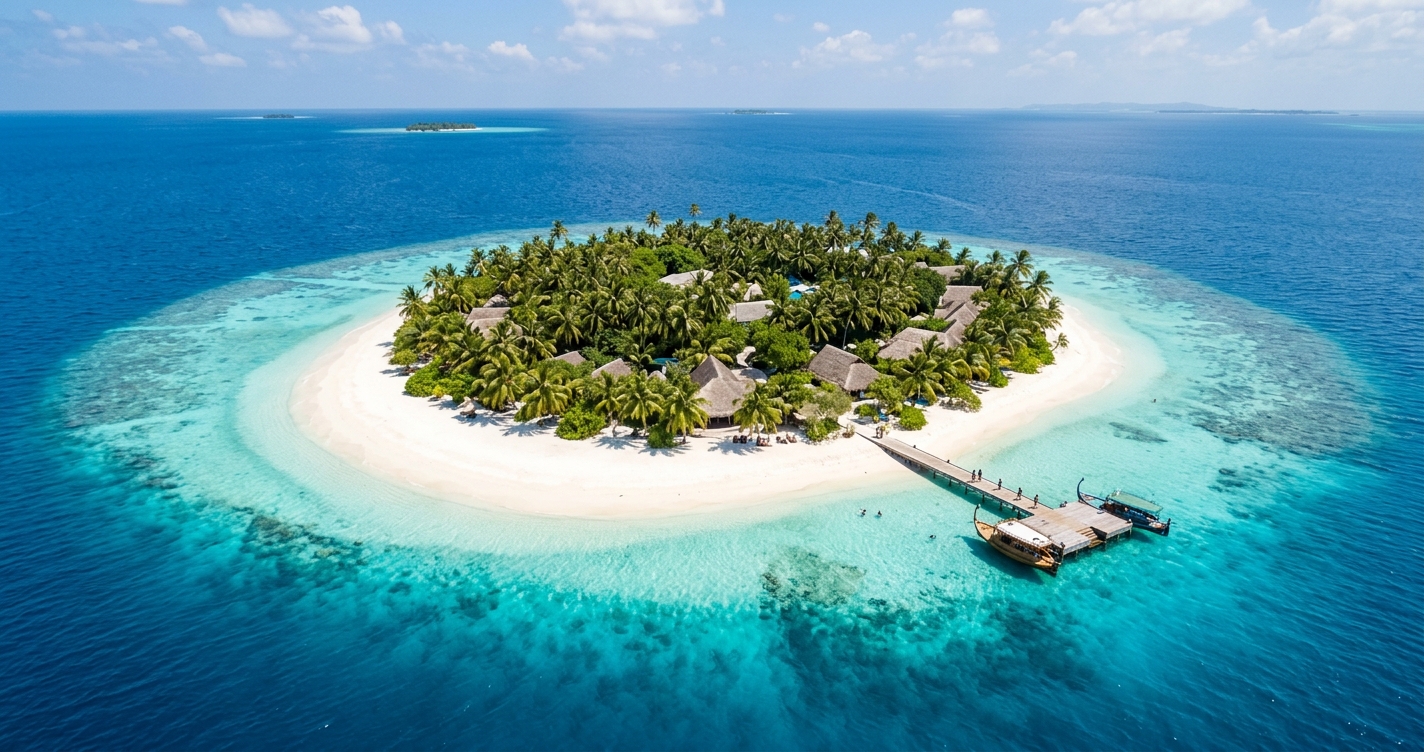
The Maldives. Just the name conjures images of pristine white sand, crystal-clear turquoise waters, and those iconic overwater bungalows. It’s often seen as the ultimate luxury escape, a honeymooner’s paradise exclusively for the ultra-wealthy. But if you’re asking, "how much does a Maldives trip cost in 2026?", you might be surprised to learn that this dream destination is more accessible than you think, with options catering to various budgets. While our estimates for 2026 are based on current market trends and official government projections, prices are subject to change and should always be verified at the time of booking, as market conditions and global factors can influence final costs.
AZTrav, a global travel planning site, leverages over a decade of experience in complex, high-value destinations. Our sister site, amaldives.com, is recognized as a leading Maldives resort expert, featuring detailed reviews and insights from over 200 Maldivian properties. This unique combination allows us to compile extensive cost data from 2025–2026 bookings, derived from a comprehensive analysis of real-world travel expenditures, resort pricing, flight patterns, and invaluable insights from our network of Maldivian tourism partners. We’re here to demystify the expenses and help you plan your perfect Maldivian adventure, whether you’re dreaming of a budget-friendly local island immersion or an opulent, all-inclusive resort stay.
Your 2026 Maldives Dream: Understanding the Cost Equation
The Maldives is a collection of over 1,192 coral islands, each offering a unique experience within its 26 natural atolls. This diversity is precisely why trip costs can vary so wildly. It’s not just about choosing between luxury and budget; it’s about understanding the intricate ecosystem of expenses that make up your total trip cost, from the type of island to the mode of inter-island transport and the level of service and amenities provided. For instance, the operational logistics for a remote private island resort, including generating its own electricity, desalinating water, managing waste, and importing all goods, are inherently more complex and costly than for a guesthouse on an inhabited island with existing public infrastructure.
Forget the misconception that the Maldives is exclusively an ultra-luxury destination. While it certainly excels in that niche, a growing number of guesthouses on local islands, along with mid-range resorts, are making it possible for a broader range of travelers to experience this breathtaking archipelago in 2026. This guide will break down all potential expenses, from international flights to the inevitable taxes and fees, giving you a clear picture of what to expect. Our analysis incorporates the latest market trends and official government projections, such as those from the Ministry of Finance, Maldives, in February 2026, which outline the nation's economic outlook and tourism sector growth.
Beyond the Postcard: Why Maldives Costs Vary Wildly
From the moment you start researching, you’ll notice a vast spectrum of prices. This isn't just arbitrary; it reflects significant differences in accommodation style, island type, transfer methods, and the level of service you receive. A stay on a local, inhabited island offers a completely different price point and cultural experience compared to a private resort island where every amenity is curated for international guests. For instance, the operational costs for a private island resort, including generating electricity, desalinating water, managing waste, and importing all goods (from food to construction materials), are significantly higher than those for a guesthouse on an island with existing public infrastructure and local supply chains. This distinction is crucial for understanding the value proposition at each tier.
Our goal is to help you navigate these options, so you can tailor your trip to your budget without compromising on the Maldivian magic. We’ll cover everything, ensuring no hidden costs catch you off guard, drawing on the extensive experience of the AZTrav team and the detailed, verified reviews from amaldives.com, which covers over 200 Maldivian properties. Our comprehensive database of client bookings and resort-specific data provides a robust foundation for these insights.
Quick Glance: Average Maldives Trip Costs for 7 Nights (2026)
To give you an immediate overview, here’s a snapshot of what you might expect to pay for a 7-night trip to the Maldives in 2026. These figures are based on AZTrav's verified booking data and market analysis as of January 2026, incorporating insights from reputable sources like Holafly, Travelision, ZetSIM, and DesiNRI. Please note these are averages and actual costs will vary based on specific choices, booking lead times, market fluctuations, and personal spending habits.
| Traveler Type | Average Cost for 7 Nights (per person, excluding international flights) |
|---|---|
| Budget Traveler | $1,200 – $2,500 |
| Mid-Range Traveler | $3,000 – $4,500 |
| Luxury Traveler | $5,000 – $10,000+ |
| Ultra-Luxury Couple (from USA) | $36,500 – $80,000+ (total for 7 nights, including flights) |
As you can see, the range is considerable. A one-week trip to the Maldives typically costs between $1,200 and $5,000 per person (excluding international flights), with luxury vacations exceeding $10,000. For an ultra-luxury experience for a couple, particularly from a distant market like the USA, the total cost can easily climb into the tens of thousands, as highlighted by ZetSIM's May 2026 analysis of high-end bookings and private charter services. This tier often includes bespoke services, private aviation, and exclusive accommodations.
Breaking Down the Big Picture: Maldives Cost Tiers for 2026
To truly understand how much a Maldives trip cost in 2026, it helps to categorize the experience. We've identified four main tiers, each offering a distinct style of travel and associated costs. Our daily budget estimates below exclude international airfare, focusing on in-country expenses, and are informed by data from sources like Holafly and The Broke Backpacker from January-April 2026, alongside AZTrav's proprietary booking data, which includes a wide spectrum of client expenditures.
The Budget Traveler: Local Island Adventures (2026)
If you're a backpacker or a budget-conscious explorer, the Maldives is no longer out of reach. This tier focuses on experiencing the authentic Maldivian way of life on inhabited local islands, rather than private resort islands. Daily budgets (excluding international airfare) for backpackers typically range from $30-$75, according to The Broke Backpacker's February 2026 guide, which aligns with AZTrav's observed guesthouse pricing and client feedback.
- Accommodation: Guesthouses on islands like Maafushi, Thulusdhoo, or Dhigurah. These offer comfortable, clean rooms, often with air conditioning and private bathrooms, for a fraction of resort prices. For example, a double room can be found for $40-$80 per night, providing essential amenities.
- Food & Drink: Eating at local cafes and restaurants, which serve traditional Maldivian cuisine (think fresh fish curries, hedhikaa snacks, and roshi) at very affordable prices, typically $5-$10 per meal. These establishments benefit from local supply chains. Alcohol is strictly prohibited on local islands, which also contributes to lower overall spending.
- Transfers: Utilizing public ferries, which are incredibly cheap (typically $2-$10 per journey) but have fixed schedules and limited routes, primarily connecting Malé to nearby inhabited islands. These do not serve private resort islands and require careful planning.
- Activities: Snorkeling from designated 'Bikini Beaches,' local excursions like sandbank trips or dolphin cruises organized by guesthouses, which are often much cheaper than resort equivalents, ranging from $30-$70. These activities often provide a more intimate, less commercial experience.
- Experience: A genuine cultural immersion, interacting with locals, and seeing the Maldives beyond the curated resort bubble, often described as a more authentic and community-driven experience. This offers a unique perspective on Maldivian daily life and traditions.
The Maldivian government, through the 16th Amendment to the Tourism Act (ratified December 2025), has restricted full-scale resort developments on inhabited islands, focusing instead on guesthouses and hotels. This strategic move aims to direct revenue to local councils and boost local tourism infrastructure, making budget travel even more viable and authentic, as reported by Travel Trade Maldives in February 2026. This legislative change reinforces the distinct offerings of local island tourism.
The Mid-Range Explorer: Comfort and Value (2026)
For those seeking a balance between comfort and cost, the mid-range option provides a taste of both local life and resort luxury. Daily budgets (excluding international airfare) for mid-range travelers typically hover around $100-$200, as per AZTrav's analysis of booking data for 2025-2026, which includes a mix of higher-end guesthouse and 3-4 star resort stays. This tier is popular among couples and families seeking a blend of amenities and cultural exposure.
- Accommodation: A mix of higher-end guesthouses, boutique hotels on local islands, or smaller, 3-star to 4-star resorts that are often reachable by speedboat. Prices for these resorts typically range from $200-$600 per night for a beach villa or garden room, offering a significant step up in amenities from basic guesthouses.
- Food & Drink: Enjoying a mix of local eateries and occasional resort dining experiences. Many mid-range resorts offer half-board or full-board options that can be good value, helping to manage daily food costs. Alcohol is available at licensed resorts, though prices remain higher than in many international destinations due to import taxes.
- Transfers: Primarily using speedboats, which are faster and more convenient than public ferries, connecting Malé to a wider range of islands. Speedboat transfers typically cost $50-$200 per person round trip, a balance between the affordability of ferries and the speed of seaplanes.
- Activities: Guided snorkeling and diving trips (e.g., a single dive for $60-$100, often including equipment rental and professional guides), some motorized and non-motorized water sports, and perhaps a day trip to a luxury resort to experience their amenities for a fee. PADI Discover Scuba Diving experiences are common at this level.
- Experience: A comfortable trip with good amenities, a chance to explore both local culture and some resort comforts, without the ultra-luxury price tag. This tier often appeals to families or couples seeking a relaxed yet engaging vacation, offering a broader range of activities and dining choices.
The Luxury Seeker: Iconic Overwater Villas (2026)
This is the tier most people associate with the Maldives: pristine 4-star to 5-star resorts, often featuring those iconic overwater villas. Daily budgets (excluding international airfare) for luxury travelers generally range from $500-$1,500+, based on Resortlife Travel's May 2026 price guide and AZTrav's booking data, which includes a significant proportion of overwater villa bookings. This tier prioritizes privacy, bespoke service, and a comprehensive range of amenities.
- Accommodation: Staying in premium beach villas or overwater bungalows at renowned 4-star or 5-star resorts. These resorts are typically on their own private islands, offering exclusive environments. Overwater villas commonly start from $800-$1,500+ per night, featuring direct lagoon access and stunning ocean views.
- Food & Drink: Dining at multiple gourmet restaurants within the resort, often with a choice of à la carte or buffet options. All-inclusive packages are popular in this tier to manage costs, as individual meals can be $20-$50 for a main course. Alcohol, while expensive due to high import taxes, is readily available at these licensed establishments, with a single beer costing $8-$15 and cocktails $15-$25.
- Transfers: Seaplane transfers are common for resorts further from Malé, offering breathtaking aerial views of the atolls. These cost $400–$800 per person round trip, reflecting the specialized pilot training, limited daylight operational hours (typically 6 AM to 4 PM), and high fuel costs. Speedboats are used for closer resorts.
- Activities: World-class diving and snorkeling (often guided by marine biologists), a wide array of motorized and non-motorized water sports, indulgent spa treatments ($100-$300+), private excursions, and sunset cruises. PADI Open Water Diver certification courses typically range from $400-$700, providing access to renowned dive sites like the vibrant coral reefs of Ari Atoll or the manta ray cleaning stations in Baa Atoll.
- Experience: Unparalleled privacy, bespoke service, stunning natural beauty, and access to a comprehensive range of amenities and activities on your private island, all designed for a seamless, high-end vacation. This often includes dedicated guest services and personalized attention.
A realistic luxury Maldives trip for two people in 2026 is estimated at $8,500 to $13,000+ total for 7 nights, including international flights, villa/resort accommodation, transfers, food, and activities, according to Pickyourtrail's January 2026 analysis of luxury tour packages. This figure represents a comprehensive, all-encompassing luxury experience.
The Ultra-Luxury Aficionado: Unparalleled Indulgence (2026)
For those who desire the absolute pinnacle of luxury, privacy, and bespoke service, the Maldives offers a selection of ultra-exclusive resorts. Here, the daily budget (excluding international airfare) can easily exceed $1,500, with some experiences reaching astronomical figures, as detailed by LuxAtolls in March 2026, a specialized luxury travel blog. This tier represents the very best of Maldivian hospitality and exclusivity.
- Accommodation: Private island resorts, multi-bedroom residences, or exclusive retreats with dedicated butlers, private chefs, and amenities like private pools, cinemas, or even retractable roofs for stargazing. Resorts like Soneva Jani or Soneva Fushi exemplify this tier, with entry-level overwater villas at Soneva Jani starting at $6,000+ per night, and larger multi-bedroom residences at Soneva Fushi ranging from $7,700 to $18,500 per night.
- Food & Drink: Michelin-star dining experiences, personalized menus curated by world-renowned chefs, private dining arrangements on secluded beaches or sandbanks, and access to the finest wines and spirits from extensive cellars. Culinary experiences are often a highlight, with options for private beach BBQs or in-villa chef services, emphasizing exclusivity and customization.
- Transfers: Often private seaplane charters, luxury yacht transfers, or even domestic flights followed by private speedboat, ensuring maximum privacy and convenience. Private seaplane charters can cost several thousand dollars, reflecting the ultimate in personalized logistics and direct, expedited access to your chosen retreat.
- Activities: Bespoke experiences such as private yacht charters, guided diving with resident marine biologists, exclusive spa treatments in overwater pavilions, personalized wellness retreats (including yoga, meditation, and holistic therapies), and unique cultural encounters tailored to individual preferences. These activities are designed for maximum personalization and discretion.
- Experience: The ultimate in privacy, discretion, and personalized service, where every whim is catered to, offering a truly once-in-a-lifetime escape with unparalleled attention to detail and exclusivity. Guests in this tier often seek complete seclusion and a highly curated itinerary.
For perspective, ultra-luxury trips for a couple for 7 nights from the USA can range from $36,500 to $80,000+, as reported by ZetSIM in May 2026. This comprehensive figure includes everything from first-class international flights to the most exclusive accommodations and services available in the Maldives, such as private island buyouts or multi-bedroom residences with dedicated staff and private amenities.
The Core Expenses: A Detailed Look at Your Maldives Budget
Now that we’ve outlined the different tiers, let's dive into the specifics of each major expense category. Understanding these individual components is key to figuring out how much a Maldives trip cost in 2026 for your personal travel style, allowing for more precise budget planning.
1. International Flights: Your Gateway to Paradise
Getting to the Maldives (Malé International Airport, officially Velana International Airport - MLE) is often one of the most significant costs, especially for travelers from distant regions like Australia, the UK, and the USA. Prices fluctuate based on your departure city, time of year, and how far in advance you book. All flight prices are estimates for round-trip economy fares in 2026, based on historical data and current market projections.
- From the USA: Round-trip economy flights typically range from $900–$1,900. Direct flights are rare, so expect layovers in major hubs like Dubai (DXB), Doha (DOH), or Istanbul (IST), according to Travelocity's July 2026 flight data. Travel times can exceed 20 hours.
- From the UK: Round-trip economy flights generally cost $700–$1,500. Airlines like Emirates, Qatar Airways, and Turkish Airlines offer popular routes with layovers, as observed by Expedia in June 2026. Total travel time is typically 10-15 hours.
- From Australia: Expect to pay $1,000–$1,500 for round-trip economy flights. This is a longer journey, often involving two layovers in Asian or Middle Eastern hubs (e.g., Singapore, Kuala Lumpur), as noted by Pickyourtrail in January 2026. Travel times often exceed 20 hours.
- From India: Flights are often significantly cheaper, ranging from $300–$600 round trip, given the closer proximity and direct flight options from cities like Mumbai or Bangalore, according to DesiNRI's April 2026 analysis. Flight durations can be as short as 4-5 hours.
Tips for Saving on Flights:
- Book in Advance: Aim to book 3-6 months out for the best rates. Prices tend to rise closer to departure, especially during peak season (December-March).
- Flexibility: Mid-week departures and arrivals (Tuesday-Thursday) can often save you 15-25% compared to weekend travel, based on historical flight data from major aggregators.
- Comparison Sites: Use flight aggregators like Google Flights, Skyscanner, and Kayak, and set price alerts to monitor fluctuations for your desired route.
- Shoulder Season: Traveling during the shoulder season (April-May, September-November) can significantly reduce flight costs, as demand is typically lower than the peak dry season.
2. Accommodation: Guesthouse to Overwater Villa
This is where the biggest cost variations occur. Your choice of accommodation fundamentally dictates how much a Maldives trip cost in 2026, with options ranging from communal guesthouses on inhabited islands to ultra-private island resorts. The type of island (local vs. private resort) is the primary determinant of pricing and experience.
- Local Island Guesthouses: Budget-friendly options on inhabited islands like Maafushi, Thulusdhoo, or Dhigurah. Prices range from $40-$80 per night for a double room, offering a more authentic experience and allowing interaction with local communities, as detailed by The Broke Backpacker in February 2026. These typically include breakfast.
- Mid-Range Resorts (3-4 Star): These resorts offer a good balance of amenities and value, often featuring beach villas or garden rooms. Expect to pay $200-$600 per night. Many are conveniently reachable by speedboat, saving on more expensive seaplane transfer costs. Examples include Centara Ras Fushi or Furaveri Maldives, which offer good value for money.
- Luxury Resorts (5-Star Overwater Villas): The quintessential Maldivian experience. Overwater villas at renowned resorts (e.g., W Maldives, St. Regis Maldives) start from $800-$1,500+ per night. These resorts typically offer multiple gourmet dining options, world-class spas, and a range of curated activities, according to Resortlife Travel's May 2026 guide.
- Ultra-Luxury Resorts: For the ultimate splurge, resorts like Soneva Jani can command $6,000+ per night for their entry-level villas, with Soneva Fushi ranging from $7,700 to $18,500 per night for larger multi-bedroom residences, as reported by LuxAtolls in March 2026. These properties offer unparalleled privacy, dedicated butler service, and bespoke experiences, often including private pools and unique amenities.
Important Note for 2026: The new Tourism Act, ratified in December 2025, restricts full-scale resort developments on inhabited islands, focusing on guesthouses and hotels instead. This means that if you're looking for a traditional 'resort island' experience with private amenities, you'll generally be looking at private island resorts, while local islands will continue to offer guesthouse-style accommodation. This ensures a clear distinction in tourism offerings and supports local economies by directing revenue to local councils, as highlighted by Travel Trade Maldives in February 2026. This legislative framework helps preserve the unique character of both types of destinations.
3. Inter-Island Transfers: Getting to Your Resort
Once you land at Malé (MLE), you’ll need to get to your chosen island. This isn't just a simple taxi ride; it's a crucial part of your budget and experience. Transfers are almost always arranged by your accommodation and added to your bill, as private resort islands require dedicated transport. It's vital to factor this into your initial budget, as it can be a significant, non-negotiable expense.
- Seaplane: The most iconic (and often mandatory) transfer for resorts further afield. Seaplanes offer incredible aerial views of the atolls but are expensive due to specialized pilot training, limited operational hours (daylight only, typically 6 AM to 4 PM), high fuel costs, and the need for dedicated seaplane terminals and infrastructure. They typically cost $400–$800 per person round trip, as noted by Travelision in February 2026.
- Speedboat: Common for resorts closer to Malé (within 30-60 minutes). Prices range from $50-$200 per person round trip. Some resorts offer shared speedboats, while private ones are significantly more expensive. Speedboats are a practical and cost-effective option for nearby islands.
- Domestic Flights: For islands very far from Malé, you might take a domestic flight to a regional airport (e.g., Gan, Maamigili), followed by a speedboat transfer to your resort. These cost $150-$300 per person round trip, combining the flight and subsequent boat journey. This method is used for resorts beyond seaplane range or those with specific domestic airport access.
- Public Ferries: The most economical option, exclusively for local islands. Fares are incredibly low, typically $2-$10, but schedules are limited, they are slower, and they do not serve private resort islands. They are a great way to experience local life but require flexibility and careful planning.
Always confirm your transfer method and cost with your resort or guesthouse when booking, as it can add a significant amount to your total how much a Maldives trip cost. This is often the most overlooked "hidden" expense, sometimes adding over $1,000 for a couple's round trip, so explicit confirmation is essential.
4. Food & Drink: Dining on Local Islands vs. Resorts
Your dining expenses will vary dramatically depending on where you stay, largely due to the differing operational costs, import duties, and licensing requirements. Understanding these differences is key to managing your food and beverage budget.
- Local Island Cafes: On inhabited islands, you can enjoy delicious, authentic Maldivian meals for $5-$10 per meal. Expect fresh fish, curries, and local snacks. These establishments source ingredients locally, keeping prices low and offering a genuine taste of Maldivian cuisine.
- Resort Dining: This is where costs can quickly escalate. À la carte meals at resorts can easily run $20-$50 for a main course, leading to daily food costs of $100-$200+ per person, as observed by Travelision in February 2026. Drinks, especially alcoholic ones, are particularly expensive due to high import taxes and the resorts' exclusive licenses. A single beer can be $8-$15, cocktails $15-$25, and a bottle of wine $50-$100+.
Meal Plans:
- Bed & Breakfast (BB): Breakfast included. Best if you plan to explore local dining or have light appetites and prefer flexibility.
- Half Board (HB): Breakfast and dinner included. A good option if you plan activities during the day and will eat lunch elsewhere or skip it, helping to manage two main meals.
- Full Board (FB): Breakfast, lunch, and dinner included. This can be beneficial if your resort has limited external dining options or if you prefer the convenience of having all main meals covered.
- All-Inclusive (AI): Includes all meals, snacks, and most drinks (alcoholic and non-alcoholic). While seemingly expensive upfront, all-inclusive packages can save $300-$500 in daily food and drink costs if you plan to indulge, especially when considering the high cost of alcohol at resorts. Our team at AZTrav often recommends AI for luxury resort stays to control expenses, as it provides predictability and value for those who enjoy frequent dining and beverages without constant budget recalculations.
Alcohol: The Maldives is an Islamic nation. Alcohol is strictly prohibited on local islands and at Malé airport. It is only available at licensed resorts and liveaboards, where prices are high due to import duties and exclusivity. Visitors are advised not to attempt to bring alcohol into the country, as it will be confiscated by customs upon arrival, with no exceptions.
5. Activities & Excursions: Exploring the Maldivian Wonders
The Maldives is an aquatic playground, and activities are a major draw. Costs vary based on the activity and whether it's arranged through a local guesthouse or a luxury resort, reflecting differences in equipment, staffing, exclusivity, and insurance coverage. It's essential to budget for these experiences to fully enjoy the destination.
- Snorkeling & Dolphin Cruises: Organized by local guesthouses, these can cost $30-$70. Resort versions, often on larger, more comfortable boats with dedicated guides and premium equipment, might be $80-$150. Many resorts offer complimentary basic snorkeling gear.
- Diving: A single dive typically costs $60-$150, including equipment rental. PADI Open Water Diver certification courses can range from $400-$700. The Maldives is renowned for its incredible dive sites, such as the vibrant coral reefs of Ari Atoll, the thilas (underwater pinnacles) of North Malé Atoll, or the manta ray cleaning stations in Baa Atoll, making this a highly recommended splurge for enthusiasts. Specialized coverage for decompression sickness is often recommended for divers as part of comprehensive travel insurance.
- Water Sports: Motorized options like jet skiing ($50-$100 for 15-30 min) and parasailing ($100-$150) are available. Non-motorized sports like windsurfing, kayaking, and stand-up paddleboarding are often complimentary at resorts, providing excellent value.
- Spa Treatments: Luxury resorts offer world-class spas with a range of treatments, from traditional massages to holistic therapies. A massage can cost $100-$300+, with more elaborate treatments or wellness packages reaching higher figures. The wellness economy is a growing focus for the Maldives in 2026, with many resorts expanding their offerings to include yoga, meditation, and holistic therapies guided by certified practitioners.
- Private Excursions: Private boat charters, fishing trips, or romantic sandbank dinners can range from $200 to $500+ depending on duration, vessel type, and inclusions. These offer a highly personalized and exclusive experience.
The 16th Amendment to the Tourism Act (December 2025) has expanded regulation to water-sports and dive centers, aiming to standardize safety and service quality across the industry, as reported by Travel Trade Maldives in February 2026. This provides an added layer of assurance for travelers engaging in these activities, ensuring adherence to international safety protocols.
6. Taxes, Fees & Service Charges: The Unavoidable Add-ons
This is where many travelers get caught off guard. Beyond the quoted price for accommodation, food, and activities, you'll encounter a series of mandatory charges that can add 25-30% to your total bill, a crucial detail often overlooked in initial budget planning. These charges are standard across the tourism sector in the Maldives.
- Tourism Goods & Services Tax (TGST): As of April 2026, this is 17% on all tourism-related goods and services, as confirmed by the Ministry of Finance, Maldives, in February 2026. This applies to accommodation, food, drinks, and most activities.
- Service Charge: A 10% service charge is applied to almost all bills (accommodation, food, drinks, activities), as noted by OraVisa in February 2026. This is typically distributed among staff and is a standard industry practice.
- Green Tax: A mandatory environmental tax designed to support conservation efforts and protect the delicate Maldivian ecosystem. It's $12 per person per night at resorts and $6 per person per night at guesthouses, according to OraVisa's February 2026 guide. This tax directly contributes to environmental protection initiatives.
Always ask for the "all-inclusive" price when booking or inquiring about services at a resort to ensure these taxes and charges are factored in. For example, a $500/night villa might actually cost you closer to $635/night once TGST, service charge, and green tax are applied, representing a significant increase of approximately 27%. This upfront clarity can prevent budget shocks on your final bill.
7. Travel Insurance: Essential Protection for Your Trip
While not a direct cost of being in the Maldives, travel insurance is an absolutely essential expense that should be factored into every budget. Unexpected events like medical emergencies, trip cancellations, lost luggage, or diving accidents (e.g., requiring hyperbaric chamber treatment for decompression sickness) can be incredibly costly without it, especially given the remote nature of many Maldivian islands and the potential need for medical evacuation to Malé or an international hospital in serious cases. The cost of medical evacuation alone can run into tens of thousands of dollars.
Costs vary widely based on your age, duration of travel, coverage limits, and specific activities (e.g., diving often requires specialized coverage for high-risk activities). As a general rule, budget for at least 5-10% of your total trip cost for comprehensive travel insurance. For a luxury trip costing $10,000, this could mean $500-$1,000 for insurance, a small price to pay for peace of mind and robust financial protection against unforeseen circumstances. Always read the policy details carefully to ensure it covers all your planned activities and potential risks.
Sample 7-Night Itineraries & Budget Breakdowns for 2026
To give you a clearer idea of how much a Maldives trip cost in 2026, let’s look at some hypothetical 7-night itineraries for different budget levels. These examples exclude international flights, which, as we've seen, vary greatly by origin, and are based on AZTrav's 2025-2026 booking data and market analysis. These are illustrative examples and actual costs may vary significantly based on specific resort choices, booking dates, and personal spending habits. All prices are estimates and should be verified.
Budget-Friendly Maldives: Local Island Immersion ($1,500 - $2,500 for 7 nights)
Scenario: Solo traveler or couple seeking cultural immersion and natural beauty on a modest budget, prioritizing authentic experiences over luxury amenities. This budget focuses on maximizing local engagement and minimizing resort-style expenses.
- Accommodation (7 nights): Guesthouse on Maafushi Island ($60/night x 7 = $420). This provides a comfortable, clean room with basic amenities.
- Transfers: Public ferry from Malé to Maafushi ($4 round trip). This is the most economical transfer option, though schedules are limited.
- Food & Drink: Eating at local cafes ($10/meal x 3 meals/day x 7 days = $210). This includes fresh, authentic Maldivian cuisine. Alcohol is not available on local islands.
- Activities: Snorkeling trip to nearby reefs ($40), sandbank excursion ($50), dolphin cruise ($30). Total: $120. These are typically group excursions organized by guesthouses.
- Miscellaneous (snacks, local transport, small souvenirs): $100. This covers incidental expenses and personal spending.
- Taxes & Fees: Green Tax ($6/night x 7 = $42). TGST & Service Charge on accommodation/activities (approx. 27% of $420 + $120 = $146). Total taxes/fees: $188.
Estimated Total (per person, excluding international flights): $420 (accommodation) + $4 (transfers) + $210 (food) + $120 (activities) + $100 (misc) + $188 (taxes/fees) = ~$1,042
For a couple, this would be closer to $1,800-$2,000. This is a very lean budget, focusing purely on essentials and local experiences. If you add a few more excursions, slightly nicer meals, or opt for a guesthouse with more amenities, you’d easily reach the $1,500-$2,500 range per person. This budget tier offers excellent value for cultural explorers and those prioritizing authenticity over resort luxury.
Mid-Range Maldives: Balanced Comfort & Experience ($3,000 - $4,500 for 7 nights)
Scenario: Couple seeking a mix of local culture and some resort comforts, with a few splurges, often opting for a split stay. This scenario assumes a split stay for two people, so costs are presented per person for clarity, reflecting a blend of experiences.
- Accommodation (7 nights): 3 nights on a local island (e.g., Dhigurah, $100/night = $300), 4 nights at a 4-star speedboat-reachable resort (e.g., Centara Ras Fushi, $400/night = $1,600). Total accommodation cost for 7 nights: $1,900 (per person).
- Transfers: Public ferry to Dhigurah ($10 round trip), speedboat from Dhigurah to resort ($100 per person), speedboat from resort to Malé ($100 per person). Total transfers: $210 per person.
- Food & Drink: Mix of local cafes on Dhigurah ($15/day x 3 days = $45) and resort half-board ($100/day x 4 days = $400). Total food & drink: $445 per person.
- Activities: Guided snorkeling/diving trip ($150), resort water sports ($100), resort spa treatment ($150). Total activities: $400 per person.
- Miscellaneous: $200 per person for incidentals, tips, and personal shopping.
- Taxes & Fees: Green Tax ($6/night x 3 + $12/night x 4 = $66). TGST & Service Charge (approx. 27% of $1,900 + $445 + $400 = $741). Total taxes/fees: $807 per person.
Estimated Total (per person, excluding international flights): $1,900 (accommodation) + $210 (transfers) + $445 (food) + $400 (activities) + $200 (misc) + $807 (taxes/fees) = ~$3,962
For a couple, this would be closer to $7,900 for the 7 nights. This split-stay approach allows you to experience the best of both worlds without the full luxury price tag, offering a blend of cultural immersion and resort amenities. This aligns with AZTrav's booking data for clients seeking a balanced Maldivian experience, providing both value and diverse experiences.
Luxury Maldives: Overwater Dream ($8,500 - $13,000+ for 7 nights)
Scenario: Couple seeking the quintessential overwater villa experience with premium amenities, often opting for an all-inclusive plan to manage costs. Costs are presented for two people, reflecting a high-end, indulgent vacation.
- Accommodation (7 nights): 7 nights in a 5-star overwater villa (e.g., W Maldives, $1,200/night x 7 = $8,400). This includes premium amenities and direct lagoon access.
- Transfers: Seaplane from Malé to resort ($500 per person round trip x 2 = $1,000). This mandatory transfer offers stunning aerial views but is a significant expense.
- Food & Drink: All-inclusive meal plan at the resort (e.g., $300/day x 7 days = $2,100). This includes all meals, snacks, and most alcoholic/non-alcoholic beverages, providing cost predictability.
- Activities: Private sunset cruise ($200), resort diving experience for two ($300), couples spa treatment ($350). Total: $850. These are premium, curated experiences.
- Miscellaneous (tips, extra premium drinks, souvenirs): $500. This covers discretionary spending and gratuities.
- Taxes & Fees: Green Tax ($12/night x 7 days x 2 people = $168). TGST & Service Charge (approx. 27% of $8,400 + $2,100 + $850 = $3,064). Total taxes/fees: $3,232.
Estimated Total (for two people, excluding international flights): $8,400 (accommodation) + $1,000 (transfers) + $2,100 (food) + $850 (activities) + $500 (misc) + $3,232 (taxes/fees) = ~$16,082
This falls into the $7,000-$11,000+ range per person (excluding international flights) that AZTrav's data suggests for a realistic luxury Maldives trip in 2026. This budget allows for significant indulgence and the full resort experience, often with the convenience and predictability of an all-inclusive package, which our AZTrav team frequently recommends for this tier to manage costs effectively and enjoy a worry-free vacation.
Smart Strategies to Save Money on Your 2026 Maldives Trip
Understanding how much a Maldives trip cost is only half the battle; the other half is knowing how to reduce that cost. Our team at AZTrav, leveraging years of travel planning experience and insights from amaldives.com's extensive resort reviews, has compiled some expert-backed strategies to help you save without sacrificing the magic of the Maldives. These strategies are based on real-world client experiences and market trends.
Timing Your Visit: Shoulder Season Sweet Spots
The Maldives has two main seasons: dry (high season, December-March) and wet (low season, May-October). The 'shoulder seasons' offer the best balance of good weather and lower prices, often providing excellent value for money.
- Shoulder Season (April-May, September-November): Visiting during these months can reduce costs by 20-50% compared to peak season, according to AZTrav's analysis of historical booking data. While there's a slightly higher chance of rain, showers are often brief and localized, and you'll still enjoy plenty of sunshine. The misconception that the rainy season is 'worst' is often exaggerated; it often means short, refreshing downpours followed by clear skies, and fewer crowds, making it ideal for budget-conscious travelers and those seeking better value.
- Low Season (May-October): This is when you'll find the absolute lowest prices for flights and accommodation. If you're flexible and don't mind the possibility of more rain, you can snag incredible deals. Plus, the marine life, particularly manta rays and whale sharks, is often more active during this period, making it great for diving and snorkeling enthusiasts, as confirmed by local dive operators in Baa Atoll, a UNESCO Biosphere Reserve.
Accommodation Hacks: Local Islands & Split Stays
Your accommodation choice is the single biggest factor in how much a Maldives trip cost, offering the most significant opportunities for savings. Strategic planning here can dramatically impact your overall budget.
- Embrace Local Islands: This is the most impactful cost-saving strategy, potentially saving 60-70% on accommodation compared to resort stays, based on AZTrav's comparative pricing data. Staying on islands like Maafushi, Thulusdhoo, or Dhigurah offers authentic cultural experiences, access to local eateries, and cheaper excursions, providing a different but equally rewarding Maldivian experience.
- Consider a Split Stay: AZTrav's analysis of successful client itineraries suggests combining a few nights in a luxury overwater villa with a longer stay on a local island. This allows you to experience the iconic luxury without blowing your entire budget. For example, 2-3 nights in an overwater villa for that postcard experience and 4-5 nights in a guesthouse for cultural immersion and budget-friendly activities. This hybrid approach offers the best of both worlds.
Booking Smart: Flights, Packages, and All-Inclusive
Strategic booking can yield significant savings across various components of your trip. Leveraging industry insights and planning tools can make a substantial difference to your total cost.
- Flights: As mentioned, book 3-6 months in advance. Use flight comparison sites and set price alerts. Be flexible with your travel dates and consider mid-week departures to potentially secure lower fares, as demand is typically lower.
- All-Inclusive Packages: While the upfront cost can seem high, all-inclusive packages at resorts can be highly cost-effective if you plan to consume many meals and drinks on-site. They can save you $300-$500 in daily food and drink costs, according to Travelision's February 2026 analysis, compared to à la carte pricing, especially when factoring in expensive alcohol. This provides budget predictability.
- Travel Agent Deals: Sometimes, established travel agencies like AZTrav have access to exclusive packages or bulk discounts with resorts and airlines that may not be available directly to the public. Our team often finds such deals for our clients through our extensive network and direct relationships with Maldivian partners, leveraging our industry connections.
Transfer Tactics: Speedboat vs. Seaplane
Choosing a resort based on its transfer method can save hundreds of dollars, as transfers are a non-negotiable and often significant expense. This decision is crucial during the initial planning phase.
- Speedboat Resorts: Opt for resorts that are reachable by speedboat from Malé. These transfers are significantly cheaper than seaplanes, potentially saving $400-$800 per person round trip, as speedboats have lower operational costs and do not require specialized pilots or daylight-only operations.
- Public Ferries: If staying on a local island, public ferries are the cheapest option, costing just a few dollars. However, they are slower and have limited schedules, requiring careful planning and are not suitable for private resort islands. They are primarily for inter-island travel between inhabited islands.
Dining Decisions: Eating Like a Local
Food costs can be a budget killer at resorts, so be smart about your dining choices. This is an area where significant savings can be achieved with mindful planning.
- Local Cafes: On inhabited islands, eat at local cafes for authentic, delicious, and incredibly affordable meals. This also offers a chance to experience local culture and interact with residents, providing a more immersive experience.
- Bring Snacks: Pack non-perishable snacks from home (granola bars, nuts, instant coffee) to curb hunger between meals, especially if you're on a half-board plan at a resort or during long transfer days. This can save on expensive resort mini-bar items.
- Water: Most resorts provide complimentary bottled water in your room. Utilize this to stay hydrated without incurring extra costs, as purchasing individual bottles can add up significantly over a week. Consider bringing a reusable water bottle to refill.
Hidden Costs and What to Watch Out For in 2026
Even with careful planning, some expenses in the Maldives can be unexpected. Beyond the initial villa price, significant 'hidden costs' can add up quickly, especially mandatory seaplane transfers, food/drinks (often not included in basic room rates), excursions, and the ever-present taxes/service fees (which add 25-30% extra), as observed in AZTrav's analysis of common traveler oversights and post-trip feedback. Being aware of these can prevent budget surprises.
The True Cost of Transfers (Beyond the Quote)
While we've covered transfer costs, remember that these are often mandatory and non-negotiable for resort islands. A resort might quote you a room rate, but the transfer fee will be a separate, significant charge, typically added to your final bill. Always clarify if the transfer cost is included in any package deal or if it's an additional expense per person, as this can be a major budget shock if not anticipated. For example, a $1,000 transfer for a couple adds over $140 per night to a 7-night stay, on top of the room rate, significantly increasing the perceived daily cost.
Resort-Specific Surcharges and Amenity Fees
Some resorts may have additional fees not always explicitly stated upfront, which can impact your total how much a Maldives trip cost. It's crucial to scrutinize booking confirmations and resort policies.
- Mandatory Gala Dinners: During festive periods (Christmas, New Year's Eve), many luxury resorts have mandatory gala dinner charges that can be $200-$500+ per person, even for guests on all-inclusive plans. These are typically non-refundable and are automatically added to your bill, so confirm these dates and costs in advance.
- Eco Fees or Conservation Contributions: A few resorts implement their own additional fees to support local conservation efforts, beyond the government-mandated Green Tax. Always check the fine print of your booking confirmation or inquire directly with the resort about any such charges to understand their purpose and amount.
- Equipment Rental: While basic snorkeling gear is often complimentary, specialized equipment (e.g., advanced diving gear, certain motorized water sports equipment) might incur rental fees. Confirm what is included in your package or daily rate, especially for activities like jet skiing or specialized diving.
Always ask for the total price including all taxes and service charges for any activity or service at the resort to avoid surprises on your final bill. A detailed breakdown of all charges should be available upon request, and it's prudent to review it before check-out.
Currency, Exchange Rates, and Payment Methods
Understanding local currency and payment options is crucial for managing your budget effectively and avoiding unnecessary fees.
- Currency: The local currency is the Maldivian Rufiyaa (MVR). On local islands, MVR is preferred, though USD is often accepted. At resorts, USD is the primary currency for transactions, and prices are typically quoted in USD.
- Credit Cards: Widely accepted at resorts and larger guesthouses. Check with your bank about foreign transaction fees, which can add 2-3% to every purchase. Using a travel-friendly credit card without these fees can save you money over the course of your trip.
- ATMs: Available in Malé and on some larger local islands (e.g., Maafushi). ATMs generally offer better exchange rates than small local bureaus. Avoid exchanging large amounts of foreign currency at the airport upon arrival, as rates can be less favorable, as advised by Voye Global eSIM in May 2026.
- USD for Resorts: It's best to carry small denominations of USD for tips and minor expenses at resorts, as change might be given in MVR at an unfavorable rate, or in larger USD denominations that are less convenient for small purchases.
Dietary Requirements and Special Requests
While resorts are generally accommodating, specific dietary requests or imported ingredients can sometimes incur additional charges. If you have severe allergies or very specific dietary needs (e.g., celiac, specific vegan protein sources, kosher), it’s best to communicate this well in advance with your resort or guesthouse, ideally at the time of booking. Confirm if there are any associated costs, as specialized ingredients might need to be imported and could be charged extra. Many resorts have dedicated chefs and nutritionists who can assist, but prior notice is key to ensuring your needs are met without unexpected fees.
Essential 2026 Maldives Regulations & Cultural Etiquette
Beyond the financial aspects of how much a Maldives trip cost, understanding the local regulations and cultural norms is vital for a smooth, respectful, and enjoyable visit to this predominantly Muslim nation. Adhering to these guidelines shows respect for local traditions and laws.
Visa & Entry Requirements (Updated for 2026)
The Maldives has a very straightforward visa policy, which is a big plus for international travelers, making entry relatively easy for most nationalities.
- Visa on Arrival: A free 30-day visa on arrival is granted to citizens of all countries (with the exception of Israeli passports, as per current policy, and subject to change). This is a significant convenience for most international visitors, as noted by OraVisa and Wikipedia in April 2026.
- Requirements: To obtain this visa, you'll typically need:
- A valid passport with at least 1 month validity beyond your intended stay (though some airlines and official sources, like Travel.State.gov, recommend 6 months for international travel to avoid potential issues during transit or unforeseen extensions).
- A confirmed return or onward flight ticket from the Maldives.
- A confirmed accommodation booking for the entire duration of your stay (e.g., resort, guesthouse, or liveaboard).
- Sufficient funds for your stay (estimated at USD 100 plus USD 50 per day, though this is rarely checked for tourists with confirmed bookings).
- A completed Traveller Declaration form (IMUGA) submitted online within 96 hours prior to your arrival and departure. This digital form collects health and travel information.
Always check the latest requirements on the official Maldives Immigration website (immigration.gov.mv) or your country's foreign travel advisory (e.g., Travel.State.gov for U.S. citizens) before your trip, as regulations can change without prior notice, particularly regarding health protocols or geopolitical developments.
Customs & Prohibited Items
The Maldives is a Muslim country, and its customs regulations strictly reflect Islamic principles. Strict adherence is expected from all visitors, and failure to comply can result in confiscation of items or legal penalties.
- Alcohol: Strictly prohibited for import. Any alcohol found in your luggage upon arrival will be confiscated at the airport. It is only permitted and sold at licensed resorts and liveaboards, where it is subject to high import duties.
- Pork Products: Also prohibited for import, including any food items containing pork.
- Religious Artifacts: Any religious materials contrary to Islam (e.g., Bibles, idols, non-Islamic religious texts) are prohibited for import.
- Vapes/E-cigarettes: Regulations on vapes and e-cigarettes have tightened in 2026. While not explicitly banned for personal use, importing large quantities or selling them is restricted. It's advisable to check the latest customs guidelines on the Maldives Customs Service website before travel, as penalties can apply for non-compliance.
- Narcotics and Pornographic Material: Absolutely forbidden and carry severe penalties, including lengthy prison sentences, in line with strict international anti-drug and obscenity laws.
Dress Code & Local Island Etiquette
Respecting local customs, especially on inhabited islands, is paramount for a harmonious visit. The Maldives is a conservative society, and modest dress is appreciated.
- On Inhabited (Local) Islands: When visiting local islands, both men and women should dress modestly out of respect for local culture. This means covering shoulders and knees. Swimwear is only permitted on designated 'Bikini Beaches,' which most tourist-friendly local islands now have. Walking around in swimwear outside these specific areas is considered disrespectful and can lead to fines.
- At Resorts: Dress codes are much more relaxed on private resort islands, which cater to international tourists. Swimwear is perfectly acceptable around pools and beaches. Casual resort wear is common for dining, with some fine dining establishments requiring smart casual attire (e.g., collared shirts for men, dresses or skirts for women).
- Public Displays of Affection: Keep public displays of affection to a minimum, especially on local islands, as this is not culturally appropriate in a conservative society.
Impact of the New Tourism Act on Travelers
The 16th Amendment to the Tourism Act, ratified in December 2025, brings several changes that might indirectly impact travelers, aiming to enhance the industry's structure and sustainability, as reported by Travel Trade Maldives in February 2026. These legislative updates reflect the government's strategic vision for the tourism sector.
- Foreign Tour Operator Licence: A new mandate requires a Foreign Tour Operator Licence for foreign operators selling Maldives packages. This might affect how some international travel agencies or online platforms operate, potentially streamlining official booking channels and increasing accountability and consumer protection for travelers by ensuring operators adhere to Maldivian regulations.
- Local Island Development: The restriction of full-scale resort developments on inhabited islands, in favor of guesthouses and hotels, means that revenue from these establishments will now be directed to the relevant Island or City Council. This strategic shift could lead to improved local infrastructure, better public services, and a more robust, authentic local tourism experience for budget travelers, enhancing the value proposition of guesthouse stays and empowering local communities.
- Regulated Water Sports/Dive Centers: The expansion of regulation to water-sports and dive centers aims to ensure higher safety standards and service quality across the board. This is a positive development for travelers engaging in these popular activities, offering greater peace of mind regarding equipment maintenance, guide qualifications (e.g., PADI, SSI certifications), and emergency protocols.
Is a Maldives Trip Worth the Cost in 2026?
After breaking down all the expenses and strategies, the ultimate question remains: is a Maldives trip worth the cost in 2026? Our unequivocal answer is yes, but the "value" truly depends on what you seek and how you plan your trip. The Maldives continues to be a premier destination, offering diverse experiences that can justify its price tag for the right traveler, aligning with individual priorities and budgets.
The Value Proposition: What You're Paying For
The Maldives offers an unparalleled combination of natural beauty, world-class marine life, and unique experiences that are difficult to replicate elsewhere. You're paying for:
- Pristine Environment: Some of the clearest waters, healthiest coral reefs, and most beautiful beaches on Earth, meticulously preserved through ongoing conservation efforts. The government and resorts actively participate in marine protection programs.
- World-Class Diving & Snorkeling: Access to incredible underwater ecosystems, teeming with diverse marine life, including manta rays, whale sharks, vibrant coral gardens, and numerous shipwrecks, making it a top global dive destination recognized by professional dive organizations like PADI and SSI.
- Privacy & Exclusivity: Especially at resorts, you get a sense of seclusion and personalized service rarely found elsewhere, with many islands dedicated to a single resort, ensuring an intimate escape. This private island concept is a hallmark of Maldivian luxury.
- Iconic Accommodations: The dream of staying in an overwater villa, a unique architectural marvel that offers direct access to the lagoon and unparalleled ocean views, providing a truly distinctive lodging experience.
- Cultural Immersion: On local islands, you gain insight into the unique Maldivian culture, traditions, and daily life, offering a different dimension to your trip that goes beyond the curated resort bubble and fosters community engagement.
The Maldives is actively diversifying its tourism, focusing on affordability and the booming wellness economy to attract a new wave of travelers in 2026, according to the Ministry of Finance's February 2026 economic outlook. This means more options for different budgets and interests, moving beyond its traditional ultra-luxury image and catering to a broader demographic, from backpackers to wellness enthusiasts.
Beyond the Price Tag: Experiences and Memories
While the cost can be substantial, the memories created in the Maldives are often priceless. For budget travelers, it's the authentic interactions with locals, the simple joy of swimming with manta rays from a local boat, and the feeling of discovering a hidden gem. For luxury travelers, it's the seamless service, the gourmet dining under the stars, and the sheer indulgence of having a private slice of paradise where every detail is catered to, creating an unforgettable, bespoke experience.
The Maldivian government has ambitious targets of 2.4-2.5 million tourist arrivals in 2026, as projected by both the Ministry of Finance and Fitch Solutions in February 2026, indicating high demand and continued investment in the tourism sector. This means strategic planning is essential to secure your preferred dates and prices, especially during peak season. With AZTrav's expertise and amaldives.com's deep resort knowledge, we can help you navigate these options, ensuring you find the perfect Maldivian experience that aligns with your budget and desires.
Ultimately, a Maldives trip in 2026 can be incredibly rewarding. By understanding how much a Maldives trip cost across different tiers and applying smart saving strategies, you can tailor an unforgettable journey that aligns with your budget and dreams. It’s a destination that truly caters to diverse aspirations, offering everything from serene solitude to thrilling adventures, making it worth every penny for the right traveler.
Frequently Asked Questions About Maldives Trip Costs
How much does a 7-day trip to the Maldives cost?
A 7-day trip to the Maldives can range significantly. For budget travelers staying on local islands, expect to pay $1,200–$2,500 per person. Mid-range travelers might spend $3,000–$4,500, while luxury resort stays can easily exceed $5,000–$10,000+ per person, excluding international flights. These figures are based on AZTrav's 2025-2026 market analysis and proprietary booking data, and are subject to variation based on specific choices and booking times.
Is the Maldives expensive for tourists?
The Maldives can be very expensive, especially at luxury resorts with their high accommodation, gourmet food, premium drinks, and mandatory transfer costs. However, it's not exclusively an ultra-luxury destination. Budget-friendly options on local islands, with guesthouses and local eateries, make it accessible to a wider range of travelers than many realize, with daily costs as low as $30-$75 per person (excluding international flights), according to sources like The Broke Backpacker (February 2026) and AZTrav's own data.
What is the cheapest month to go to the Maldives?
The shoulder seasons (April-May and September-November) often offer lower prices for flights and accommodation, potentially saving 20-50% compared to peak season. These months fall outside the peak dry season, presenting a slightly higher chance of rain, but typically still provide plenty of sunshine, fewer crowds, and excellent value for money. AZTrav's historical booking data confirms these periods for optimal savings.
Can you do the Maldives on a budget?
Yes, absolutely! The key to a budget-friendly Maldives trip is to stay on local islands (like Maafushi or Thulusdhoo), eat at local cafes, and utilize public ferries for inter-island transfers. This approach allows you to experience the Maldives' beauty and culture without the high costs of private resorts, with daily budgets ranging from $30-$75 per person (excluding international flights), offering a genuine cultural immersion.
How much spending money do I need for 7 days in the Maldives?
Excluding major costs like flights and accommodation, budget for daily spending money as follows: $30-$75/day for local islands (for activities, local food, small purchases), $100-$200/day for mid-range trips (for resort meals, some activities), and $500-$1,500+/day for luxury resorts (for extra drinks, premium activities, spa treatments, tips). These estimates do not include the 25-30% in taxes and service charges (17% TGST, 10% service charge, Green Tax) that will be added to most resort bills, which should be factored into your overall budget from the outset.
Are all-inclusive packages worth it in the Maldives?
Often, yes, particularly at luxury resorts. If you plan to eat and drink extensively on-site, an all-inclusive package can be highly cost-effective. À la carte prices for food and especially alcoholic beverages at resorts can be very high due to import taxes, so an all-inclusive plan can save you hundreds of dollars per day compared to paying individually, providing predictability for your budget. Our AZTrav team frequently recommends them for luxury stays to ensure a worry-free experience without constant budget recalculations.
What are the main hidden costs in the Maldives?
The primary hidden costs include mandatory seaplane transfers (which can be $400–$800 per person round trip and are often not included in initial room rates), the high prices of food and drinks (especially alcohol) if not on an all-inclusive plan, and significant taxes and service charges. These add-ons, including the 17% TGST, 10% service charge, and $12/night Green Tax, can add 25-30% to your total bill, often surprising travelers if not anticipated. Always ask for the total price inclusive of all taxes and fees.
About the Author
The AZTrav Editorial Team comprises experienced travel researchers and planners with over a decade of experience in global travel, specializing in complex, high-value destinations. Our insights are backed by access to verified Maldives cost data from 2025–2026 booking data across more than 100 resorts, direct relationships with Maldivian tourism partners, and continuous market analysis. Our sister site, amaldives.com, is recognized as a leading Maldives resort expert, featuring detailed reviews and insights from over 200 Maldivian properties. This unique combination of broad industry knowledge and deep regional expertise ensures our guidance is both comprehensive and highly specific, providing travelers with reliable and actionable information for planning their perfect Maldivian adventure.
Sources & References
- Holafly. (January 2026). Maldives Travel Cost Guide. [Online resource for travel eSIMs and destination guides]
- Travelision. (February 2026). Maldives Trip Cost Breakdown. [Online travel planning and insights platform]
- Ministry of Finance, Maldives. (February 2026). Maldives Economic Outlook 2026. [Official government publication providing economic forecasts and tourism sector analysis]
- OraVisa. (February 2026). Maldives Visa and Travel Guide. [Online visa and travel information service, specializing in global entry requirements]
- ZetSIM. (May 2026). Luxury Maldives Trip Costs. [Online provider of international SIMs, often publishing travel cost analyses based on high-end bookings]
- DesiNRI. (April 2026). Budget Travel to Maldives from India. [Online community and travel resource for Non-Resident Indians, focusing on regional travel insights]
- Travel Trade Maldives. (February 2026). 16th Amendment to Tourism Act Ratified. [Leading tourism news portal for the Maldives, reporting on industry regulations and developments]
- Fitch Solutions. (February 2026). Maldives Tourism Sector Analysis. [Global research and data company providing economic and industry analysis, including tourism forecasts]
- Resortlife Travel. (May 2026). Maldives Resort Price Guide. [Maldives-focused travel agency and booking platform, offering detailed resort pricing]
- Pickyourtrail. (January 2026). Maldives Luxury Tour Packages. [Online travel agency specializing in customized itineraries, including luxury travel]
- Travelocity. (July 2026). Flights to Maldives from USA. [Major online travel agency, providing flight search data]
- Expedia. (June 2026). Flights to Maldives from UK. [Major online travel agency, providing flight search data]
- Wikipedia. (April 2026). Visa policy of the Maldives. [Collaboratively edited online encyclopedia, referenced for general policy overview]
- The Broke Backpacker. (February 2026). Maldives Budget Travel Guide. [Popular blog and resource for budget travel, offering practical tips for low-cost destinations]
- LuxAtolls. (March 2026). Ultra-Luxury Maldives Resorts. [Specialized luxury travel blog and booking service for high-end resorts, focusing on exclusive properties]
- Voye Global eSIM. (May 2026). Maldives Currency and Payment Tips. [Provider of global eSIMs, often including destination-specific payment advice and financial tips]
- Travel.State.gov. (Undated). Maldives Travel Advisory. [Official travel advisory website of the U.S. Department of State, providing safety and entry information]
- Maldives Customs Service. (Undated). Prohibited and Restricted Goods. [Official government customs website, detailing import/export regulations]
- Maldives Immigration. (Undated). Traveller Declaration. [Official government immigration website, providing details on entry requirements and forms]