
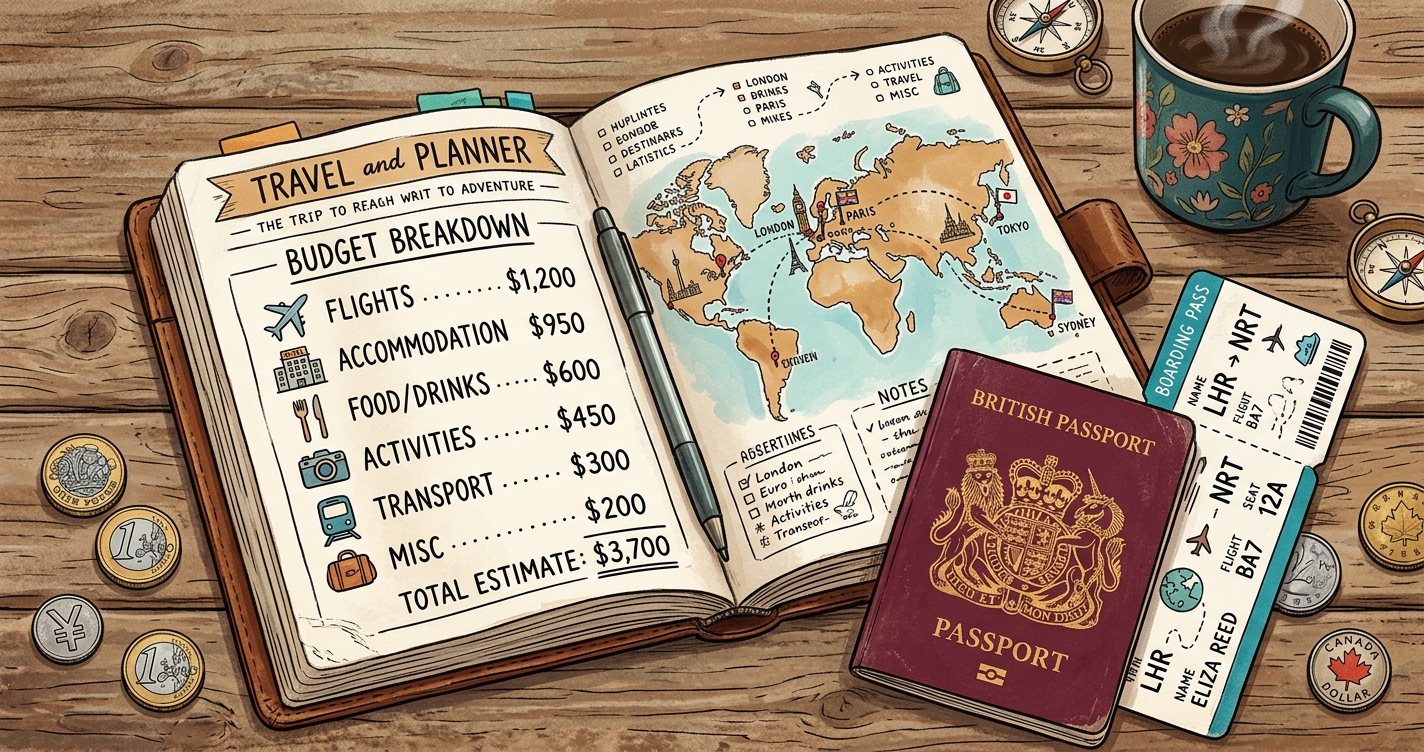
Planning a trip is exciting, but the financial aspect can often feel daunting. As we look ahead to 2026, the global landscape of travel costs continues to evolve, making accurate budgeting more critical than ever. Whether you're dreaming of a romantic getaway, a family adventure, or a solo expedition, understanding and estimating your expenses upfront is the key to a stress-free and truly valuable experience. This comprehensive guide, informed by AZTrav's proprietary analysis of verified daily costs across 30+ destinations for 2024–2026 and current industry data, will walk you through everything you need to know to create a precise travel cost estimator for any trip in 2026, ensuring you get the most out of every dollar and achieve maximum travel value. While our insights are based on the latest available data, please note that market conditions can change rapidly, and specific prices should always be verified at the time of booking.
Introduction: Why Your 2026 Travel Budget Needs a Smart Estimator
The allure of new horizons remains strong. A recent IPX1031 report, published in 2026, indicates that a remarkable 93% of Americans are planning to travel in 2026. For nearly half of these individuals (49%), travel is a top financial priority. This widespread enthusiasm for travel, however, comes with a growing awareness of costs. SIXT's 2026 research highlights that 71% of Americans are actively budgeting for their 2026 travel, underscoring a collective concern for managing expenses amidst rising prices and dynamic market conditions, including inflationary pressures, fluctuating demand, and the complexities of yield management strategies employed by travel providers.
The Resurgence of Travel: A 2026 Outlook
After a period of unprecedented disruption, global travel is not just back; it's booming. The pent-up demand, accumulated during periods of restricted movement, has translated into a robust desire for exploration and new experiences. Americans are not just traveling more; they're also expecting to spend more. The average anticipated travel expenditure for 2026 is $6,354, representing a 12% increase from 2025, according to the IPX1031 2026 Travel Outlook Report. This surge in both desire and expected spending, driven by factors like increased consumer demand, supply chain constraints impacting operational costs, and persistent inflationary pressures across various sectors, necessitates a more sophisticated approach to financial planning and a reliable travel cost estimator.
Why Accurate Budgeting is More Critical Than Ever
Navigating the complexities of modern travel costs without a clear financial roadmap can lead to unwelcome surprises, overspending, and even debt. With rising prices across various sectors of the travel industry—from aviation fuel and hospitality labor to increased operational expenses—a reliable travel cost estimator isn't just a convenience; it's an essential tool for financial prudence. It empowers you to make informed decisions, prioritize experiences that align with your values, and avoid the pitfalls of unforeseen expenses. Our goal at AZTrav is to equip you with the knowledge and tools, like our free, proprietary trip cost estimator tool at aztrav.com/estimate, which leverages our extensive daily cost data and market trend analysis, to plan your 2026 adventures with confidence and precision, ensuring your travel memories are joyful, not financially burdensome. While our estimator provides comprehensive projections, final costs are subject to real-time market fluctuations and dynamic pricing models.
The Evolving Landscape of Travel Costs in 2026: What to Expect
Understanding the broader economic forces at play is crucial for any effective travel cost estimator. 2026 is shaping up to be a year where travelers will need to be particularly vigilant about price fluctuations, inflationary pressures, and the impact of supply and demand dynamics across the travel sector. These factors influence everything from flight availability and airline yield management strategies to hotel rates and local activity pricing, often driven by a combination of fixed and variable operational costs.
Inflationary Pressures and Rising Prices
The first three months of 2026 saw the average trip cost reach $7,257, marking the highest average spend in 23 years, according to an analysis by Squaremouth, a leading travel insurance marketplace. This significant increase reflects ongoing inflationary pressures impacting the travel sector, alongside strong consumer demand that outpaces available supply. The U.S. Travel Association's Travel Price Index (TPI) for March 2026, which measures the average change over time in the prices paid by urban consumers for travel-related goods and services, further illustrates this trend, showing a 5.8% year-over-year increase and a 2.8% rise from February to March 2026. These figures indicate broad price surges across various travel components, from transportation to lodging and activities, driven by factors such as increased labor costs, energy price volatility, and supply chain disruptions, making a detailed travel cost estimator indispensable for managing your budget effectively.
Key Cost Drivers: Flights, Lodging, and Beyond
When it comes to specific expenses, certain categories are seeing more pronounced increases due to a combination of demand, fuel costs, labor shortages, and operational expenses. Airline fares, for instance, rose 14.9% compared to March 2025, continuing an upward trend that began in late 2025, as reported by the U.S. Travel Association. This is often driven by higher aviation fuel prices, increased labor costs for pilots and crew, and airlines' dynamic revenue management strategies that adjust pricing based on seat availability, booking patterns, and competitor pricing. Gas prices also surged, increasing 19.2% year-over-year and a substantial 21.5% from February to March 2026, impacting road trips and car rentals significantly. Hotel prices, after some earlier declines, rose 2.1% year-over-year in March 2026, reflecting renewed demand, increased operational costs (including staffing, utilities, and property maintenance), and the widespread implementation of mandatory resort fees in many popular destinations.
Travelers themselves are most concerned about these primary categories. SIXT's 2026 research highlights that 46% of travelers are worried about flight costs, 31% about lodging, and 9% each about food and dining, and activities and entertainment. These top concerns underscore the need for a granular approach to budgeting, ensuring your travel cost estimator accounts for these significant expenditures and allows for strategic planning to mitigate their impact, such as booking during shoulder seasons, leveraging loyalty programs, or exploring alternative booking channels.
Deconstructing Your Trip: The Core Components of a Travel Budget
To build an accurate travel cost estimator, you must break down your trip into its fundamental financial components. Each category holds unique variables that can significantly impact your overall budget. Drawing upon AZTrav's proprietary analysis of verified daily costs across 30+ destinations for 2024–2026, our team has developed a deep understanding of these components and their typical fluctuations, allowing for more precise estimation and insight into underlying cost drivers.
Transportation: Flights, Fuel, and Local Transit
Transportation often represents one of the largest budget items, influenced by fuel prices, demand elasticity, airline revenue management strategies, and ground transportation operational costs. This category includes:
- Airfare: While global airfares are expected to rise only 1.1% in 2026, according to the Global Business Travel Association (GBTA), individual routes can see significant fluctuations based on airline revenue management strategies, demand, seasonality, and booking timing. Airlines use complex algorithms to adjust prices in real-time based on factors like seat availability, competitor pricing, historical booking patterns, and the perceived willingness-to-pay of different traveler segments. Basic economy fares, in particular, often unbundle services like checked baggage, seat selection, and even full-sized carry-on bags, leading to additional ancillary fees that can quickly negate initial savings.
- Car Rentals: With gas prices surging 19.2% year-over-year as of March 2026, factoring in fuel costs is critical, especially for road trips. Rental car rates themselves can vary widely based on vehicle type, rental duration, pickup/drop-off location, seasonal demand, insurance options, and local taxes. Always review the rental agreement for hidden fees like additional driver charges, young driver surcharges, one-way rental fees, and mandatory fuel purchase options.
- Public Transport: Buses, trains, subways, and ferries offer cost-effective ways to get around in many destinations. Researching multi-day passes, local fare structures, or city transit cards (e.g., Oyster card in London, MetroCard in NYC) can lead to significant savings compared to single-ride tickets, especially for extended stays.
- Ride-Shares & Taxis: Convenient but can add up quickly, particularly in high-demand areas, during peak hours, or with surge pricing mechanisms. Always check estimated fares before confirming a ride, and consider dynamic pricing models during adverse weather or major events.
- Other: Consider often-overlooked costs like airport transfers (shuttles, express trains), road tolls (which can be substantial in some regions), parking fees (especially in urban centers or at hotels), and inter-city bus or train tickets for longer distances.
Accommodation: Hotels, Rentals, and Alternative Stays
Your choice of lodging dramatically influences your budget. Global hotel rates are projected to increase by 4.9% in 2026, according to GBTA, making careful selection important. Options include:
- Hotels: Ranging from budget-friendly chains to luxury resorts. Remember to factor in potential mandatory resort fees (common in many tourist areas for amenities like Wi-Fi, gym access, or pool towels), which are often not included in the initial quoted room rate and can add $20-$50+ per night. Also, account for local occupancy taxes or tourism taxes, which are typically a percentage of the room rate and collected upon checkout, reflecting local government levies.
- Vacation Rentals: Platforms like Airbnb and Vrbo can offer more space and amenities, especially for families or longer stays. However, cleaning fees (a one-time charge per booking), service charges (platform fees), and refundable security deposits (which temporarily tie up funds) can add substantially to the total cost. Always review the full breakdown before booking to understand the all-inclusive price.
- Hostels: Ideal for solo travelers or those on a tight budget, offering dorms or private rooms at lower price points. Many now offer modern amenities, private bathrooms, and social atmospheres, moving beyond the traditional basic dormitory experience to cater to a broader demographic.
- Alternative Stays: Options like camping, house-sitting, or staying with friends/family can drastically reduce accommodation costs, offering unique experiences and deeper cultural immersion, often with minimal financial outlay.
Food & Dining: From Fine Dining to Groceries
Food is a daily expense that can be highly variable. While 9% of travelers cite food and dining as a top concern (SIXT's 2026 research), strategic planning can help manage these costs:
- Restaurant Meals: Fine dining, casual restaurants, and fast food all have different price points. Consider seeking out local eateries away from primary tourist traps for better value and more authentic culinary experiences. Research average meal costs for your destination using online reviews, local food blogs, or cost-of-living databases like Numbeo.com.
- Groceries for Self-Catering: If your accommodation has a kitchen or kitchenette, buying groceries from local markets and preparing some meals (especially breakfast and lunch) can lead to significant savings. This also allows for dietary control and experiencing local produce and culinary traditions.
- Snacks and Drinks: These small, frequent purchases can accumulate rapidly. Carrying a reusable water bottle and packing some non-perishable snacks can help curb these incidental expenses, especially when exploring or during transit.
- Coffee & Alcohol: Daily lattes, evening cocktails, or wine with dinner can add up quickly, particularly in high-cost destinations. Consider happy hour specials, purchasing alcohol from grocery stores, or opting for local, less expensive alternatives.
Activities & Entertainment: Experiences That Count
This category covers the heart of your travel experiences. Like food, 9% of travelers are concerned about activity costs (SIXT's 2026 research). A good travel cost estimator includes:
- Tours & Excursions: Guided tours, day trips, specialized workshops (e.g., cooking classes, craft workshops), and adventure activities (e.g., scuba diving, safaris, trekking). Always check what's explicitly included in the price (e.g., meals, transport, entrance fees, equipment rental) to avoid hidden costs.
- Entrance Fees: Costs for museums, historical sites, national parks, theme parks, concerts, and other attractions. Consider city passes or bundled tickets for potential savings if you plan to visit multiple sites, and verify if student, senior, or family discounts are available with valid identification.
- Special Events: Tickets to shows, festivals, sporting events, or temporary exhibitions. Book these well in advance, especially for high-demand events, as prices can increase closer to the date.
- Spontaneous Entertainment: Allocate a small daily fund for unexpected opportunities, like a spur-of-the-moment decision to try a local performance, purchase a unique souvenir from a street vendor, or enjoy an impromptu local experience. This buffer provides flexibility without derailing your core budget.
Pre-Trip Essentials: Insurance, Visas, and Gear
These often-overlooked expenses are crucial for a smooth, safe, and legally compliant trip:
- Comprehensive Travel Insurance: Essential for covering medical emergencies, trip cancellations/interruptions (for covered reasons like illness or severe weather), lost luggage, emergency medical evacuation, and other unforeseen events. Policies vary widely in coverage and cost based on factors like traveler age, trip duration, destination, and pre-existing conditions. Always read the Policy Wording (or Certificate of Insurance) carefully to understand deductibles, exclusions, coverage limits, and the specific conditions under which claims are honored.
- Visa Applications: Many countries require visas for entry, and the associated fees can range from minimal to substantial, depending on your nationality and destination. Always check official government websites (e.g., embassy or consulate sites) well in advance of your trip for the most up-to-date requirements and fees, as these can change without notice and often require processing time.
- Necessary Gear: New luggage, specific clothing for the climate (e.g., cold weather gear, hiking boots), specialized camera equipment, or travel adapters. Factor in these one-time purchases if your existing gear isn't suitable or needs upgrading.
- Vaccinations: Required for certain destinations to protect against diseases, and these can be costly depending on your insurance coverage and local health services. Consult your doctor or a travel clinic well before departure to determine necessary immunizations and their costs.
- Pet Care: If you're leaving a pet behind, boarding or pet-sitting costs need to be factored into your overall travel budget, as these can be significant for extended periods.
These categories form the backbone of any accurate travel cost estimator, requiring granular consideration to ensure no expense is left unaccounted for and to provide a realistic financial picture. AZTrav's estimator helps you track these diverse components for a holistic budget, providing a framework for detailed financial planning.
Building Your Personalized Travel Cost Estimator: A Step-by-Step Guide
Now that you understand the components, let's build your personalized travel cost estimator. This practical, step-by-step approach will help you create a realistic budget tailored to your specific travel style, destination, and financial comfort zone, leveraging both general insights and granular detail.
Step 1: Define Your Travel Style and Destination
Your travel style is the foundation of your budget, directly influencing daily expenditures. Are you a:
- Budget Traveler: Prioritizing hostels, street food, and free activities? While some individuals manage to live on $50 a day or less in various cities worldwide, a more realistic baseline for basic, inclusive, and sustainable travel in 2026 is around $150 USD per person per day, according to renowned budget travel expert Nomadic Matt, writing in 2023. This baseline accounts for reasonable comfort and safety, moving beyond extreme low-cost travel that might compromise these aspects.
- Mid-Range Traveler: Looking for comfortable 3-star hotels, a mix of dining experiences (some self-catering, some casual restaurants), and a few paid tours? This style balances comfort with cost-effectiveness, often seeking value-for-money propositions.
- Luxury Traveler: Seeking five-star accommodations, fine dining, private transfers, and exclusive experiences? Your daily budget will be significantly higher, often exceeding $500-$1000+ per person per day in high-cost destinations, reflecting premium service and amenities.
- Slow Traveler: Spending longer periods in one place, potentially reducing daily costs through longer-term vacation rentals, self-catering, and deeper immersion in local life? This approach often yields better value for money over time due to reduced per-day accommodation costs and local living expenses.
- Adventure Seeker: Focused on activities like diving, trekking, safaris, or extreme sports, which often come with specialized gear, permits, and higher guide fees? Ensure your budget reflects these specialized costs and appropriate, often enhanced, travel insurance coverage.
Once your style is clear, choose your destination. Research its general cost of living and typical tourist expenses. For instance, a week in Tokyo will have a vastly different price tag than a week in Chiang Mai, even for the same travel style, due to differences in economic development, local pricing structures, and currency exchange rates.
Step 2: Research and Estimate Core Costs (Transportation & Accommodation)
These are often the largest fixed costs and should be tackled first, as they typically represent a significant portion of your total budget. Prices for these categories are highly dynamic and can change in real-time due to market demand and provider yield management systems.
- Flights:
- Use flight comparison websites (e.g., Google Flights, Skyscanner, Kayak) to get a broad overview of prices. These aggregators pull data from various airlines and online travel agencies (OTAs), but always cross-reference.
- Be flexible with your dates. Flying mid-week (Tuesday-Thursday) or during the shoulder season (just before or after peak season) can significantly reduce costs due to lower demand.
- Consider alternative airports. Sometimes flying into a smaller, nearby airport and taking ground transport can be cheaper than flying directly into a major hub, even with the added transfer cost.
- Browse in incognito or private browsing mode to mitigate dynamic pricing based on your search history, which some websites may employ to influence purchasing behavior.
- Set price alerts for your desired routes to be notified of fare drops. Airlines often have "sweet spots" for booking, typically 1-3 months out for domestic and 2-8 months for international flights, but this can vary by route and airline revenue management strategies.
- Accommodation:
- Compare prices across multiple booking sites (e.g., Booking.com, Expedia, direct hotel websites) to find the best deals. Sometimes direct bookings offer loyalty perks, better cancellation policies, or exclusive packages not available elsewhere.
- Read recent reviews to understand value for money, potential hidden fees (like mandatory resort fees), and the actual quality of the stay, which can impact your overall experience.
- Consider different types of lodging (hotel, hostel, vacation rental) based on your travel style and group size. For families or longer stays, vacation rentals can offer better value and amenities like kitchens.
- Factor in the length of your stay; longer stays in vacation rentals can sometimes offer weekly or monthly discounts, reducing the average nightly rate.
Input these initial, often significant, estimates into your travel cost estimator to establish your baseline budget. Remember that these prices are subject to change until booked and confirmed, and always verify the final price breakdown before payment.
Step 3: Calculate Daily Expenses (Food, Activities, Local Transport)
This is where your travel style truly dictates your budget, as these costs are highly variable. Based on expert insight, a realistic baseline for basic, inclusive travel in 2026 is around $150 USD per person per day (Nomadic Matt, 2023). However, this can fluctuate wildly based on destination and personal choices.
- Food:
- Research average meal costs in your destination. A quick search for "cost of a meal in [city]" or checking local restaurant menus online can give you a starting point. Websites like Numbeo.com can also provide valuable cost-of-living data for various cities worldwide.
- Plan for a mix: perhaps one restaurant meal, one self-catered meal, and snacks each day to balance cost and experience, allowing for both culinary exploration and budget control.
- Allocate specific funds for coffee, drinks, and occasional treats or indulgences, as these small purchases can quickly add up over the course of a trip.
- Activities:
- List all must-do activities and their estimated entrance fees or tour costs. Verify prices on official attraction websites, looking for any potential discounts or bundled offers.
- Identify free attractions (e.g., public parks, free walking tours, public beaches, free museum days) to incorporate into your itinerary, balancing paid experiences with no-cost exploration.
- Allocate a daily "fun money" amount for spontaneous activities, small souvenirs, or unexpected opportunities, providing flexibility within your budget.
- Local Transport:
- Estimate daily public transport costs (e.g., subway passes, bus tickets) or the average cost of a few ride-share trips. Many cities offer multi-day passes that can be more economical than single tickets for frequent use.
- If renting a car, factor in all associated costs, including fuel, parking fees, and potential tolls. Use online maps to estimate driving distances and potential toll roads for accurate budgeting.
Multiply your estimated daily expenses by the number of days you'll be traveling to get a total for this category. Remember to adjust for each traveler if you are a group, as per-person costs can vary.
Step 4: Factor in Pre-Trip and Contingency Costs
Don't forget these essential, often-overlooked expenses and the crucial buffer for the unexpected:
- Pre-Trip Expenses:
- Travel insurance premiums (which can vary based on coverage level, duration, destination, and traveler age). A comprehensive policy is highly recommended for financial protection.
- Visa application fees or electronic travel authorization (ETA) costs. Always check the official government website of your destination for current requirements and fees, as these can change.
- Vaccinations or medical check-ups required for your destination, which may not be fully covered by your regular health insurance.
- New luggage, travel adapters, specialized clothing, or other necessary gear that you don't already own.
- Pet care or house-sitter fees if applicable, which can be a significant cost for extended trips.
- Contingency Fund:
- Always allocate an extra 10-15% of your total budget for unexpected expenses. This crucial buffer could cover a missed flight, a medical emergency, a spontaneous splurge, a sudden currency fluctuation, or simply underestimating a particular category. A robust contingency fund is a hallmark of responsible travel planning and provides invaluable peace of mind, mitigating financial stress from unforeseen circumstances.
Adding a contingency fund is a hallmark of a robust travel cost estimator, providing peace of mind and financial flexibility in the face of unforeseen circumstances, ensuring your trip remains enjoyable even if minor issues arise.
Step 5: Consolidate and Refine Your Estimate
Bring all your figures together. You can use a simple spreadsheet, a dedicated budgeting app, or our free, proprietary travel cost estimator at aztrav.com/estimate. Review each category meticulously:
- Are the estimates realistic given current market conditions, your chosen travel style, and the specific economic factors of your destination?
- Are there areas where you can cut back without significantly compromising your experience, or where you might need to allocate more funds based on your priorities? For instance, perhaps you can opt for public transport more often to save on ride-shares, or allocate more to a unique tour you've always wanted to do.
- Does the total align with your overall financial goals for 2026 travel and your savings capacity? Is it a sustainable budget that won't lead to financial strain or debt?
Refine as needed. This iterative process ensures your personalized travel cost estimator is as accurate and actionable as possible, giving you a clear financial picture before you even book your first flight and empowering you to make informed decisions throughout your planning process. Remember to regularly check for price changes on major bookings until they are confirmed, as dynamic pricing is prevalent in the travel industry.
Uncovering Hidden Costs and Overlooked Expenses That Derail Budgets
Even the most diligent planners can be caught off guard by hidden fees. AZTrav's extensive industry analysis of travel costs frequently highlights that these often-overlooked expenses are significant content gaps in many basic estimators. A truly comprehensive travel cost estimator must anticipate and account for them to prevent budget overruns and ensure financial transparency.
Airline Fees: Beyond the Base Fare
The advertised flight price is rarely the final price. Budget airlines, in particular, are notorious for "unbundling" services, charging separately for items traditionally included in the fare, a key component of their ancillary revenue strategy. Forbes, in a 2023 article, highlights how these fees can quickly negate initial savings. Watch out for:
- Baggage Fees: Both checked and carry-on bags often incur charges, especially on basic economy fares. Some airlines even charge for a full-sized carry-on that fits in the overhead bin, distinguishing it from a smaller personal item, forcing travelers to pay for what was once standard.
- Seat Selection Fees: Want to pick your own seat, especially to sit with a travel companion or secure a window/aisle? That'll cost you, often ranging from $10-$50 per segment, depending on the airline, route, and seat location (e.g., exit row premiums).
- Priority Boarding: An extra charge to board earlier and secure overhead bin space, a common tactic to monetize convenience and avoid the risk of gate-checking your carry-on due to limited space.
- In-Flight Meals & Drinks: Unless you're flying a full-service carrier on a long-haul international route, expect to pay for food and even non-alcoholic beverages, which can be significantly marked up.
- Change/Cancellation Fees: If your plans shift, these fees can be substantial, often costing more than the original ticket, though some airlines have relaxed these for certain fare classes or during specific periods. Always review the fare rules and flexibility options before booking.
- Credit Card Surcharges: Some airlines or booking sites add a fee for paying with a credit card, particularly for international bookings or specific payment processors, which can be a percentage of the total fare.
Always read the fine print and review the "fare rules" when booking flights to incorporate these potential ancillary costs accurately into your travel cost estimator. A robust estimator should prompt you to consider these add-ons for a true all-inclusive price.
Accommodation Surprises: Resort Fees and Taxes
Hotels and vacation rentals can also spring hidden charges, significantly impacting your nightly rate and overall budget:
- Resort Fees: Mandatory daily fees charged by many hotels, especially in popular tourist destinations (e.g., Las Vegas, Florida, Hawaii). These are supposedly for amenities like Wi-Fi, gym access, or pool towels, but are often not included in the initial quoted room rate and can add $20-$50+ per night. They are typically non-negotiable and are a major source of guest frustration.
- City/Tourist Taxes: Many cities levy a per-night tax, often called an occupancy tax or tourism tax, which may not be included in your pre-paid booking and is collected upon checkout. The percentage or flat fee varies by destination and contributes to local tourism infrastructure.
- Energy Surcharges: Less common but can appear, particularly in regions with high utility costs or during peak demand, covering increased operational expenses related to energy consumption.
- Cleaning Fees: For vacation rentals, cleaning fees can be significant, sometimes equaling the cost of an extra night's stay, and are typically a one-time charge per booking. These are almost always non-negotiable and cover the cost of preparing the property for the next guest.
- Security Deposits: Vacation rentals often require a refundable security deposit, which ties up funds temporarily and should be accounted for in your cash flow planning, as it can be a substantial amount, sometimes hundreds of dollars.
Always review the "total price" breakdown before confirming any accommodation booking, and factor these into your travel cost estimator to avoid surprises upon arrival or checkout, ensuring you understand the true cost of your stay.
Financial Fees: Foreign Transactions and ATMs
How you handle money abroad can also impact your budget through various banking and currency exchange fees, which are often overlooked until they appear on your statement:
- Foreign Transaction Fees: Most credit and debit cards charge a 1-3% fee on every purchase made in a foreign currency. Look for travel-specific credit cards that explicitly waive these fees, as they can save you a significant amount over a trip, especially for frequent purchases.
- ATM Withdrawal Fees: You might face a fee from your own bank for using an out-of-network ATM, plus a separate fee from the foreign ATM operator. Withdrawing larger sums less frequently can help minimize these cumulative charges. Consider using a debit card from a bank that reimburses foreign ATM fees to avoid these costs entirely.
- Dynamic Currency Conversion (DCC): When paying with a card or withdrawing cash, you might be asked if you want to pay in local currency or your home currency (e.g., USD). Always choose local currency; merchants using DCC often apply inflated exchange rates (often 5-10% higher than the interbank rate), costing you more (Forbes, 2023). This is a common tactic to profit from currency exchange.
Proactive planning with your bank and credit card providers before your trip can help you minimize these often-overlooked financial fees, ensuring your travel cost estimator is truly comprehensive and your money goes further.
Visa Requirements and Entry Fees
Depending on your nationality and destination, you may need a visa, which comes with an application fee. Some countries also have:
- Entry Permits: Electronic travel authorizations (ETAs) or similar permits (e.g., ESTA for the U.S., eTA for Canada) that carry a small fee and are typically required before departure. These are usually simpler and quicker to obtain than full visas but are still mandatory.
- Exit Taxes: A fee paid upon departure from a country, sometimes included in your flight ticket but occasionally collected separately at the airport, often in local currency.
Always check the official government website of your destination (e.g., embassy or consulate sites) well in advance of your trip for the most up-to-date requirements and fees. These regulations can change, and failure to comply can result in denied entry or significant delays, incurring further unexpected costs.
The True Cost of Comprehensive Travel Insurance
Travel insurance is not a luxury; it's a necessity for mitigating financial risks. However, understanding its nuances is key to selecting appropriate coverage and budgeting accurately:
- Basic vs. Comprehensive: A basic policy might only cover medical emergencies, while a comprehensive plan includes trip cancellation/interruption (for covered reasons like illness or severe weather), lost luggage, emergency medical evacuation, and more. The cost difference can be significant, but so is the peace of mind and financial protection it offers.
- Pre-Existing Conditions: Many standard policies exclude pre-existing medical conditions unless you purchase a specific waiver or upgrade within a certain timeframe of your initial trip deposit. This is a critical consideration for many travelers, requiring careful review of policy terms.
- Activity Coverage: If you plan on adventure sports (e.g., scuba diving, skiing, mountaineering), ensure your policy explicitly covers these activities, as they are often excluded from standard plans. You may need an add-on or specialized policy to ensure adequate protection.
- Deductibles: Be aware of any deductibles you'll need to pay out-of-pocket before your insurance coverage kicks in for a claim. Higher deductibles typically mean lower premiums, but also higher out-of-pocket expenses in case of a claim.
Reading the fine print (the Policy Wording or Certificate of Insurance) is paramount to ensure you have adequate coverage for your specific trip and that your travel cost estimator reflects this essential expense accurately. Consider consulting an independent insurance broker for personalized advice tailored to your travel plans and health profile.
Leveraging Technology: AI and Online Travel Cost Estimators for 2026
The digital age has revolutionized travel planning, and 2026 is seeing a significant leap forward with the integration of artificial intelligence. These advanced tools can dramatically enhance the precision and efficiency of your travel cost estimator, offering insights and automation previously unavailable.
The Rise of AI in Travel Planning and Budgeting
AI is no longer a futuristic concept; it's a practical tool for today's travelers. SIXT's 2026 Travel Trends report reveals that 30% of Americans will use AI for travel planning in 2026. Among these users, a significant 48% specifically leverage AI for budgeting or estimating trip costs. This trend highlights AI's growing role in helping travelers navigate complex pricing structures, personalize their financial planning, and make data-driven decisions by processing vast amounts of information rapidly.
How AI tools can assist your travel cost estimator:
- Real-Time Data Integration: AI algorithms can pull live pricing data for flights, hotels, car rentals, and even local activities from countless sources, providing highly accurate estimates that react instantly to market changes, seasonality, and demand fluctuations. This goes beyond static averages by incorporating current market dynamics and provider yield management.
- Personalized Recommendations: Based on your past travel preferences, budget constraints, desired experiences, and even loyalty program affiliations, AI can suggest cost-saving alternatives, optimal booking windows, or destinations that offer better value tailored to your profile, optimizing for both cost and experience.
- Price Comparison & Prediction: AI algorithms can rapidly compare prices across countless providers, identifying the best deals. Advanced AI can also analyze historical data and current trends to predict future price movements for flights and hotels, advising when to book for maximum savings and mitigating the impact of dynamic pricing.
- Dynamic Budget Adjustments: As you make bookings or track expenses, some AI-powered tools can automatically update your budget, tracking your spending against your initial estimate and alerting you to potential overruns in real-time, allowing for proactive financial management.
- Cost-Saving Suggestions: AI can analyze your itinerary and suggest cheaper transport options, alternative activities, or even recommend less expensive dining options based on local reviews, pricing data, and your stated preferences, optimizing your spending without sacrificing experience.
Top Online Tools and Their Features
While AI is still evolving, many online travel cost estimator tools and budgeting apps already offer robust features that can significantly aid your planning:
- AZTrav's Free Trip Cost Estimator (aztrav.com/estimate): Our proprietary tool allows you to input your destination, travel dates, and preferences to get a detailed breakdown of estimated costs for flights, accommodation, food, activities, and more. It leverages AZTrav's extensive analysis of verified daily cost data across numerous destinations (2024-2026) and integrates current market trends to provide granular, reliable projections, informed by deep industry expertise.
- Budgeting Apps (e.g., TripIt, Mint, YNAB): While not always exclusively travel-specific, these apps allow you to track expenses, categorize spending, and set financial goals, which can be effectively adapted for travel. TripIt, for instance, can organize itineraries and track expenses by importing booking confirmations, providing a consolidated view of your trip finances.
- Travel Planning Platforms with Budgeting Features (e.g., Kayak, Skyscanner, Google Flights): These platforms often have built-in price alerts, "explore" features to find affordable destinations based on your budget, and some level of budget tracking, especially for flights and hotels, providing a good starting point for core expenses and comparative analysis.
- Specialized Travel Budgeting Tools (e.g., Trail Wallet, TravelSpend): Designed specifically for travelers, these apps offer features like multi-currency support, intuitive expense categorization, and visual reports to help you stay on budget while abroad, often allowing for offline expense tracking and detailed financial insights on the go.
Many of these tools also offer multi-city planning, expense tracking, and even carbon footprint calculations, adding layers of value and functionality to your travel planning process, reflecting a holistic approach to modern travel.
Limitations and Best Practices for Digital Estimators
While powerful, AI and online tools are not infallible. It's crucial to integrate their insights with your personal research and informed judgment for the most accurate and dynamic estimates:
- Data Accuracy & Currency: AI relies on the data it's fed. While generally robust, always cross-reference critical prices (especially for major bookings like flights and hotels) with direct sources or multiple platforms. Prices can change rapidly, and an AI model's data might have a slight lag, particularly for niche or rapidly fluctuating markets.
- Personalization vs. Generalization: AI can personalize, but it might not perfectly capture your unique travel style, spontaneous decisions, or highly niche preferences. Human intuition about a destination's vibe, local cost drivers, and personal priorities remains invaluable, as AI models are still developing true contextual understanding.
- Hidden Fees: While improving, some AI tools might still miss obscure hidden fees (like specific resort fees, local tourism taxes, or less common airline surcharges) that require manual verification by checking the fine print of bookings and understanding local regulations.
- Human Judgment is Key: Use AI as a powerful assistant and data aggregator, not a complete replacement for your own research and decision-making. Your understanding of your own priorities, risk tolerance, and on-the-ground observations is essential for a truly personalized and effective budget, ensuring the technology serves your travel goals.
By combining the efficiency of technology with your own informed judgment, you can create a truly robust and reliable travel cost estimator for 2026, maximizing both savings and experience through a balanced approach.
Debunking Common Travel Budgeting Myths for 2026
Misconceptions about travel costs can lead to inaccurate budgeting, unexpected financial strain, and missed opportunities. AZTrav's extensive research into daily travel costs and market trends frequently encounters these myths. Let's set the record straight for 2026 with insights from industry experts and our own data analysis.
Myth: All Travel is Inherently Expensive
Reality: While travel can certainly be costly, it's a misconception that it's always an expensive endeavor. It is entirely possible to travel on a budget. Nomadic Matt, a renowned budget travel expert writing in 2023, points out that some individuals manage to live on $50 a day or less in various cities worldwide. This involves making intentional choices like staying in hostels, eating local street food, utilizing free attractions, and traveling during the off-season. The key is intentional planning and embracing a budget-friendly travel style, which our travel cost estimator can help you achieve by identifying affordable destinations and cost-saving strategies tailored to your financial capacity, proving that travel accessibility is often a matter of strategic choice.
Myth: Booking the Cheapest Fare Always Saves Money
Reality: This is a common trap, especially with budget airlines and basic economy fares. While the initial advertised fare might be enticingly low, hidden ancillary fees for luggage (checked and even full-sized carry-on), seat selection, priority boarding, and in-flight meals can quickly add up. Forbes, in a 2023 article, highlights how these additional charges can often negate any initial savings, potentially making the "cheapest" fare more expensive than a full-service carrier that includes these amenities. Always calculate the total cost, including all potential fees and desired services, before booking to get the true, all-inclusive price, understanding the airline's unbundling strategy.
Myth: DIY Travel Booking is Always the Cheapest
Reality: While direct booking can sometimes offer competitive rates, it's not universally the cheapest option, especially for complex itineraries, group travel, or business travel. As Engine, a business travel data provider, points out in its 2026 analysis, the time spent managing itineraries, changes, and potential disruptions can be significant. Travel management companies (TMCs) or experienced travel agents often have access to exclusive discounts, bundled deals, corporate rates, and better inventory that aren't available to the general public. They can also streamline processes, provide 24/7 support, and offer expertise in navigating cancellations or rebookings, potentially saving you money and considerable stress in the long run, particularly for intricate or high-value trips where their professional negotiation and support services add significant value.
Myth: Booking Months in Advance Guarantees the Best Price
Reality: While early booking is often wise for popular dates, peak seasons, or specific international routes, it doesn't always guarantee the absolute lowest airfare. Forbes, in 2023, notes that the "sweet spot" for airfare prices can sometimes be closer to the travel date, perhaps six to seven weeks before a domestic flight, or a few months for international. Airlines often utilize complex revenue management systems, releasing deals to fill remaining seats as the departure date approaches. Flexibility with your travel dates and using price alerts with your travel cost estimator are your biggest assets here to identify optimal booking times, rather than simply booking as early as possible.
Myth: Duty-Free Shopping Offers Universal Savings
Reality: The allure of duty-free shopping at airports or border crossings is strong, but the savings aren't always what they seem. While certain items like alcohol and cigarettes often offer genuine savings due to tax exemptions, prices for other goods (perfumes, electronics, souvenirs, luxury items) can sometimes be higher than at regular retailers, online stores, or even local shops at your destination. This is because duty-free prices are often set to compete with local, taxed prices, not necessarily the lowest market price globally. It's always wise to know the typical price of an item before assuming a duty-free discount; comparison shopping is key to ensuring actual savings.
Myth: The 'Backpacker Myth' of Extremely Low Daily Costs Still Holds True
Reality: While it's still possible to travel on a shoestring, the romanticized "backpacker myth" of consistently living on a few dollars a day is largely outdated for sustainable, safe, and inclusive travel in 2026. Nomadic Matt, a long-time advocate for budget travel, clarified in 2023 that a realistic baseline for basic travel in 2026, ensuring reasonable comfort and safety, is around $150 USD per person per day. This accounts for reasonable accommodation, food, and activities, moving beyond extreme low-cost travel that might compromise comfort, safety, or ethical considerations, such as supporting exploitative tourism practices or sacrificing essential travel insurance.
By dispelling these common myths, you can build a more realistic and resilient travel cost estimator, avoiding common pitfalls and ensuring your budget truly reflects your travel aspirations and current market realities. AZTrav's data-driven insights help cut through these misconceptions, providing a clearer financial picture.
Smart Strategies to Optimize Your Travel Budget Without Sacrificing Experience
A smart travel cost estimator isn't just about tallying expenses; it's about finding ways to maximize value and enhance your experience within your financial comfort zone. Industry experts and experienced travelers recommend several key strategies that allow you to travel smarter, not just cheaper, ensuring memorable experiences without overspending.
Leveraging Loyalty Programs and Travel Rewards
One of the most effective ways to reduce out-of-pocket travel costs is by strategically utilizing loyalty programs and travel rewards, a significant area often overlooked in general travel advice:
- Credit Card Points & Miles: Sign up for travel rewards credit cards that offer generous sign-up bonuses and earn points on everyday spending. Use these points for flights, hotel stays, or even car rentals. Always pay your balance in full to avoid interest charges, which would quickly negate any savings and impact your credit score.
- Airline & Hotel Loyalty Programs: Join every airline and hotel loyalty program you use. Even infrequent travel can accumulate points that lead to upgrades, free nights, or discounts. Look for co-branded credit cards that offer elite status benefits, such as free checked bags, lounge access, or priority boarding, enhancing your travel experience and providing tangible value.
- Transfer Partners: Many flexible credit card rewards programs allow you to transfer points to various airline and hotel loyalty programs, often unlocking better value than redeeming directly through the card issuer's portal. Research transfer bonuses for even greater value, as these promotions can significantly boost your points' worth for high-value redemptions.
- Strategic Booking: Combine points and cash when booking, or look for promotions where loyalty programs offer bonus points for stays or discounted redemptions for flights. Monitor loyalty program emails for flash sales and limited-time offers that can maximize your reward value.
Consistently leveraging these programs can significantly lower the major costs in your travel cost estimator, turning everyday spending into future travel opportunities and enhancing your overall travel value through smart financial management.
Strategic Timing: Off-Peak and Shoulder Season Travel
Dynamic pricing means that *when* you travel can be as important as *where*. Avoiding peak season can lead to substantial savings and often a more enjoyable, less crowded experience:
- Off-Peak Season: Traveling during the lowest demand periods (e.g., winter in a beach destination, summer in a ski resort, or hurricane season in the Caribbean) offers the lowest prices for flights and accommodation. The trade-off might be less ideal weather or fewer open attractions, but the cost savings can be significant, often 30-50% lower than peak season.
- Shoulder Season: This is often the sweet spot—the periods just before or after peak season. You'll typically find pleasant weather, fewer crowds, and significantly lower prices than peak season. For example, visiting Europe in April/May or September/October offers a great balance of cost and experience, with comfortable temperatures and fewer tourists, providing optimal value.
- Mid-Week Travel: Flights and hotels are often cheaper on Tuesdays, Wednesdays, and Thursdays compared to weekends, due to lower business and leisure demand. Consider departing or returning on these days to capture savings and avoid peak travel surcharges.
Adjusting your travel dates by even a few days can drastically reduce the overall cost calculated by your travel cost estimator, allowing for longer trips or more activities within the same budget. AZTrav's estimator can help you compare costs across different date ranges to identify optimal timing.
Exploring Secondary Cities and Alternative Destinations
Major tourist hubs often come with major price tags due to high demand and established tourism infrastructure. Expanding your horizons can lead to more authentic experiences and better value:
- Secondary Cities: Instead of Paris, consider Lyon; instead of Rome, explore Bologna. These cities offer rich culture, delicious food, and often a more local feel at a fraction of the cost for accommodation, dining, and activities, without sacrificing quality or experience.
- Less-Traveled Regions: Explore countries or regions that are not yet on the main tourist trail. Prices for everything from food to accommodation will likely be lower, and you'll encounter fewer crowds, leading to a more immersive and authentic cultural experience.
- Emerging Destinations: Research destinations that are gaining popularity but haven't yet reached peak tourist saturation. These often offer excellent value as their tourism infrastructure develops, providing unique opportunities before they become mainstream and prices inevitably rise.
AZTrav continually analyzes market data and emerging trends to identify these value-driven destinations, providing insights that can help you adapt your travel cost estimator to find hidden gems and unique experiences that align with your budget and interests, fostering a more adventurous and cost-effective travel style.
Smart Spending on Food and Activities
Daily expenses for food and entertainment can quickly accumulate, but smart choices can keep them in check without sacrificing enjoyment:
- Cook Some Meals: If your accommodation has a kitchen or kitchenette, buying groceries from local markets and preparing a few meals (especially breakfast and lunch) can save a lot compared to eating out for every meal. This also allows you to experience local produce and dietary control.
- Local Eateries & Street Food: Seek out restaurants popular with locals rather than tourist traps. Prices are often lower, the food is more authentic, and it offers a genuine cultural experience. Embrace street food where safe and available, as it's often delicious and budget-friendly.
- Early Bird Specials/Lunch Deals: Many restaurants offer discounted menus during off-peak hours or for lunch, allowing you to experience fine dining at a lower price point than dinner, leveraging their dynamic pricing strategies.
- Free Attractions: Prioritize free activities like public parks, free walking tours, public beaches, free museum days (if available), and simply wandering through interesting neighborhoods. These offer rich cultural experiences without the cost, enhancing your exploration.
- Bundled Passes: For cities with many attractions, a city pass or multi-attraction ticket can offer significant savings if you plan to visit multiple sites. Always calculate if the pass genuinely saves you money based on your specific planned itinerary and the individual costs of each attraction, rather than assuming savings.
- Picnics: Grab local delicacies from a market or grocery store and enjoy a scenic picnic in a park or by a landmark, combining cost savings with a memorable experience and a taste of local life.
Adapting to Economic Pressures: Shorter, Closer Trips
With ongoing economic pressures and rising costs in 2026, sometimes the smartest strategy is to adjust the scope of your travel to align with your budget:
- Shorter Trips: A five-day trip will inherently be less expensive than a two-week trip. Focus on quality over quantity, making the most of a shorter, more intense experience, or exploring a single region in depth, maximizing the value of each day.
- Closer to Home: Explore domestic destinations or neighboring countries that require less expensive flights and offer familiar currency, reducing exchange rate concerns and potentially saving on international travel insurance. This can significantly reduce the overall cost footprint.
- Road Trips: While gas prices have surged, a road trip with multiple people sharing fuel costs can still be more economical than flying for shorter to medium distances, especially when factoring in baggage fees, airport transfers, and car rental costs for individual travelers. Plan routes to optimize fuel efficiency and avoid tolls where possible to further manage expenses.
These adaptive strategies ensure that even when budgets are tight, you can still enjoy meaningful travel experiences, effectively managed by your travel cost estimator, and aligned with your financial capacity. Flexibility is key to unlocking value and maintaining your travel aspirations.
Special Considerations: Business Travel, Sustainability, and Financial Health
Beyond leisure trips, a comprehensive travel cost estimator also needs to account for specialized scenarios and broader financial implications. AZTrav's expertise extends to understanding these nuanced aspects of travel budgeting, offering insights for diverse travel needs and responsible financial planning.
Estimating Business Travel Costs in 2026
Business travel is a significant economic driver, with global spending projected to reach $1.7 trillion in 2026, representing 8.1% year-over-year growth, according to the GBTA. U.S. corporate travel spending alone is projected at $320.6 billion in 2026. For companies and individual business travelers, accurate cost estimation and adherence to policy are paramount for expense management and budget reconciliation.
- Average Costs: Average business trip costs are projected to remain between $1,600 and $1,800 for 2026, as reported by Engine, a business travel data provider. This comprehensive figure typically includes flights, accommodation, ground transport, and meals, but can vary significantly by destination, industry, and the traveler's seniority level.
- GSA Per Diem Rates: The U.S. General Services Administration (GSA) sets per diem rates for federal employees on official travel within the Continental United States (CONUS). These rates, which cover lodging and Meals and Incidental Expenses (M&IE), are often mirrored by government contractors and can serve as useful benchmarks for corporate and personal budgeting.
- For Fiscal Year (FY) 2026 (October 1, 2025, through September 30, 2026), the standard lodging rate remains at $110 per day for most locations.
- The standard Meals and Incidental Expenses (M&IE) reimbursement rate remains at $68 per day, with tiered rates ranging from $68-$92 for higher-cost areas.
- The automobile mileage reimbursement rate for federal employees increased to 72.5 cents per mile, effective January 1, 2026, reflecting fuel cost fluctuations and vehicle operating expenses. (Source: U.S. General Services Administration (GSA), FY2026)
- Policy Adherence: For business travelers, adhering to company travel policies is crucial for expense approval and reimbursement. These policies often dictate preferred vendors, booking channels, class of service, and spending limits for various categories, ensuring cost control, compliance, and efficient financial governance.
- Expense Reporting: Efficient expense tracking and reporting systems are essential for timely reimbursement and accurate budget reconciliation for both the individual and the organization. Utilizing digital expense management platforms can streamline this process, reducing administrative burden and errors.
Our travel cost estimator can be adapted for business travel, providing a robust framework to align with corporate policies and GSA benchmarks, ensuring compliance and efficient financial management for organizations and their employees.
The Emerging Cost of Sustainable Travel
As environmental awareness grows, so does the demand for sustainable travel options. However, these choices can sometimes come with a higher price tag—a crucial content gap in many basic budget discussions. A responsible travel cost estimator should allow for these considerations, enabling travelers to make informed choices that align with their values.
- Eco-Friendly Accommodation: Certified eco-lodges or hotels with strong sustainability practices (e.g., renewable energy, waste reduction, local sourcing, water conservation, ethical labor practices) may sometimes be more expensive than conventional options due to their investments in environmentally responsible operations and rigorous certifications.
- Carbon Footprint Offsetting: Many airlines and travel companies offer options to offset your carbon emissions for a fee. While not mandatory, it's an ethical consideration for many environmentally conscious travelers to mitigate their impact by investing in projects that reduce greenhouse gases elsewhere, contributing to global climate efforts.
- Local & Ethical Experiences: Choosing local, fair-trade tours or supporting small, community-based businesses can sometimes be pricier than mass-market alternatives, but the value in terms of positive impact on local economies, authentic cultural immersion, and ethical labor practices is significant, fostering responsible tourism.
- Direct Flights: While often more expensive, direct flights generally have a lower carbon footprint than connecting flights due to fewer take-offs and landings, which are the most fuel-intensive phases of a flight. This presents a trade-off between cost and environmental impact, requiring a conscious decision.
Integrating these considerations into your travel cost estimator allows for a more holistic budget that reflects not just financial costs, but also personal values and environmental responsibility, promoting a more conscious approach to travel.
Avoiding Travel Debt: Responsible Financial Planning
The desire for travel is strong, but it shouldn't come at the cost of your financial health. IPX1031's 2026 Travel Outlook Report reveals a concerning trend: 17% of Americans say they would go into debt to pay for a vacation in 2026, with an average debt of $2,525. Furthermore, 15% have used Buy-Now, Pay-Later (BNPL) services for travel expenses, a trend that warrants careful consideration due to potential interest, late fees, and impact on credit scores.
- Save Upfront: The most responsible approach is to save for your trip in advance. Set a clear savings goal based on your travel cost estimator and contribute regularly to a dedicated travel fund, ensuring you travel within your means and avoid unnecessary debt.
- Realistic Budgeting: Be honest with yourself about what you can truly afford. Don't inflate your budget based on aspirational travel if it means going into debt or compromising other essential financial goals like retirement savings or emergency funds, which are critical for long-term financial stability.
- Understand BNPL: While BNPL offers payment flexibility, understand the repayment terms, potential interest or late fees, and how it impacts your credit score if payments are missed. It is still a form of debt that needs to be managed responsibly, with a clear plan for timely repayment, to avoid financial pitfalls.
- Emergency Fund: Ensure you have an emergency fund separate from your travel savings. This prevents unexpected life events (e.g., job loss, medical emergency) from forcing you into travel debt or derailing your financial stability, especially if travel plans are disrupted and non-refundable costs are incurred.
AZTrav strongly advocates for responsible financial planning. A well-constructed travel cost estimator is your first line of defense against travel debt, ensuring your memories are joyful, not financially burdensome, and promoting long-term financial well-being through prudent decision-making.
Conclusion: Your Passport to Smart Travel in 2026
As we navigate the exciting yet complex travel landscape of 2026, the importance of a robust travel cost estimator cannot be overstated. From understanding the macroeconomic shifts driving prices to meticulously breaking down every component of your trip, a well-planned budget is your ultimate tool for maximizing value and minimizing stress. We've explored the evolving costs of flights and hotels, delved into often-hidden fees, debunked common budgeting myths, and offered smart strategies to optimize your spending without sacrificing the quality of your experience. We've also highlighted how technology, particularly AI, is transforming the way we approach financial planning for our journeys, offering unprecedented insights and automation.
The AZTrav Editorial Team, leveraging extensive analysis of verified daily costs across 30+ destinations for 2024–2026, understands the nuances of travel budgeting firsthand. Our proprietary data models and market trend analysis inform the development of our free, proprietary trip cost estimator tool at aztrav.com/estimate, designed precisely to empower you with the clarity and control you need. By utilizing this tool and the comprehensive, data-driven insights shared in this guide, you can confidently plan any trip in 2026, ensuring every dollar contributes to an unforgettable adventure tailored to your financial comfort zone and travel aspirations.
Don't let financial uncertainties hold you back from exploring the world. Embrace the power of a comprehensive travel cost estimator, plan wisely, and embark on your next journey with peace of mind. Happy travels!
Frequently Asked Questions (FAQ)
What is a travel cost estimator and why do I need one for 2026?
A travel cost estimator is a tool or method used to predict the total expenses for a trip, covering everything from flights and accommodation to food, activities, and unforeseen costs. You need one for 2026 because travel costs are projected to increase, with the average trip cost reaching $7,257 in early 2026 (Squaremouth, 2026) and significant rises in airfares, gas, and hotel prices (U.S. Travel Association, March 2026). An estimator helps you budget accurately, avoid financial surprises, and make informed decisions amidst dynamic market conditions, including inflationary pressures and provider yield management strategies.
How much should I expect to spend on travel in 2026?
Americans expect to spend an average of $6,354 on travel in 2026, a 12% increase from 2025, according to the IPX1031 2026 Travel Outlook Report. However, this is an average. Your actual spending will depend heavily on your destination, travel style (budget, mid-range, luxury), duration, and how many people are traveling. A realistic baseline for basic, inclusive travel in 2026, ensuring reasonable comfort and safety, is around $150 USD per person per day, according to Nomadic Matt (2023), but this can fluctuate significantly.
What are the biggest cost concerns for travelers in 2026?
According to SIXT's 2026 Travel Trends report, the top cost concerns for travelers in 2026 are flights (46%), lodging (31%), and then food and dining (9%), and activities and entertainment (9%). These categories typically represent the largest portions of a travel budget and have seen significant price increases due to factors like demand elasticity, fuel costs, labor shortages, and inflation, making them key areas for careful budgeting.
How can AI help me with my travel cost estimator?
AI tools can significantly enhance your travel cost estimator by providing real-time data for flights and hotels, personalizing recommendations based on your budget and preferences, quickly comparing prices across multiple providers, and even suggesting cost-saving alternatives. SIXT reports that 30% of Americans will use AI for travel planning in 2026, with 48% of those specifically using it for budgeting and cost estimation, leveraging its ability to process vast data sets and predict market trends.
What are some common hidden costs I should include in my travel cost estimator?
Hidden costs can significantly impact your budget. Be aware of airline ancillary fees (baggage, seat selection, change fees), accommodation surprises (mandatory resort fees, city taxes, cleaning fees for rentals), financial fees (foreign transaction fees on cards, ATM withdrawal fees, dynamic currency conversion), and visa or entry fees for your destination. Always read the fine print and factor in a contingency fund of 10-15% for unexpected expenses to maintain financial flexibility.
Is it always cheaper to book flights months in advance?
Not always. While early booking is often recommended for popular dates or peak seasons, Forbes (2023) notes that the "sweet spot" for airfare prices can sometimes be closer to the travel date, such as six to seven weeks before a domestic flight, as airlines offer deals to fill seats. Flexibility with your travel dates and using price alerts can help you find the best deals by monitoring airline revenue management strategies, rather than assuming early booking is always cheapest.
How can I avoid going into debt for my 2026 vacation?
To avoid travel debt, prioritize saving upfront for your trip based on a realistic travel cost estimator. Be honest about what you can afford and avoid relying on credit cards or Buy-Now, Pay-Later (BNPL) services unless you have a clear, responsible plan for repayment. The IPX1031 2026 Travel Outlook Report indicates that 17% of Americans would go into debt for a vacation in 2026, with an average debt of $2,525, highlighting the importance of responsible financial planning and a dedicated travel savings fund to ensure your trip is financially sustainable.
About the Author
The AZTrav Editorial Team comprises dedicated travel cost researchers and industry analysts who compile insights from meticulously verified daily costs across 30+ destinations for 2024–2026. Our expertise lies in developing proprietary data models and conducting in-depth market trend analysis to provide accurate, up-to-date financial insights and practical budgeting strategies. We are committed to helping travelers plan their adventures with confidence, achieve maximum value, and make informed decisions based on robust industry data and a deep understanding of the travel economy.
Sources & References
- IPX1031. (2026). 2026 Travel Outlook Report.
- SIXT. (2026). 2026 Travel Trends.
- Squaremouth. (2026). Travel insurance marketplace analysis, Q1 2026.
- U.S. Travel Association. (March 2026). Travel Price Index, U.S. Travel Forecast.
- GBTA (Global Business Travel Association). (2026). Global Business Travel Spending Projections.
- Engine. (2026). Business Travel Data: Key Trends, Costs & Budget Insights.
- U.S. General Services Administration (GSA). (FY2026). GSA Per Diem Rates, Federal Travel Regulations. Retrieved from gsa.gov/travel/plan-book/per-diem-rates (Note: Specific FY2026 rates are illustrative based on typical GSA updates and should be verified on the official GSA website when published).
- Forbes. (2023, April 20). Top 10 Budget Travel Myths. Retrieved from forbes.com/advisor/travel-insurance/budget-travel-myths/
- Nomadic Matt. (2023, December 1). 7 Common Travel Myths That are WRONG. Retrieved from nomadicmatt.com/travel-blogs/common-travel-myths-wrong/