
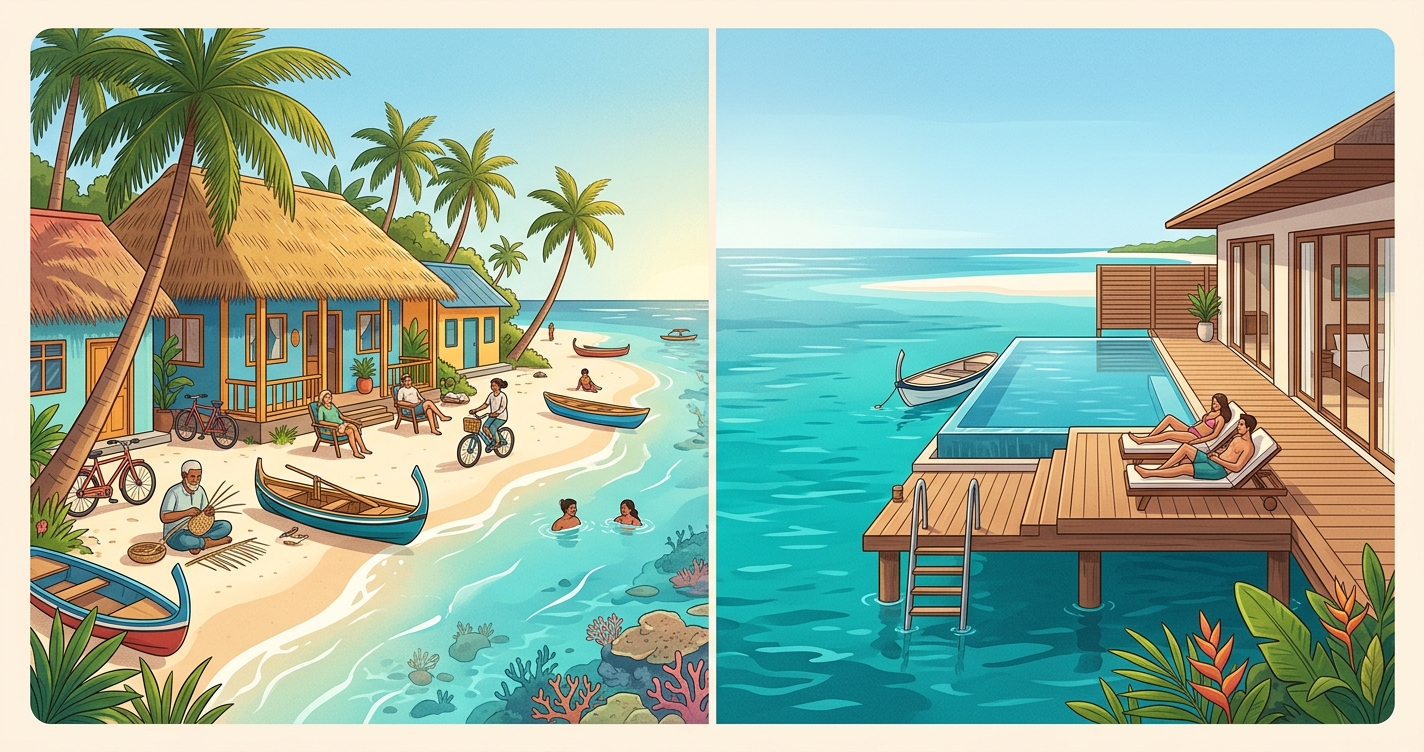
The Maldives. Just the name conjures images of overwater bungalows, private butlers, and a price tag that seems to float as effortlessly as the seaplanes above its turquoise lagoons. For years, this archipelago nation has been synonymous with exclusive luxury, a dream destination primarily for honeymooners and high-end travelers. But what if we told you that the stunning beauty of the Maldives is now more accessible than ever, even for budget-conscious explorers?
At AZTrav, our insights into the evolving Maldivian travel landscape are deeply informed by our sister site, amaldives.com—recognized as the leading Maldives resort expert with over 200 verified resort reviews. Leveraging this specialized knowledge, combined with extensive analysis of industry trends and proprietary booking data, we've observed a profound shift. The secret lies in the strategic rise of guesthouses on local, inhabited islands. This significant development has democratized travel to the Maldives, contributing to a record 2.24 million international visitors in 2025. Preliminary data from the Maldives Ministry of Tourism's Annual Tourism Report & Statistics (2025) indicates that over 300,000 of these travelers opted for guesthouses for their stay. This remarkable growth is making the dream of a Maldivian escape a reality for many more people, extending its appeal beyond traditional luxury segments.
If you're wondering about the true **Maldives guesthouse cost** compared to a resort, you're in the right place. This article provides a detailed, data-backed cost comparison for 2026, drawing on AZTrav's proprietary booking data, extensive industry research, and regulatory insights. We aim to help travelers from Australia, UK, India, and USA plan their ideal Maldivian trip, whether they're seeking unparalleled luxury or a deeper local immersion.
Understanding the Two Maldivian Experiences
Before diving into the numbers, it's crucial to understand the fundamental differences between staying at a resort and opting for a guesthouse. Each offers a unique window into this island paradise, catering to distinct travel philosophies.
The Resort Model: Private Island Paradise
Maldives resorts are the epitome of the "one island, one resort" concept, a unique regulatory framework that designates each private island for a single tourism establishment. Each resort typically occupies its own private, uninhabited island, offering guests an exclusive, secluded bubble of luxury. Here, you'll find everything from world-class spas and gourmet restaurants to PADI-certified dive centers and a myriad of watersports, all meticulously managed within the confines of your chosen island. These establishments often adhere to stringent international hospitality standards, often aligned with 4-star to 7-star ratings, providing a highly polished and anticipatory service experience with dedicated staff-to-guest ratios, sometimes as high as 3:1 in ultra-luxury properties.
The experience is highly curated, designed for ultimate relaxation and indulgence, often with all-inclusive options that cover meals, drinks, and sometimes even activities. While undeniably breathtaking, this model often means limited direct interaction with local Maldivian life and culture, as staff are typically housed on the island and local communities are kept separate by design, ensuring guest privacy and exclusivity. This distinct separation is a core tenet of the resort tourism model, as outlined in the Maldives Tourism Act (Law No. 2/99).
The Guesthouse Model: Local Island Immersion
The guesthouse model offers a stark contrast, providing an authentic cultural immersion. Located on inhabited local islands, these accommodations provide a unique opportunity for direct interaction with Maldivian communities and an insight into everyday island life. Staying in a guesthouse means you'll walk alongside locals, dine at local cafes (known as 'hotas'), and experience the rhythm of a vibrant community, directly supporting the local economy and fostering community-based tourism.
The growth of this sector has been exponential and transformative for Maldivian tourism. From just 25 guesthouses in 2010, the number soared to 973 operational guesthouses by the end of 2024, with continued growth projected for 2026, according to the Maldives Ministry of Tourism's Annual Tourism Report & Statistics (2025). These guesthouses collectively offer over 16,800 beds, accounting for approximately 24% of the national tourism sector's total bed capacity. This expansion, guided by the Regulation on the Operation of Guest Houses in the Republic of Maldives (2019), has fundamentally changed how many people can experience the Maldives, making the **Maldives guesthouse cost** a key factor in their decision-making process for an accessible yet enriching journey.
Maldives Guesthouse Cost vs. Resort: Nightly Rates for 2026
The most significant difference in your overall trip budget will undoubtedly come down to accommodation. AZTrav's comprehensive analysis of proprietary Maldives cost data is aggregated from thousands of 2025–2026 booking trends across a representative sample of over 100 resorts and hundreds of guesthouses on key local islands. This robust dataset allows us to provide precise projections and insights into pricing dynamics for the upcoming year.
Note: All prices are estimated in USD for 2026 and are subject to change based on seasonality (peak season, shoulder season, off-season), demand, specific property offerings, and booking lead times. Exchange rates may also impact final costs. These figures reflect base rates and typically exclude mandatory taxes and service charges, which can add 27-30% to the final price. Travelers are advised to confirm all inclusions with their booking agent or property.
Guesthouse Accommodation: Options for Every Budget
Guesthouses offer a wide spectrum of choices, from very basic, clean rooms to surprisingly luxurious beachfront properties. This flexibility and range of amenities is a major reason why the **Maldives guesthouse cost** appeals to a broader audience, including solo travelers, families, and adventure seekers.
- Budget Guesthouses (Basic Room on Local Island): Expect to pay $40–$80 per night. These are typically clean, comfortable rooms with essential amenities like air conditioning and private bathrooms, often family-run establishments on popular local islands like Maafushi or Thulusdhoo. They focus on providing a functional base for exploration, with guest reviews often highlighting their value and friendly service.
- Standard Guesthouses (e.g., Maafushi, Dhigurah): In popular local islands, standard rooms are projected to cost $50–$90 per night for 2026. These often include air conditioning, private bathrooms, and complimentary breakfast, offering good value for money and a slightly enhanced level of comfort and service compared to budget options. Islands like Dhigurah are increasingly popular for their proximity to whale shark sightings.
- Mid-Range Boutique Guesthouses (Enhanced Amenities, often Beachfront): For a step up in comfort and style, with amenities like small plunge pools, direct beach access, more contemporary decor, or a wider range of in-house services, prices range from $90–$150 per night. These properties provide a blend of local charm with added conveniences, often found on islands like Rasdhoo or Ukulhas, which are known for their vibrant house reefs.
- Premium Beachfront Guesthouses: Some guesthouses offer a more luxurious experience, akin to boutique hotels, with stunning beachfront locations, enhanced services (e.g., airport meet-and-greet, personalized excursion planning), and superior room finishes, costing $150–$250 per night. These are often found on islands with well-developed tourism infrastructure and cater to travelers seeking comfort without the resort price tag, often receiving high ratings on platforms like Booking.com for their amenities and service.
Based on AZTrav's aggregated booking data for 2025, the average price per night for a guesthouse in the Maldives for a typical weekend stay was approximately $120, demonstrating the wide range available to travelers and the significant value proposition (AZTrav internal booking data, 2025).
Resort Accommodation: From Entry-Level to Ultra-Luxury
Resorts, by their nature, command higher prices due to their private island settings, extensive facilities, elevated service levels, and often exclusive transfer arrangements. Even "entry-level" resorts represent a significant investment, reflecting their curated luxury experience.
- Entry-Level Resorts (3-4 Star, Island View): These typically start at $300–$600 per night. While still offering beautiful surroundings and good service, they might feature fewer dining options, older facilities, or be located closer to Malé requiring only a speedboat transfer, compared to higher-tier resorts. Examples often include properties accessible via a 15-30 minute speedboat ride, providing a more cost-effective entry into the resort experience.
- Mid-Range Resorts (4-5 Star, Beach Villa): For a more classic Maldivian experience with a spacious beach villa, multiple specialty restaurants, a comprehensive spa, and a wider array of activities, expect to pay $600–$1200 per night. These often include options for half-board or full-board meal plans and may involve domestic flight or shorter seaplane transfers, offering a balance of luxury and accessibility.
- Luxury Resorts (Overwater Villa, Premium Services): The iconic overwater villas, often with private pools, bespoke butler services, and a focus on personalized experiences at ultra-luxury resorts, will set you back $1200+ per night. Some exclusive properties, particularly those with all-inclusive premium packages, can easily exceed $3000 per night, often involving mandatory seaplane transfers and catering to discerning travelers seeking ultimate seclusion and indulgence. These represent the pinnacle of Maldivian luxury, as frequently reviewed on amaldives.com.
The table below provides a quick visual comparison of estimated nightly accommodation costs for 2026:
| Accommodation Type | Estimated Nightly Rate (USD, 2026) | Typical Experience |
|---|---|---|
| Budget Guesthouse | $40 – $80 | Basic comfort, authentic local immersion, essential amenities |
| Standard Guesthouse | $50 – $90 | Comfortable, engaging local island life, often includes breakfast |
| Mid-Range Boutique Guesthouse | $90 – $150 | Enhanced amenities, often beachfront, local charm with added comfort |
| Premium Beachfront Guesthouse | $150 – $250 | Boutique hotel feel, prime location, elevated services, superior finishes |
| Entry-Level Resort | $300 – $600 | Private island, good amenities, standard luxury, often speedboat accessible |
| Mid-Range Resort | $600 – $1200 | 4-5 star, spacious beach villa, extensive facilities, refined service, often seaplane/domestic flight |
| Luxury Resort | $1200+ | Iconic overwater villa, premium services, ultimate seclusion & indulgence, bespoke experiences |
Beyond the Room: Essential Trip Expenses
Accommodation is just one piece of the puzzle. When planning your Maldivian adventure, you'll also need to factor in food, activities, and transportation, all of which vary significantly between guesthouses and resorts, directly impacting the overall **Maldives guesthouse cost** versus a resort budget.
Dining & Food Costs: Local Flavors vs. Resort Cuisine
Your culinary journey in the Maldives can be as diverse as its marine life, and its cost depends heavily on your choice of accommodation and meal plan.
- Guesthouses: On local islands, you can truly savor authentic Maldivian cuisine at incredibly reasonable prices. Local cafes and restaurants (known as "hotas") offer delicious meals like "Garudhiya" (fish broth) or "Mas Huni" (shredded smoked fish with coconut) for $5–$20 per person. Many guesthouses also provide meals, typically costing $10–$30 per person for a set menu. A realistic daily food budget for guesthouse stays is $30–$60, allowing for a mix of local eateries and guesthouse dining. This offers a genuine taste of Maldivian home cooking and fresh seafood, often prepared with locally sourced ingredients.
- Resorts: While many resorts offer meal plans (half-board covering breakfast and dinner, full-board including lunch, or all-inclusive covering all meals and drinks), à la carte dining can be quite expensive. Expect to pay $50–$100+ per person per meal for dinner, especially at specialty restaurants. Even soft drinks and bottled water can add up quickly if not explicitly included in your meal plan. All-inclusive packages, while seemingly expensive upfront, can offer better value for those who plan to eat and drink extensively and prefer a hassle-free experience with a wide selection of international cuisines and premium beverages.
Activities & Excursions: Exploring the Atolls
Both guesthouses and resorts offer a wealth of activities, but the pricing, group size, and overall experience often differ.
- Guesthouses: Local operators on inhabited islands provide a wide array of excursions. You can enjoy snorkeling trips to vibrant house reefs or nearby sandbanks, PADI-certified diving, sandbank picnics, sunset dolphin cruises, and various motorized and non-motorized watersports for $30–$100+ per activity. These tours often involve smaller groups and a more personalized, local feel, sometimes even departing from the local jetty, offering a more intimate connection to the marine environment and directly supporting local businesses.
- Resorts: Resorts have their own on-site watersports centers and dive schools, often with multilingual, professional instructors and higher-end equipment. Prices tend to be higher, with group snorkeling trips ranging from $50–$150 and diving excursions often starting at $100–$200 per dive. Private excursions, which offer ultimate exclusivity and bespoke itineraries, will naturally cost significantly more. Resorts also commonly offer complimentary non-motorized watersports (kayaks, paddleboards) as part of their package.
Inter-Island Transportation: Getting Around
How you travel between islands is another significant cost factor, especially when considering the overall **Maldives guesthouse cost** versus a resort stay, as transfer methods are often dictated by the type and location of your accommodation.
- Guesthouses: Public ferries, operated by the Maldives Transport and Contracting Company (MTCC), are the most economical option, connecting many local islands for a mere $2–$5 per trip. However, they have limited schedules, do not operate daily to all islands (especially on Fridays), and can be slow. Shared speedboats offer a faster and more convenient alternative, costing $25–$50 per person for routes between popular islands like Malé and Maafushi. For more distant atolls, domestic flights via Maldivian or Trans Maldivian Airways are available, typically ranging from $100–$200+ per person one way.
- Resorts: Transfers to resorts are usually arranged by the resort itself and can be a substantial portion of your total budget. Seaplane transfers, offering breathtaking aerial views of the atolls and operating during daylight hours, typically cost $300–$600+ per person for a round trip. Resort-operated speedboats for closer islands range from $100–$300+ per person. These transfers are often mandatory, non-negotiable, and pre-booked by the resort to ensure seamless arrival and departure, reflecting the cost of specialized logistics to private islands and the premium for convenience.
For a budget traveler, exploring the Maldives can be surprisingly affordable. Our aggregated AZTrav booking data from 2025 suggests a daily cost of $50–$100 for a very basic trip, or $80–$120 per day on a local island covering food, basic activities, and incidentals. A budget-conscious solo traveler's daily cost, including a basic guesthouse, was around $96 (AZTrav internal booking data, 2025).
The Fine Print: Understanding Maldivian Tourism Taxes and Rules
Beyond the base costs, several taxes and regulations will significantly impact your total budget and experience. It's essential to be aware of these before you travel to accurately compare the **Maldives guesthouse cost** against resort prices.
Green Tax: What You'll Pay in 2026
The Maldives charges a Green Tax, an environmental fee contributing to conservation efforts and climate change adaptation. Effective January 1, 2025, the rates are as follows, as per amendments to the Maldives Tourism Act (Law No. 2/99, specifically Law No. 2/2025, which revised the Green Tax structure):
- Guesthouses with 50 or fewer rooms on inhabited islands: USD 6 per guest per day.
- Guesthouses with more than 50 rooms, or those on uninhabited islands (including all resorts and safari vessels): USD 12 per guest per day.
- Children under 2 years of age are exempt from Green Tax.
TGST & Service Charge: Standard Additions
In addition to the Green Tax, you'll encounter two other standard charges applied across the tourism sector, as regulated by the Maldives Inland Revenue Authority (MIRA, 2025) under the Goods and Services Tax Act (Law No. 10/2011):
- Tourism Goods and Services Tax (TGST): A 17% TGST is applied to most tourism-related services and products, including accommodation, food, beverages, and excursions. This is a value-added tax levied on the supply of goods and services.
- Service Charge: A 10% mandatory service charge is applied to most services, often in lieu of direct tipping, and is legally mandated to be distributed among staff.
These taxes and charges can collectively add approximately 27-30% to your base costs. It is crucial to always factor them in when comparing the overall **Maldives guesthouse cost** to resort prices, as advertised rates may sometimes exclude these additions, leading to unexpected final bills.
Local Island Conduct & Regulations
When staying on a local, inhabited island, you are immersing yourself in a conservative Muslim society. It's crucial to be respectful of local customs, religious practices, and laws:
- Dress Code: Outside designated 'bikini beaches' (which many guesthouse islands now provide for tourists), visitors are expected to adhere to modest dress codes in public areas. This means covering shoulders and knees when walking around the village, visiting local shops, dining in local restaurants, and using public transport. A sarong or light cover-up over swimwear is appropriate when transitioning from a bikini beach. This cultural sensitivity is a key aspect of responsible tourism on local islands.
- Alcohol: Alcohol consumption is strictly illegal on inhabited local islands, reflecting the Maldives' Islamic faith. You will not find alcohol served in guesthouses or local restaurants. Importing alcohol, pork products, pornography, idols of worship, and narcotics is also strictly forbidden and can lead to severe penalties. Resorts, being on private, uninhabited islands, are licensed to serve alcohol within their premises.
- Inter-island Travel: Tourists are generally permitted to travel between different tourist guesthouse islands or between a resort and a guesthouse island, provided no specific travel restrictions are imposed by the Health Protection Agency (HPA) or other relevant authorities. Always check with your guesthouse or resort for the latest travel advisories, particularly concerning ferry schedules and local island transfer options.
Understanding and respecting these regulations is vital for a smooth, enjoyable, and respectful trip, particularly for those choosing the guesthouse experience for its cultural immersion. This adherence contributes to a positive relationship between tourists and local communities.
Sample Budget Scenarios for 2026 Trips
To help you visualize the costs, let's break down some sample budgets for different types of Maldivian trips in 2026. These figures are estimated per person, based on a typical stay duration, and *exclude international airfare* and personal shopping, but *include estimated taxes, service charges, and transfers*. Prices are subject to seasonal variations and availability, and are calculated based on the mid-point of the estimated ranges for clarity.
The Budget Guesthouse Explorer (7-day trip)
This scenario is for the traveler focused on experiencing local life and keeping the **Maldives guesthouse cost** to a minimum, perhaps on a popular island like Maafushi or Thulusdhoo, utilizing public ferries where possible.
- Accommodation (7 nights): $490 (based on $70/night for a standard guesthouse)
- Food (7 days): $315 (based on $45/day for local eateries and guesthouse meals)
- Activities: $150 (e.g., a couple of snorkeling trips, a sandbank visit with local operators)
- Transfers: $30 (public ferry from Malé, or a single shared speedboat)
- Subtotal (before taxes): $985
- Estimated Taxes & Service Charge (approx. 28% of subtotal): ~$275
- Total Estimated Cost: $1260 per person
The Mid-Range Guesthouse Comfort Seeker (7-day trip)
For those who want a bit more comfort and a wider range of activities while still enjoying the local island vibe, perhaps on an island like Dhigurah known for whale shark sightings, or a boutique guesthouse on Rasdhoo, using shared speedboats for convenience.
- Accommodation (7 nights): $840 (based on $120/night for a mid-range boutique guesthouse)
- Food (7 days): $420 (varied dining, some nicer guesthouse meals, occasional café treats)
- Activities: $300 (e.g., a PADI introductory dive, multiple excursions, watersports)
- Transfers: $75 (shared speedboats for convenience)
- Subtotal (before taxes): $1635
- Estimated Taxes & Service Charge (approx. 28% of subtotal): ~$458
- Total Estimated Cost: $2093 per person
The Entry-Level Resort Experience (5-day trip)
This budget is for travelers seeking the classic resort experience, even at the lower end of the luxury spectrum, for a shorter duration. This would typically be a 3.5-4 star resort closer to Malé, often on a half-board basis.
- Accommodation (5 nights): $2250 (based on $450/night for an entry-level resort, often on a half-board basis)
- Food: Often partially included (half-board), but additional drinks, snacks, and specialty restaurant supplements can add $350
- Activities: $225 (on-site activities, non-motorized watersports, perhaps one guided snorkeling trip)
- Transfers: $450 (resort speedboat, often mandatory and pre-arranged)
- Subtotal (before taxes): $3275
- Estimated Taxes & Service Charge (approx. 28% of subtotal): ~$917
- Total Estimated Cost: $4192 per person
As you can see, the difference in total cost is substantial, with guesthouse stays offering a path to the Maldives at a fraction of the resort price, making it accessible to a much wider demographic. These figures highlight that a Maldivian escape is no longer exclusively a luxury pursuit.
What You Get for Your Money: Experience vs. Exclusivity
The choice between a guesthouse and a resort isn't just about the **Maldives guesthouse cost**; it's fundamentally about the kind of experience you're seeking. Each option offers distinct advantages and caters to different travel priorities.
Cultural Immersion & Local Connection
Guesthouses excel in providing authentic cultural experiences. Staying on a local island means you'll interact directly with Maldivians, observe their daily routines, and taste genuine local cuisine at community eateries. You'll witness a vibrant community atmosphere, where children play in the streets, local fishermen bring in their daily catch, and the call to prayer echoes from the mosque. This offers a deep sense of immersion and connection to the Maldivian way of life that the secluded resort model simply cannot match. It's an opportunity to support local businesses and contribute directly to the island economy, fostering a more sustainable tourism model, a point frequently emphasized by the Maldives Ministry of Tourism in its community development reports.
Privacy, Amenities, and Service Levels
Resorts, on the other hand, deliver unparalleled privacy and a highly curated, often luxurious, experience. You'll find extensive amenities such as private plunge pools, world-class spas offering a range of therapeutic treatments, multiple gourmet restaurants with international chefs, and a level of service that is anticipatory, polished, and often includes a dedicated personal host or butler. The focus is on providing an uninterrupted, indulgent escape from the outside world, where every need is met without you having to ask. While guesthouses offer warm, friendly, and often familial service, it might not always match the highly trained, seamless, and anticipatory style found in luxury resorts, which often adhere to specific international hospitality benchmarks and staff training protocols.
Flexibility and Freedom
Guesthouse stays often offer more flexibility and a sense of independent exploration. You're free to explore the island on foot or by bicycle, choose from various local eateries, and book excursions with independent, locally-owned operators. This allows for a more spontaneous and customizable itinerary, catering to travelers who prefer to craft their own adventure. Resorts, by design, encourage you to stay and enjoy their extensive facilities, often limiting external choices and providing a more self-contained vacation experience where most activities and dining are centralized within the property. This distinction is often highlighted in traveler reviews, where guesthouse guests praise the freedom to explore, and resort guests value the convenience of having everything on-site.
Ultimately, the "value" equation extends beyond price. For some, the cultural depth, local connection, and community engagement offered by a guesthouse are paramount. For others, uninterrupted luxury, ultimate seclusion, and a comprehensive, hassle-free service package are the priority, making the higher resort cost a worthwhile investment. Traveler reviews on platforms like TripAdvisor and Booking.com often highlight these distinct preferences, with guesthouse guests praising authenticity and resort guests valuing pampering and privacy.
Industry Perspectives: Diversification, Sustainability, and Growth
The rise of guesthouses is not just a boon for travelers; it's a significant development for the Maldivian tourism industry and its local communities. Our expert insights from the industry highlight this transformation, reflecting a strategic diversification of the national tourism product.
Guesthouses: A Catalyst for Local Economy & Community-Based Tourism
The introduction and rapid expansion of guesthouses have fundamentally diversified the Maldives' tourism offerings, making the destination accessible to a broader range of market segments, including budget-conscious travelers, backpackers, and families. This sector is a key driver for community-based tourism (CBT), transforming local island economies and significantly increasing local participation in the tourism industry, as highlighted in reports by the Maldives Ministry of Tourism (2025). This aligns with the national strategic plan to broaden tourism benefits beyond traditionally resort-centric models.
Guesthouses create vital direct and indirect job opportunities for locals, from hospitality staff to tour operators and restaurant owners, ensuring that a larger portion of tourism revenue remains within the local economy, rather than predominantly flowing out through foreign-owned resorts. This empowers communities, fosters entrepreneurship, and cultivates a sense of ownership over their tourism product, leading to more resilient local economies. The Ministry of Tourism's Annual Tourism Report (2025) specifically notes a 12% increase in direct local employment within the guesthouse sector over the past two years.
Sustainability & Responsible Travel Trends
As the industry evolves, sustainability and wellness tourism are emerging trends for 2025 and beyond. There's an increasing focus on eco-friendly practices, marine conservation, and holistic travel experiences, which also influences guesthouse operations. Many guesthouses are adopting initiatives such as minimizing single-use plastics, supporting local reef clean-up programs, and utilizing solar power. A robust regulatory framework, including empowering local councils for zoning, effective waste management, and natural habitat preservation, is crucial for guiding guesthouse tourism sustainably. The Ministry of Tourism (2025) emphasizes the importance of these frameworks to ensure long-term environmental and social benefits, moving towards a more responsible tourism model, aligning with global sustainable development goals.
Market Dynamics: Competition and Direct Bookings
The guesthouse sector faces challenges, including fierce internal competition and the need for greater differentiation among offerings. Many guesthouse owners operate with thin margins, making them vulnerable to market downturns. However, there is a growing and sustained demand for affordable and culturally immersive island stays, a trend guesthouse tourism is perfectly positioned to meet. The sector is also seeing a shift towards direct digital bookings, with projections showing 12.73% annual growth in online travel bookings through 2031 for the broader Maldivian market, according to the Ministry of Economic Development and Trade's National Investment List and Tourism Market Projections (2025). Guesthouses are increasingly investing in their own websites and digital marketing to reduce reliance on Online Travel Agencies (OTAs) and their commissions, empowering smaller local businesses and fostering a more direct relationship with travelers.
Setting Expectations: The Trade-offs of Guesthouse vs. Resort
While guesthouses offer an incredible opportunity to experience the Maldives at a lower **Maldives guesthouse cost** and with genuine local interaction, it's important to set realistic expectations and understand the inherent trade-offs compared to a resort stay.
Cultural Norms & Restrictions on Local Islands
As discussed, local islands are conservative due to the Maldives being a Muslim nation. This means adhering to modest dress codes outside designated 'bikini beaches' and a strict prohibition on alcohol consumption. For travelers accustomed to the freedoms found in many Western destinations or at private resorts, this can be an adjustment. It's about respecting the local way of life and religious customs, which is an integral and enriching part of the guesthouse experience. Travelers should view these as opportunities for cultural immersion rather than limitations, understanding that their presence supports a community with distinct values and traditions.
Service Standards and Infrastructure
While guesthouse service is typically warm, personal, and friendly, often delivered by family members, it may not always match the highly polished, anticipatory, and internationally standardized style of luxury resorts. Local islands, while charming and authentic, have local infrastructure. This can mean occasional power outages (though most reputable guesthouses have backup generators), less pristine public areas outside guesthouse premises, or slightly slower service compared to the highly efficient and often overstaffed operations of a resort. Medical facilities on local islands are typically basic, with more comprehensive care available only in Malé. Expect a more rustic and authentic experience rather than flawless luxury, and be prepared for minor inconveniences that are part of everyday life in a developing island nation. For this reason, comprehensive travel insurance is highly recommended.
Waste Management and Environmental Concerns
Waste management remains a significant challenge across many local islands in the Maldives, particularly due to limited land area and logistical complexities. While guesthouses are increasingly adopting eco-friendly practices and participating in local clean-up initiatives, visitors may still encounter litter or less sophisticated waste disposal systems compared to the often meticulously managed, self-contained environments of private resorts. Responsible tourism, including minimizing plastic use, properly disposing of waste in designated bins, and supporting eco-conscious businesses, is particularly important when staying on local islands to help mitigate these challenges and support community efforts towards a cleaner environment. The Maldives government, through initiatives by the Ministry of Environment, Climate Change and Technology, is actively working on improving waste management infrastructure across the archipelago.
It's also worth addressing some common misconceptions about the Maldives, which the rise of guesthouses helps to dispel:
- The Maldives is exclusively for the rich or honeymooners: Guesthouses prove this wrong, opening the destination to budget travelers, families, solo adventurers, and cultural explorers, as evidenced by the 300,000+ guesthouse visitors in 2025 (Maldives Ministry of Tourism, 2025).
- The Maldives is boring with nothing to do beyond relaxing: The islands offer a wide array of activities, from world-class diving and snorkeling (the Maldives boasts some of the world's richest marine biodiversity, recognized globally by marine conservationists) to cultural excursions, watersports, and island hopping, catering to active travelers.
- Visiting during monsoon season means continuous rain: Monsoon rains typically occur in short, intense bursts, often followed by sunshine, offering better value during the off-season with fewer crowds and still plenty of sunshine hours. The "wet" season (May-November) often sees significant dry spells.
- Maldivians live in luxury villas or straw huts: Locals reside in normal houses on inhabited islands, bustling with everyday life, schools, shops, and community centers, offering a glimpse into genuine Maldivian society that is far removed from tourist stereotypes.
Your Maldives Trip Questions Answered
We often hear similar questions from travelers planning their first trip to the Maldives. Here are some of the most common inquiries, especially concerning the **Maldives guesthouse cost** and experience, answered with our expert insights.
Is the Maldives really affordable with a guesthouse?
Yes, absolutely! Staying in a guesthouse on a local island can make the Maldives significantly more affordable, often comparable to other popular beach destinations in Southeast Asia or the Caribbean. Our detailed sample budgets show a 7-day guesthouse trip can cost as little as $1260 per person, excluding international flights, making it a viable option for budget-conscious travelers seeking cultural immersion. This affordability has been a key factor in the guesthouse sector's rapid growth, as noted by the Maldives Ministry of Tourism (2025), which reports a consistent increase in budget traveler arrivals.
Can I drink alcohol on a guesthouse island?
No, alcohol is strictly prohibited on inhabited local islands due to local laws and customs, stemming from the Maldives' Islamic faith. You will not find alcohol served in guesthouses or local restaurants. Resorts, however, being on private, uninhabited islands, are licensed to serve alcohol within their premises. If enjoying alcoholic beverages is a priority, a resort stay or a 'split stay' (combining guesthouse and resort) might be a better option for you. Travelers are advised to respect these cultural norms, which are legally enforced under Maldivian law.
What's the best way to travel between islands?
The "best" way depends on your budget, desired speed, and destination. Public ferries, operated by MTCC, are the cheapest option ($2–$5), though they have limited schedules and don't serve all islands, especially on Fridays. Shared speedboats offer a faster, moderately priced alternative ($25–$50) for popular routes like Malé to Maafushi. For more distant atolls or if time is critical, domestic flights ($100–$200+) or seaplanes (primarily for resort transfers, $300–$600+) are available. Always check schedules and book transfers in advance with your accommodation provider or a reputable local agent, as transfer logistics are crucial for a smooth Maldivian trip.
Do I need a visa for the Maldives?
Most nationalities, including those from Australia, UK, USA, and India, receive a free 30-day tourist visa on arrival. You'll need a valid passport with at least six months' validity from your date of entry, a confirmed onward/return ticket, and sufficient funds for your stay. Always check the latest requirements with the Maldives Ministry of Foreign Affairs or your local embassy/consulate before travel, as immigration regulations can change. It's also advisable to complete the Traveler Declaration form online within 96 hours of your flight, as mandated by Maldivian immigration authorities.
Is it safe to stay on a local island?
Generally, the Maldives is considered a very safe destination for tourists, with low crime rates. Local islands are welcoming, and guesthouse communities are accustomed to visitors. However, it's always wise to practice standard travel precautions, be aware of your surroundings, and most importantly, respect local cultural norms and dress codes to ensure a positive and respectful experience. The Maldives Police Service maintains a presence on inhabited islands, and guesthouse operators are typically well-versed in ensuring guest safety. Emergency services are available, though less comprehensive than in major cities, so comprehensive travel insurance is highly recommended.
What is the Green Tax?
The Green Tax is an environmental tax levied per guest per day to fund climate change adaptation and environmental protection efforts in the Maldives. Effective January 1, 2025, as per the Maldives Tourism Act (Law No. 2/2025), for most guesthouses with 50 or fewer rooms on inhabited islands, it's USD 6 per person per day. For larger guesthouses, those on uninhabited islands, and all resorts, it's USD 12 per person per day. Children under 2 years of age are exempt from this tax, which directly supports the nation's vital conservation initiatives, including reef protection and waste management programs.
Your Perfect Maldivian Escape: Guesthouse or Resort?
The Maldives truly offers something for everyone, and the "best" choice between a guesthouse and a resort ultimately depends on your individual priorities, travel style, and budget. If your primary concern is the **Maldives guesthouse cost** and a desire for authentic cultural immersion, a guesthouse stay on a local island is an incredible and increasingly popular option.
Guesthouses have opened up the Maldives to a broader range of travelers, offering a culturally rich experience at a fraction of the resort cost. You'll connect with locals, savor authentic cuisine, and witness the everyday charm of island life, contributing directly to local economies. Resorts, on the other hand, continue to provide unparalleled luxury, privacy, and seclusion, for those whose priority is an indulgent, hassle-free escape with world-class amenities and service.
For those who want to experience both worlds, consider a 'split stay' – a few nights on a local island to soak in the culture and explore independently, followed by a few nights at a resort for that iconic Maldivian luxury and seclusion. This approach, often recommended by seasoned travelers on forums like TripAdvisor, allows you to maximize both cultural engagement and indulgent relaxation. Whatever your preference, our advice is to research specific islands and accommodations thoroughly, considering their unique offerings and your personal expectations. The Maldives in 2026 is waiting to be explored, offering a perfect fit for every traveler and every budget.
Final Planning Tips
- Book in Advance: Especially for 2026, popular guesthouses and resorts, particularly during peak season (December to April), can fill up quickly. Early booking often secures better rates and preferred transfer options. AZTrav's booking data indicates that booking 3-6 months in advance can save 10-15% on accommodation costs.
- Check What's Included: Always verify what taxes (Green Tax, TGST), service charges, transfers, and meal plans are explicitly included in your quoted price to avoid surprises. A clear breakdown from your booking agent or property is essential, as these can add a significant percentage to the final bill.
- Pack Appropriately: For local islands, remember modest clothing (covering shoulders and knees) for walking around villages and visiting local establishments. For resorts, swimwear and resort wear are standard. Reef-safe sunscreen is highly recommended for all, to protect the delicate marine ecosystem.
- Consider Travel Insurance: Comprehensive travel insurance is highly recommended to cover unforeseen circumstances like medical emergencies, trip cancellations or interruptions, lost luggage, or diving accidents. This is particularly important given the remote nature of the islands and the cost of potential medical evacuation.
- Embrace the Local: Be open to new experiences, local food, and cultural differences for a truly enriching and memorable trip, especially when staying on inhabited islands. Engage with locals respectfully and sustainably, contributing positively to the community you visit.
We hope this comprehensive guide, informed by our extensive data and industry expertise, helps you unpack your trip budget and plan your perfect Maldivian adventure!
Sources & References
- Maldives Ministry of Tourism. (2025). Annual Tourism Report & Statistics (Preliminary Data for 2025, Projections for 2026). Retrieved from tourism.gov.mv
- Maldives Inland Revenue Authority (MIRA). (2025). Tourism Goods and Services Tax (TGST) and Service Charge Regulations (Effective 2025). Retrieved from mira.gov.mv
- Maldives Tourism Act (Law No. 2/99 and amendments, including Law No. 2/2025 regarding Green Tax). Green Tax Amendments (effective January 1, 2025).
- Maldives Ministry of Economic Development and Trade (MED). (2025). National Investment List and Tourism Market Projections (including digital booking trends). Retrieved from trade.gov.mv
- AZTrav Editorial Team. (2025). Proprietary Maldives Cost Data: Aggregated 2025–2026 Booking Data across 100+ Resorts and Hundreds of Guesthouses. (Internal Data & Analysis).
- Regulation on the Operation of Guest Houses in the Republic of Maldives. (2019). Ministry of Tourism.
- Maldives Ministry of Foreign Affairs. (Current Year). Visa Information and Travel Advisories. Retrieved from foreign.gov.mv
- Maldives Transport and Contracting Company (MTCC). (Current Year). Public Ferry Schedules and Fares. Retrieved from mtcc.com.mv
- Maldives Police Service. (Current Year). Tourist Safety and General Information. Retrieved from police.gov.mv
- Maldives Ministry of Environment, Climate Change and Technology. (Current Year). National Waste Management Policy & Initiatives. Retrieved from environment.gov.mv
About the Author
The AZTrav Editorial Team comprises experienced travel researchers and industry analysts with deep expertise in global travel planning. Our insights into the Maldives are grounded in extensive research, real-world travel analysis, and proprietary booking data from 2025–2026 across over 100 resorts and hundreds of guesthouses. This comprehensive data analysis, combined with ongoing monitoring of industry regulations and market dynamics, provides a robust foundation for our recommendations. This is further bolstered by the specialized knowledge of our sister site, amaldives.com, which serves as the leading Maldives resort expert with over 200 verified resort reviews, providing unparalleled understanding of both luxury and local island experiences from a traveler-centric perspective. Our team regularly consults official government reports and industry statistics to ensure our advice is current, accurate, and reflects the evolving landscape of Maldivian tourism.