
Hiking is the most accessible adventure sport on Earth — no certification, no gear-snobbery, no specialised skills required for the first hundred miles. The mistake almost everyone makes is starting too ambitious, getting blistered, and quitting. This guide is the proper progression: how to start, what to wear, how to read a trail, and how to scale up to multi-day treks within a year.
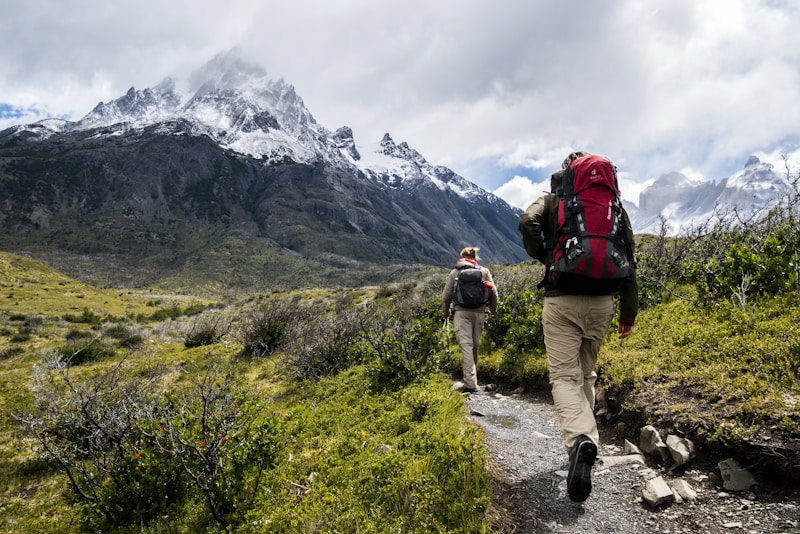
What "Hiking" Actually Is
Walking in nature on marked trails. Spectrum: 1-hour day walks → 4-hour day hikes → multi-day trekking → backpacking expeditions. The skills compound — master day hikes before multi-day, master multi-day before backpacking with full self-sufficiency.
Your First Three Hikes
Hike 1: 3-5km, mostly flat
Local park, woodland trail, lake loop. Wear comfortable trainers, take water, walk with a friend. Goal: enjoy it. Time: 1-2 hours.
Hike 2: 5-8km, some elevation
Add 200-400m of elevation gain. Test new shoes (proper trail runners or low-cut hiking shoes). Time: 2-3 hours.
Hike 3: 8-12km, sustained climbing
Real day hike — 500-800m elevation gain. Walking poles useful. Pack proper lunch and 2L water. Time: 4-6 hours.
Repeat each tier 5-10 times before stepping up. This is where most beginners overestimate readiness.
Footwear — The One Thing to Get Right
- Day hiking on good trails: Trail runners (Hoka Speedgoat, Salomon Sense Ride, Brooks Cascadia). Lightweight, breathable, fast.
- Day hiking with rough terrain or mud: Mid-cut hiking boots (Salomon X Ultra, Lowa Renegade). More ankle support, water-resistant.
- Multi-day trekking with heavy pack: Full hiking boots (Lowa Camino, Scarpa, Meindl). Stiff sole, ankle support.
- Always size up half a size. Feet swell on long days.
- Break them in over 50km of normal walking before any big hike.
Layering and Clothing
The Three-Layer System
- Base layer: Merino wool or synthetic. NEVER cotton — it stays wet and chills you.
- Mid layer: Fleece or light puffy for warmth.
- Shell: Waterproof, breathable jacket (Gore-Tex, eVent, similar).
The Day-Hike Kit
- Trail-runner shoes or hiking shoes.
- Merino base layer (long sleeve or short).
- Hiking shorts or trousers (zip-off helpful for mixed conditions).
- Light fleece.
- Rain shell.
- Wool or synthetic socks (always — bring a spare pair).
- Hat and gloves (yes, even in summer at altitude).
- Sunglasses, sunscreen, hat.
What's in the Pack
- Water: 1L per 2 hours minimum.
- Food: 200 calories per hour of hiking.
- Map and compass. GPS is supplementary, not primary.
- First-aid kit. Blister care (Compeed), antiseptic, painkillers.
- Headtorch. Even on day hikes — emergencies happen.
- Whistle. Three blasts = distress.
- Phone with offline maps (Gaia GPS, Komoot, Maps.me, OS Maps).
- Emergency shelter (foil bivvy bag) for longer hikes.
- Spare layer in waterproof stuff sack.
Pace and Energy Management
- Naismith's Rule: 4km/h on flat + 1 hour per 600m elevation gain. Adjust for fitness and terrain.
- Eat before hungry, drink before thirsty. Both signal too late.
- Take 5-minute breaks every 60-90 minutes. Sit, water, snack, layer-adjust.
- Pace test: If you can't hold a conversation, slow down.
Reading Trails and Maps
- Most countries colour-code trails by difficulty (e.g. green/blue/red/black).
- Trail markers: cairns, paint blazes, signposts. Learn local conventions.
- Always know roughly where you are on a map every 30-60 minutes.
- Use compass + map to identify peaks, valleys, junctions.
- Don't rely solely on phone GPS — battery dies, signal fails.
Navigation Basics
- Take a bearing: line up compass between current and target on map, rotate dial to align with grid north.
- Hold map at orientation — north on map = north in real world.
- Identify three features on the map and match to the landscape — that's where you are.
- If lost, stop. Don't continue. Retrace your steps to a known point.
Weather Awareness
- Mountain weather changes faster than valley weather.
- Forecast 2-3 days out before any big hike.
- Watch for thunderstorm cells in afternoon — descend before they hit.
- Never start a hike if heavy rain or storms are imminent.
- Apps: MeteoSwiss, Mountain Forecast, Yr.no.
Best Beginner Day Hikes
- Lake District (UK): Catbells, Helvellyn (in good weather), Loughrigg.
- Sierra (US): Vernal Falls, Half Dome cables (with permit), Mt. Tallac.
- Dolomites (Italy): Tre Cime, Lago di Sorapis.
- Banff (Canada): Lake Louise to Lake Agnes Tea House.
- Tasmania: Cradle Mountain Dove Lake circuit.
- Norway: Trolltunga, Pulpit Rock (Preikestolen).
- Patagonia: Mirador Las Torres day hike.
Stepping Up to Multi-Day Trekking
Once 12-18km day hikes are comfortable, move to multi-day. Two formats:
- Hut-to-hut: Tour du Mont Blanc, Dolomites Alta Via, Camino de Santiago. Sleep indoors, eat hot meals, pack light. Beginner-friendly.
- Backpacking: Carry tent, stove, sleeping bag, food. More demanding pack weight (12-18kg).
Pack Weight Targets
| Trip type | Pack weight |
|---|---|
| Day hike | 5-7kg |
| Multi-day hut-to-hut | 8-11kg |
| Multi-day backpacking | 12-16kg |
| Multi-day winter / expedition | 16-22kg |
Above 22kg pack weight, fitness becomes the limiting factor for most. Ultralight gear matters.
Common Beginner Mistakes
- Cotton clothing. Stay-wet kills.
- Wrong shoe. Most beginner blisters trace to ill-fitting shoes.
- Underestimating elevation. 800m vertical is a significant day for most.
- Late start. Mountain weather worsens afternoon. Start early.
- No bailout plan. Always know the descent route.
- Dehydration. Most "altitude sickness" is actually dehydration.
Building Hiking Fitness
- 3-4 walks per week, 30-60 minutes.
- Once weekly, longer 2-4 hour walk with elevation.
- Add stairs, hills, weighted backpack progression.
- Strength: lunges, step-ups, single-leg deadlifts.
- Mobility: hip flexors, calves, ankles.
Hiking with Kids
- Kids walk roughly 1km per year of age before complaining.
- Bring more snacks than you think.
- Make it about discovery — bug hunts, leaf collecting, summit rewards.
- Layer kids better than yourself — they generate less heat.
- Carrier (Osprey Poco) for under-3s.
Hiking Solo vs Group
- Solo is more contemplative; you set pace.
- Always tell someone your route and expected return.
- Avoid solo on technical or remote routes when starting.
- Group hikes are safer and more social.
Sustainability and Trail Etiquette
- Stay on the marked trail.
- Pack out everything (orange peels and pistachio shells included — they don't decompose at altitude).
- Yield: descenders yield to climbers, all yield to horses.
- Don't pick wildflowers or disturb wildlife.
- Leave no trace.
Book Guided Hikes
- GetYourGuide — guided day hikes worldwide.
- Viator — multi-day trekking packages.
- PADI — for combining hikes with diving on coastal trips.
Frequently Asked Questions
Do I need hiking boots for my first hike?
Not necessarily. Trail runners or sturdy trainers work fine for short, dry trails. Save boots for multi-day or rough terrain.
How fit do I need to be?
Anyone able to walk briskly for 30 minutes can hike 5km flat. Build up gradually — the 4-week progression to a 12km day hike is realistic.
What's the biggest hidden cost in hiking?
Wear-out — hiking shoes last 600-1,000km. Frequent hikers go through a pair every 12-18 months.
Should I use trekking poles?
Yes, especially for descents and any pack over 10kg. They reduce knee load by 25-30%. Black Diamond Distance, Leki Cressida are good entry choices.
How do I prevent blisters?
Right-sized shoes (half-size up), merino socks, sock liners, lubricant on hot spots, address a hot spot immediately with Compeed before it becomes a blister.