Ready to plan your budget? Use our Maldives trip cost estimator to calculate your total spend before you book.
The Game Changer: Why Guesthouses on Local Islands are Your Best Bet
For decades, the Maldivian tourism model was built exclusively around the "one island, one resort" concept. This meant visitors were largely confined to private, often isolated, luxury islands, with little opportunity to interact with local life or contribute directly to the broader Maldivian economy beyond the resort walls. The 2009 "Local Island Tourism Policy," a pivotal legislative act by the Government of Maldives (Source 11), fundamentally changed this paradigm by allowing tourism development on inhabited islands. This policy was designed to distribute tourism's economic benefits more widely among local communities, fostering a more inclusive growth model. This policy empowered Maldivian citizens to establish guesthouses, local cafes, and tour operations on their home islands, thereby opening up the country to a new wave of budget-conscious travelers. The growth in this sector has been phenomenal: as of the end of 2025, there were 973 guesthouses operating across the Maldives, collectively offering 16,824 beds. This accounts for a significant 25% of the total tourist bed capacity in the country, according to data cited in the Ministry of Tourism and Environment's Year-End 2025 Report (Source 6). This rapid expansion directly translates to more choices and better prices for travelers like you, fostering a more inclusive and diversified tourism model that supports local livelihoods and entrepreneurship.What are Local Islands and Guesthouses?
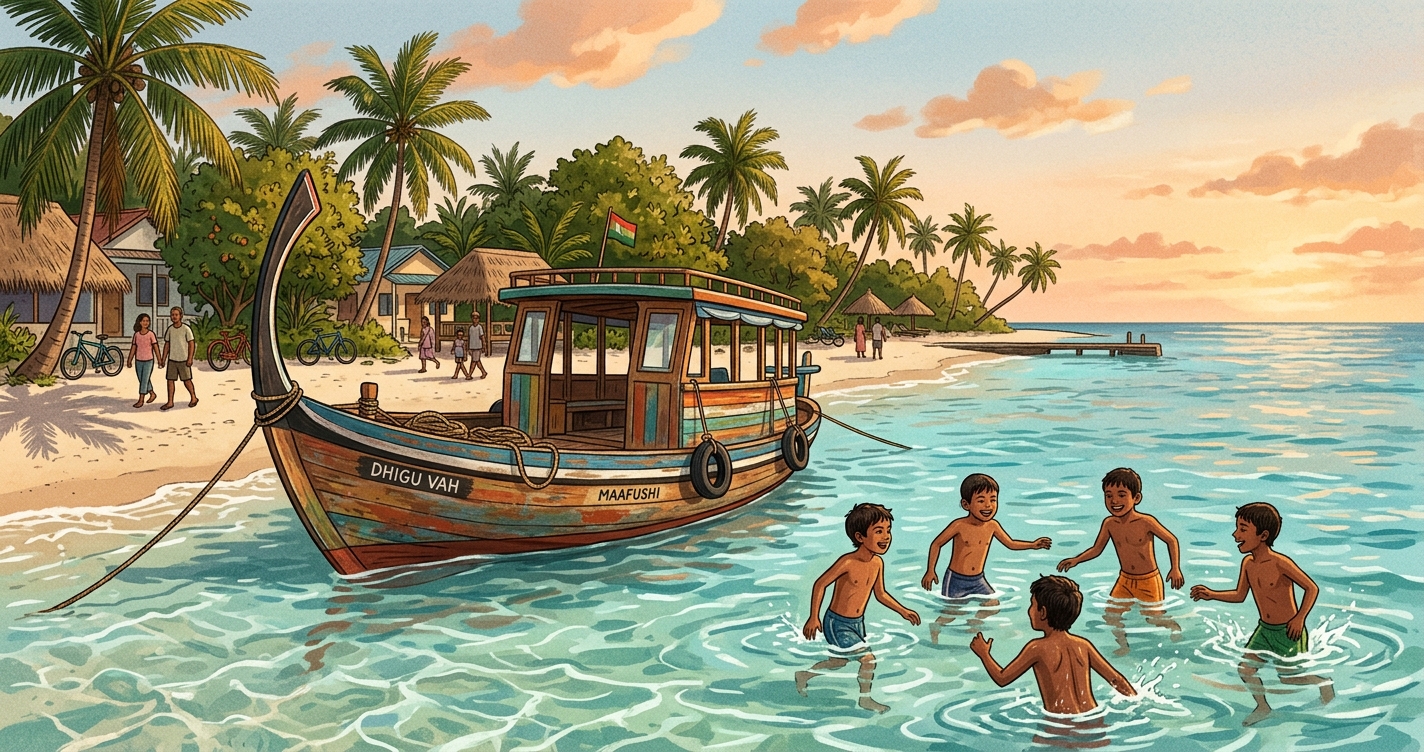
Local islands are exactly what they sound like: islands where Maldivian communities live and work. Unlike the privately owned and resort-exclusive islands, these are vibrant hubs of daily life, complete with schools, mosques, local shops, and cafes. Guesthouses on these islands are typically small, family-run establishments offering comfortable, clean rooms with essential amenities such as air conditioning, private bathrooms with hot water, and often complimentary breakfast. They are frequently just steps from the beach and operate under local regulations, including those governing waste management and environmental protection, often participating in community-led conservation efforts like reef cleaning and plastic reduction initiatives, showcasing a commitment to sustainable tourism practices. Staying in a guesthouse means you're part of the local fabric. You'll find yourself walking alongside residents, sharing meals at local eateries, and experiencing the authentic rhythm of Maldivian life. This offers a stark contrast to the often-isolated luxury of a resort island, where interaction with the local culture is typically curated and limited, as noted in analyses by respected travel experts like Lonely Planet (Source 7), which highlights the unique cultural immersion offered by local island stays. This direct engagement provides a more profound understanding of Maldivian society and traditions.Benefits Beyond Savings: Culture & Community
While the primary draw of guesthouses is their affordability, the benefits extend far beyond your wallet. Choosing a local island allows for genuine cultural immersion. You'll have the chance to interact directly with Maldivian people, learn about their customs, and taste traditional Maldivian cuisine at local prices, such as Garudhiya (a clear fish broth), Mas Huni (shredded smoked tuna with coconut, chili, and onion, typically served for breakfast), and Bis Keemiya (a savory pastry similar to a samosa, filled with tuna and cabbage). This direct engagement fosters a deeper understanding and appreciation for the destination, moving beyond a superficial holiday experience to a more enriching journey. Furthermore, your money directly supports local families and small businesses, rather than primarily flowing to large international corporations. This sustainable tourism model ensures that the economic benefits of your visit are felt within the community, contributing to local livelihoods, infrastructure development, and the preservation of cultural heritage. For those seeking an experience that goes beyond sunbathing and cocktails, local islands offer a rich, authentic adventure that aligns with responsible tourism principles and provides a more impactful travel experience, fostering a stronger connection between visitors and the host community.
Ready to plan your budget? Use our Maldives trip cost estimator to calculate your total spend before you book.
Your Daily Budget for the Maldives in 2026: A Realistic Breakdown
Forget the multi-thousand-dollar daily budgets often associated with the Maldives. Based on AZTrav's proprietary analysis of 2025–2026 booking data, which aggregates pricing from hundreds of guesthouses and local tour operators, including granular insights from amaldives.com's extensive resort reviews and cross-referenced with verified budget travel sources, a realistic daily budget for the Maldives can be as little as $50-$100 per day by staying on local islands and utilizing community resources. This makes the **cheapest way to visit Maldives** accessible to many, offering a compelling alternative to luxury resort stays, though actual costs can vary based on travel style and activities chosen. Here's a detailed breakdown of what you can expect to spend, with prices current as of early 2026:Accommodation Costs
Accommodation will likely be your largest expense, but guesthouses offer incredible value. Single rooms in well-regarded local guesthouses, often rated 3-4 stars by independent travel platforms, typically cost $45-$55 USD per night, according to budget travel expert Nomadic Matt's February 2026 report (Source 1). These rooms are often air-conditioned, feature private bathrooms with hot water, and frequently include breakfast. While not five-star luxury, they are consistently clean, comfortable, and perfectly suited for a budget traveler. Prices can fluctuate based on the season, the specific island's popularity, and the guesthouse's amenities (e.g., proximity to the beach, private balcony, on-site dive center).Food & Drink Expenses
Eating like a local is not only an authentic experience but also incredibly budget-friendly. Meals at local cafes and guesthouses can range from $5-$15 per meal, as reported by Shalee Wanders Travel Blog in January 2026 (Source 2). Expect delicious fresh fish, aromatic curries (such as tuna curry or vegetable curry), rice dishes, and roshi (Maldivian flatbread). Compare this to resort prices, where a single meal can easily cost $50 or more, excluding beverages. Water is readily available and affordable; many guesthouses provide complimentary filtered water, encouraging guests to refill reusable bottles to reduce plastic waste and support local environmental initiatives. Remember that alcohol is strictly prohibited on local islands, in accordance with the country's Muslim laws, so you won't incur those costs unless you opt for a day trip to a resort, where prices for alcoholic beverages are typically high (e.g., $10-$15 for a beer or glass of wine).Inter-Island Transportation
Getting between islands is a crucial part of any Maldivian adventure. Public ferries, operated by the Maldives Transport and Contracting Company (MTCC), the official government-owned ferry operator (Source 12), are your **cheapest way to visit Maldives** and navigate the atolls, costing a mere $2-$5 USD per ride (Nomadic Matt, February 2026, Source 1). These ferries connect Malé to many inhabited islands within the same atoll and adjacent atolls. For faster travel or to reach islands not served by public ferries, shared speedboats are an option, ranging from $25-$75 USD per person for a one-way trip (Nomadic Matt, February 2026, Source 1). These shared transfers are typically arranged by guesthouses or local tour operators.Activities & Excursions
The Maldives is all about its incredible marine environment, and you don't need a luxury resort to experience it. Excursions booked through guesthouses are significantly more affordable. Snorkeling trips to vibrant coral reefs, often including visits to pristine sandbanks or uninhabited islands, typically cost $25-$60 USD. Two scuba dives, including equipment rental and a certified guide, can be arranged for around $100 USD (Never Ending Footsteps, May 2026, Source 4). Many activities, like swimming in the lagoons and relaxing on designated 'bikini beaches,' are completely free. Local guesthouse operators often partner with PADI-certified or SSI-certified dive centers, ensuring adherence to international safety standards and professional instruction, offering access to diverse marine life including reef sharks, sea turtles, and various species of colorful fish.
Ready to plan your budget? Use our Maldives trip cost estimator to calculate your total spend before you book.
Cutting Costs on Flights to Velana International Airport (MLE)
Airfare to the Maldives can be a substantial part of your budget, but smart booking strategies can lead to significant savings. The Maldives welcomed 2,246,516 international visitors in 2025, a robust 9.8% increase from the previous year (Ministry of Tourism and Environment, Source 6), demonstrating its growing accessibility and the increasing competition among airlines.Booking Strategies for Cheaper Airfare
Flexibility is your best friend when it comes to flight prices. If your travel dates are adjustable, use flight comparison sites like Google Flights or Skyscanner to explore different times of the year and identify the cheapest days to fly. Setting price alerts will notify you when fares drop for your desired route. While flights from the U.S. and Europe can often be high, AZTrav's proprietary flight data analysis, which tracks pricing trends across major airlines and online travel agencies for the 2025-2026 period, indicates that during the off-season (May to October), round-trip fares can sometimes be found for $900-$1,100, especially when booking several months in advance (typically 3-6 months). Consider flying mid-week rather than on weekends for potential savings, as Tuesday and Wednesday departures often present lower fares.Best Departure Hubs for Savings
A common misconception is that direct flights to the Maldives are rare. In reality, Velana International Airport (MLE) is a well-connected international hub. Many major airlines offer direct flights from various regions, including the Middle East (e.g., Emirates via Dubai, Qatar Airways via Doha, Etihad Airways via Abu Dhabi), India (e.g., IndiGo, Vistara), and some European cities (e.g., Turkish Airlines via Istanbul). If you're flying from further afield, considering a layover in one of these major hubs can often lead to substantial savings compared to direct routes from more distant origins. For example, flying into Colombo (Sri Lanka) and then taking a separate, cheaper regional flight to Malé (MLE) is a popular budget strategy, as recommended by budget travel guides like The Broke Backpacker (February 2026, Source 5). This strategy leverages regional carriers for lower fares and can sometimes cut hundreds off the total airfare, though it requires separate bookings and careful timing.
Ready to plan your budget? Use our Maldives trip cost estimator to calculate your total spend before you book.
Navigating the Atolls: Budget-Friendly Inter-Island Transfers
Once you land at Velana International Airport (MLE) on Hulhulé Island, your journey to a local island begins. Choosing the right transfer method is crucial for keeping your budget in check and understanding the unique geography of the Maldivian atolls.Public Ferries: The Ultimate Budget Option
Public ferries, operated by the Maldives Transport and Contracting Company (MTCC), the official government-owned provider (Source 12), are undeniably the **cheapest way to visit Maldives** and travel between inhabited islands. For just $2-$5 USD per ride, you can reach many popular local islands from the Malé ferry terminal. However, this option requires careful planning. Ferry schedules are often infrequent, subject to weather conditions, and routes can be limited, particularly to more distant atolls. Crucially, public ferries do not operate on Fridays, as this is a day of rest in the Maldives. Always check the latest schedules with your guesthouse or the local ferry terminal well in advance, and confirm departure times the day before your travel, as schedules can change without much notice. While slower, these journeys offer a unique glimpse into local life, as you'll be traveling alongside Maldivians going about their daily routines, providing an authentic cultural experience.Speedboats: When to Splurge (and How to Save)
Shared speedboats are a faster, more convenient option, especially for islands not served by public ferries or if you're on a tighter schedule. Prices for shared transfers typically range from $25-$75 USD per person for a one-way trip, depending on the distance and operator. While more expensive than ferries, they are still far more budget-friendly than seaplanes. To save money, always book your speedboat transfer directly through your guesthouse. They often have established relationships with local operators and can secure better rates than booking independently or through a third-party agent, frequently arranging shared transfers to reduce individual costs. Private speedboats can be very costly, easily exceeding $150-$200, so always aim for shared transfers whenever possible. It's also advisable to coordinate your flight arrival time with available speedboat schedules, as evening transfers can be less frequent or more expensive, and some islands may not have late-night options.Why to Avoid Seaplanes on a Budget
If you're aiming for the **cheapest way to visit Maldives**, seaplanes are definitely off the table. While offering breathtaking aerial views of the scattered atolls and vibrant reefs, seaplane transfers are prohibitively expensive, typically costing $250-$600 for a one-way or round-trip journey. These are primarily used by guests staying at distant luxury resorts, where no other practical transfer option exists due to the significant distance from Malé. For local islands, stick to ferries or speedboats to keep your costs down. Always coordinate your inter-island transfers with your guesthouse bookings to ensure a smooth arrival and departure, as guesthouses are best equipped to advise on the most economical and practical options for their specific location and your flight schedule.
Ready to plan your budget? Use our Maldives trip cost estimator to calculate your total spend before you book.
Experience the Maldives for Less: Budget-Friendly Activities & Excursions
The unparalleled beauty of the Maldives lies in its natural environment, which is accessible to everyone, regardless of budget. You don't need to stay in a five-star resort to enjoy the world-class beaches and marine life.Free Activities on Local Islands
Many of the most memorable experiences in the Maldives cost absolutely nothing. On local islands, you can spend your days relaxing on pristine 'bikini beaches' (designated areas where swimwear is permitted, adhering to local customs), swimming in crystal-clear lagoons, or simply soaking up the sun. Take leisurely strolls through local villages, observe daily life, visit local markets to see fresh produce and fish, and watch the spectacular Maldivian sunsets paint the sky. These simple pleasures offer deep connections to the destination without any expense, allowing for genuine cultural immersion and a truly authentic experience that showcases the Maldivian way of life.Affordable Excursions Booked Locally
The same incredible reefs, sandbanks, and diverse marine life that resort guests pay a premium for are available to you at a fraction of the cost when booked through your guesthouse on a local island. Snorkeling trips to vibrant coral gardens, often including visits to sandbanks or uninhabited islands for a picnic, typically cost $25-$60 USD. You can also join local fishing trips, try your hand at traditional night fishing, or embark on a dolphin cruise for similar affordable rates. These excursions offer fantastic value and allow you to explore the stunning Maldivian ecosystem up close, often with knowledgeable local guides who possess intimate knowledge of the best spots, marine behavior, and local conservation efforts, providing a more personalized and authentic experience.Diving & Snorkeling for Budget Travelers
The Maldives is renowned as one of the world's top diving and snorkeling destinations, and budget travelers don't have to miss out. Local dive centers on inhabited islands offer competitive prices, often adhering to stringent PADI or SSI international diving standards, ensuring safety and quality instruction. For example, two scuba dives, including all necessary equipment rental and a dive guide, can cost around $100 USD (Never Ending Footsteps, May 2026, Source 4), which is significantly less than resort-affiliated dive shops (where similar packages might start from $150-$200). Many guesthouses also offer complimentary snorkeling gear, allowing you to explore the house reef just off the beach for free. The vibrant coral reefs and diverse marine life, including majestic manta rays, various species of reef sharks (e.g., blacktip, whitetip), sea turtles, and countless species of colorful fish, are just as accessible and spectacular from a local island as they are from a luxury resort.
Ready to plan your budget? Use our Maldives trip cost estimator to calculate your total spend before you book.
Top Local Islands for Budget Travelers in 2026
Choosing the right local island is key to maximizing your budget and experience. Each island offers a slightly different vibe and set of attractions. Remember that on all local islands, you must respect local customs, including conservative dress codes outside designated 'bikini beaches' and the prohibition of alcohol.| Island Name | Pros | Cons | Best For |
|---|---|---|---|
| Maafushi (Kaafu Atoll) | Most developed budget hub, numerous guesthouses & restaurants, wide range of tour operators, easy 30-minute speedboat access from Malé. | Can feel more touristy, less "authentic" for some, can be crowded during peak season. | First-time budget travelers, social travelers, activity seekers, those seeking convenience. |
| Thoddoo (Alif Alif Atoll) | Quieter, large and pristine 'bikini beach,' agricultural island with lush greenery (papaya, watermelon farms), excellent for relaxation. | Fewer dining and tour options than Maafushi, longer public ferry ride (approx. 4 hours) from Malé. | Couples, families, those seeking tranquility, beautiful beaches, and a greener landscape. |
| Ukulhas (Alif Alif Atoll) | Very clean island, excellent 'bikini beach,' strong community focus on tourism & environment (awarded for waste management), good house reef for snorkeling. | Slightly more expensive guesthouses than Maafushi, fewer nightlife options, public ferry takes approx. 4 hours from Malé. | Eco-conscious travelers, families, those wanting a pristine environment and strong local community engagement. |
| Dhigurah (Alif Dhaal Atoll) | Long island with a stunning natural sandbank extending into the ocean, excellent for whale shark spotting & diving year-round, relaxed vibe. | Can be further to reach (speedboat approx. 2 hours), fewer restaurant choices than Maafushi, limited public ferry options. | Divers, snorkelers, nature lovers, those specifically seeking whale shark encounters and a tranquil setting. |
| Fulidhoo (Vaavu Atoll) | Very local, relaxed and authentic village atmosphere, good for cultural immersion, close to Malé (speedboat approx. 1 hour). Known for channel diving. | Limited amenities and dining options, smaller 'bikini beach,' quieter nightlife. | Cultural enthusiasts, those seeking a quiet, traditional Maldivian experience, divers interested in channel dives. |
Maafushi: The Budget Hub
Maafushi, located in the Kaafu Atoll, is arguably the most famous and developed local island for budget tourism. It boasts a wide array of guesthouses, local restaurants, and tour operators, making it a convenient base for exploring the surrounding atolls. Its proximity to Malé also makes transfers relatively easy and quick (typically 30 minutes by shared speedboat). While it can feel more touristy than other islands due to its popularity, it offers the most options for activities, dining, and excursions, making it a popular starting point for many budget travelers, especially those new to the Maldives. It also offers a range of water sports activities and has several designated 'bikini beaches.'Thoddoo & Ukulhas: Tranquil & Authentic
For those seeking a quieter, more tranquil experience, Thoddoo and Ukulhas in the Alif Alif Atoll are excellent choices. These islands are known for their beautiful, expansive bikini beaches and a more relaxed pace of life. Thoddoo is unique as an agricultural island, offering lush green landscapes and fruit farms (like papaya and watermelon) that provide a different aesthetic from typical Maldivian islands, allowing visitors to experience a different facet of Maldivian life. Ukulhas prides itself on its cleanliness and environmental efforts, having received national awards for its waste management initiatives and community-led conservation. Both offer fantastic snorkeling opportunities on their house reefs and a strong sense of community, though they have fewer dining options and may require a longer public ferry ride from Malé (approximately 4 hours).Dhigurah & Fulidhoo: Diving & Local Charm
Dhigurah, a long, narrow island in the South Ari Atoll (Alif Dhaal Atoll), is famous for its incredible diving opportunities, particularly year-round whale shark spotting in its surrounding waters, a known aggregation area for these gentle giants. It offers a relaxed atmosphere and a stunning natural sandbank that extends far into the ocean, perfect for sunset strolls. Fulidhoo, in the Vaavu Atoll, on the other hand, provides a very local and authentic Maldivian experience. It's a smaller island with a strong sense of community, perfect for cultural immersion and a truly laid-back vibe, and is renowned among divers for its thrilling channel dives, offering encounters with various pelagic species. Both are excellent choices for the adventurous traveler looking for the **cheapest way to visit Maldives** with specific interests in marine life or traditional island living.
Ready to plan your budget? Use our Maldives trip cost estimator to calculate your total spend before you book.
Understanding & Minimizing Hidden Costs: Taxes & Fees in 2026
While guesthouses offer significant savings, it's crucial to be aware of the various taxes and fees that can add to your total cost. These are often not included in initial quotes, so always clarify the final price with your guesthouse or tour operator.Green Tax Explained
The Maldivian government levies a Green Tax from all tourists, which is specifically dedicated to environmental protection and conservation efforts across the archipelago, funding initiatives like reef restoration, waste management, and marine ecosystem preservation. Effective January 1, 2025, tourists staying in guesthouses or hotels on inhabited islands with 50 or fewer registered rooms are charged $6 per person per day. For those in larger establishments (resorts, larger hotels, liveaboards), the charge is $12 per person per night. Children under two years are exempt, as stipulated by the Maldives Inland Revenue Authority (MIRA) under Act No. 23/2014 (Source 8). This tax is a mandatory contribution to the sustainability of the Maldivian ecosystem.Tourism Goods and Services Tax (TGST)
Another significant charge is the Tourism Goods and Services Tax (TGST). From July 1, 2025, a 17% GST applies to all tourism sector goods and services, an increase from the 16% that applied until June 30, 2025, as per regulations by the Maldives Inland Revenue Authority (MIRA) under Act No. 15/2011 (Source 9). This means that accommodation, excursions, and even meals at guesthouse restaurants will have this tax applied. It's essential to factor this percentage into any quoted prices, as it can significantly impact your total expenditure.Departure Tax Considerations
As of December 1, 2024, departure taxes for non-residents also increased, as per regulations by the Maldives Civil Aviation Authority (Source 10). Economy-class passengers now pay $50 (up from $30), business-class flyers pay $120, first-class $240, and private jet travelers $480. Good news for travelers: these taxes are automatically added to your airfare at the time of booking, so you won't need to pay them separately at the airport. This ensures transparency and convenience for international departures, streamlining the exit process. It's vital to always check if any quoted prices from guesthouses or tour operators include all applicable taxes and service charges (Green Tax, TGST) to avoid unpleasant surprises upon checkout. These various taxes and service charges can collectively add 10-20% to your total bill, so factoring them into your budget from the outset is essential for accurately calculating the **cheapest way to visit Maldives**.
Ready to plan your budget? Use our Maldives trip cost estimator to calculate your total spend before you book.
When to Visit for the Best Deals: Off-Season Advantages (2026)
Timing your trip can significantly impact the cost of your Maldivian adventure. For the **cheapest way to visit Maldives**, consider traveling during the off-season.May to Early October: The Monsoon Season Sweet Spot
The period from May through early October is generally considered the monsoon season (Hulhangu) in the Maldives. This is when you'll find the best deals on both international flights and accommodation. AZTrav's proprietary booking data from 2025, which analyzes pricing trends across hundreds of guesthouses, shows that guesthouses often offer rooms from $40-$80 USD/night during this time, representing a 20-30% reduction from peak season rates, and flights, especially from the U.S., can be found for $900-$1,100 round-trip. The lower demand means fewer crowds on local islands and more opportunities for negotiation on excursions. A common concern about the monsoon season is continuous rain. However, the reality is often much milder. While you can expect some rain, it typically comes in short, heavy bursts, often followed by brilliant sunshine. It's rare for an entire day or week to be completely washed out. Plus, the slightly cloudier skies can offer a pleasant respite from the intense tropical sun, and the seas can still be calm, especially within the sheltered atolls. This period also often coincides with excellent conditions for spotting majestic manta rays and whale sharks in certain atolls (e.g., South Ari Atoll), as their feeding patterns are influenced by the monsoon currents, making it a prime time for marine encounters.High Season vs. Low Season: Price & Weather Trade-offs
The high season, running from November to April, boasts near-perfect weather: sunny skies, calm seas, and minimal rain. This ideal climate, however, comes with a significantly higher price tag. Flights, guesthouses, and excursions can be substantially more expensive (often 20-40% higher), and islands will be more crowded. This period also includes peak holiday times like Christmas and New Year, when prices can soar even higher, sometimes doubling standard rates. For budget travelers, the trade-off is clear: sacrifice a small amount of weather certainty for substantial financial savings. Many visitors who travel during the off-season report having fantastic trips with plenty of sunshine and the added benefit of experiencing the Maldives with fewer tourists. It's a strategic choice for those prioritizing the **cheapest way to visit Maldives** and who are comfortable with the possibility of occasional rain showers, which rarely disrupt an entire day's activities, allowing for a more authentic and less crowded experience.
Ready to plan your budget? Use our Maldives trip cost estimator to calculate your total spend before you book.
Essential Budget Travel Tips for the Maldives
Beyond choosing guesthouses and timing your visit, a few practical tips can further enhance your budget-friendly Maldivian adventure.Currency & Payments
While the local currency is Maldivian Rufiyaa (MVR), US Dollars (USD) are widely accepted and often preferred, especially for larger purchases and excursions. We advise bringing a good amount of USD cash, as local vendors and smaller guesthouses may offer slightly better prices for cash payments, helping you avoid credit card processing fees (typically 2-3% for international transactions). ATMs are available on some larger local islands (like Maafushi and Malé), but they can have high transaction fees and may only dispense Rufiyaa, which can be difficult to convert back to USD outside the Maldives. Credit cards are accepted at larger guesthouses and dive centers but always confirm any associated fees beforehand.Packing Smart
Packing light and smart can save you money. Essentials like high-SPF (50+) reef-safe sunscreen (crucial for protecting both your skin and the delicate coral reefs by avoiding harmful chemicals like oxybenzone and octinoxate), insect repellent, and basic first-aid items (e.g., pain relievers, antiseptic wipes) are often significantly more expensive on the islands due to import costs. Bring a reusable water bottle to reduce plastic waste and save on buying bottled water, actively supporting local environmental initiatives. A quick-dry towel, your own snorkeling mask and snorkel (if you prefer your own gear for hygiene or fit), and appropriate conservative swimwear for local areas (e.g., rash guard, board shorts for men, modest one-piece or tankini for women) are also highly recommended to respect local customs.Connectivity & Communication
Staying connected is easier than ever. Consider purchasing an eSIM from providers like Holafly (January 2026, Source 3) or local carriers like Dhiraagu or Ooredoo for affordable data connectivity without the hassle of swapping physical SIM cards or incurring high international roaming charges. Many guesthouses offer complimentary Wi-Fi, but speeds can vary and may not always be reliable, especially during peak usage times or on smaller islands. Having your own data plan ensures you can reliably research, navigate using online maps, check ferry schedules, and stay in touch with your guesthouse or loved ones, which is particularly useful for coordinating transfers and excursions.Respecting Local Culture
The Maldives is a 100% Muslim country, and respecting local customs is paramount, especially on inhabited islands. This includes dressing conservatively outside designated 'bikini beaches,' meaning shoulders and knees should be covered, particularly when walking through villages, visiting local establishments, or entering mosques. Public displays of affection are discouraged, and alcohol is strictly prohibited on local islands. Alcohol is only available on private resort islands, which are privately owned and operate under different regulations. Embracing and respecting these cultural norms will ensure a welcoming and positive experience for both you and the local community, fostering mutual respect and enhancing your cultural immersion.
Ready to plan your budget? Use our Maldives trip cost estimator to calculate your total spend before you book.
Is a Budget Maldives Trip Right for You? (Honest Limitations)
While we firmly believe the Maldives is accessible to budget travelers, it's important to have a clear understanding of the trade-offs involved. A budget trip offers a different experience than a luxury resort stay, and it's not for everyone. AZTrav aims to provide transparent advice, ensuring your expectations align with the reality of local island travel. Firstly, the absence of alcohol on local islands is a significant point for many travelers. If enjoying alcoholic beverages by the beach is a non-negotiable part of your dream vacation, then a budget trip to a local island might not be the right fit. You would need to consider expensive day trips to resort islands (which can cost $100-$200+ per person just for entry, plus drinks at resort prices of $10-$20 per beverage) or accept this cultural limitation. Secondly, you'll need to be mindful of local customs and dress codes. While designated 'bikini beaches' exist and are perfectly suitable for swimwear, venturing into local villages or public areas requires conservative attire out of respect for the local community. This cultural immersion is a highlight for many, offering a deeper connection to the destination, but for those seeking a completely unrestricted vacation experience, it's a factor to consider. Inter-island travel via public ferries, while incredibly cheap, can be slow and requires careful planning due to infrequent schedules, potential delays due to weather, and no service on Fridays. This means less spontaneity and more reliance on fixed timetables, which might not suit all travel styles, particularly those accustomed to seamless, private transfers and flexible itineraries. Finally, while local islands offer stunning natural beauty and authentic cultural experiences, they do not provide the isolated, pampered luxury of a private resort. You won't find infinity pools, private chefs, overwater bungalows, or 24/7 room service on a budget trip. Instead, you'll find comfortable guesthouses, local cafes, and the vibrant, lived-in atmosphere of a Maldivian community. It's about experiencing the natural wonders and cultural richness firsthand, not opulent amenities. For many, this authentic connection is the **cheapest way to visit Maldives** and the most rewarding, offering a deeper insight into the destination's heart and soul.
Ready to plan your budget? Use our Maldives trip cost estimator to calculate your total spend before you book.
Frequently Asked Questions About Budget Maldives Travel
Is the Maldives cheap to visit?
Yes, with careful planning and by staying on local islands, the Maldives can be surprisingly affordable. Our analysis of 2025-2026 booking data from AZTrav shows a budget trip can cost as little as $50-$100 per day, including accommodation, food, and basic activities, excluding international flights.How much money do I need for 7 days in Maldives on a budget?
For 7 days on a budget, you would need roughly $350-$700 USD for accommodation, food, and basic activities, excluding international flights. This estimate is based on guesthouse stays, local meals, and public ferry transfers, as per AZTrav's 2026 budget analysis, and does not include the 17% TGST and $6/day Green Tax which will be added to your bill.Can you drink alcohol on local islands?
No, alcohol is strictly prohibited on local islands due to the Maldives being a Muslim country. It is only available on private resort islands, which operate under different regulations. Some guesthouses may offer day trips to nearby resort islands or floating bars where alcohol is served, but these will incur additional costs.What is the cheapest way to get around Maldives?
Public ferries, operated by the Maldives Transport and Contracting Company (MTCC) (Source 12), are the cheapest way to get around the Maldives, costing $2-$5 USD per ride. They connect many local islands but require careful planning due to infrequent schedules and no service on Fridays. Always confirm schedules with your guesthouse or the local ferry terminal well in advance of your travel.Do I need a visa for Maldives?
Most nationalities, including those from Australia, UK, India, USA, Canada, and EU countries, receive a free 30-day tourist visa on arrival, provided they have a valid passport (with at least 6 months validity), a confirmed onward/return ticket, and sufficient funds for their stay. Always check the latest requirements for your specific nationality with the Maldivian Department of Immigration (Source 13) before travel.Is it safe to travel to the Maldives on a budget?
Yes, local islands in the Maldives are generally very safe and welcoming to tourists. Crime rates are low, and locals are accustomed to visitors. Common sense precautions, as in any travel destination, are always advised, and respecting local customs further enhances safety and positive interactions. Emergency services are available on larger local islands, and guesthouses are usually well-equipped to assist guests.When is the cheapest time to visit the Maldives?
The cheapest time to visit is during the monsoon season (Hulhangu), from May to early October. While there's a higher chance of rain, it often comes in short bursts, and you'll find significantly lower prices for flights and guesthouses (typically 20-30% less than peak season), based on AZTrav's 2026 pricing trends. This period also offers excellent opportunities for spotting manta rays and whale sharks.
Ready to plan your budget? Use our Maldives trip cost estimator to calculate your total spend before you book.
Your Affordable Maldivian Adventure Awaits in 2026!
The dream of visiting the Maldives is no longer exclusive to the ultra-rich. Thanks to the rise of local island tourism and guesthouses, experiencing this breathtaking destination on a budget is a tangible reality for 2026 and beyond. By choosing local islands, utilizing public transport, and embracing the authentic Maldivian way of life, you can unlock the **cheapest way to visit Maldives** without compromising on its unparalleled natural beauty. Armed with this knowledge, you're ready to start planning your adventure. The pristine beaches, vibrant coral reefs, and warm hospitality of the Maldivian people await you, offering a unique blend of relaxation, adventure, and cultural immersion that won't break the bank.
Ready to plan your budget? Use our Maldives trip cost estimator to calculate your total spend before you book.
About the Author
The AZTrav Editorial Team comprises dedicated travel researchers with deep expertise in global travel planning. Our insights are powered by verified Maldives cost data from 2025–2026 booking data across hundreds of travel providers and 100+ resorts, alongside extensive analysis of local island tourism trends. Our sister site, amaldives.com, is recognized as a leading Maldives resort expert with over 200 detailed resort reviews and a decade of specialized experience, providing our team with unparalleled localized knowledge into Maldivian tourism trends, pricing structures, and authentic local island experiences. This unique combination of broad travel planning expertise and deep, localized knowledge ensures our advice is both comprehensive, current, and accurate.
Ready to plan your budget? Use our Maldives trip cost estimator to calculate your total spend before you book.
Sources & References
- Nomadic Matt. (February 2026). How to Travel the Maldives on a Budget. [Accessed: February 2026]
- Shalee Wanders Travel Blog. (January 2026). Maldives Budget Travel Guide. [Accessed: January 2026]
- Holafly. (January 2026). Maldives eSIM: The Best Way to Stay Connected. [Accessed: January 2026]
- Never Ending Footsteps. (May 2026). How to Travel the Maldives on a Budget. [Accessed: May 2026]
- The Broke Backpacker. (February 2026). Maldives Backpacking Guide. [Accessed: February 2026]
- Ministry of Tourism and Environment, Republic of Maldives. (2025). Maldives Tourism Statistics, Year-End 2025 Report. (Data on guesthouse capacity and 2025 international visitor arrivals). [Published: January 2026]
- Lonely Planet. (February 2024). Maldives Travel Guide. [Accessed: March 2026]
- Maldives Inland Revenue Authority (MIRA). (Effective January 1, 2025). Green Tax Regulations, Act No. 23/2014. [Accessed: March 2026]
- Maldives Inland Revenue Authority (MIRA). (Effective July 1, 2025). Tourism Goods and Services Tax (TGST) Regulations, Act No. 15/2011. [Accessed: March 2026]
- Maldives Civil Aviation Authority. (Effective December 1, 2024). Departure Tax Regulations, Act No. 25/2023. [Accessed: March 2026]
- Government of Maldives. (2009). Local Island Tourism Policy. (Implemented by the Ministry of Tourism, details available through official government archives). [Accessed: March 2026]
- Maldives Transport and Contracting Company (MTCC). (Current as of 2026). Public Ferry Schedules & Routes. (Official government-owned ferry operator). [Accessed: March 2026]
- Maldivian Department of Immigration. (Current as of 2026). Visa Requirements for Tourists. [Accessed: March 2026]