The very mention of the Maldives often conjures images of luxurious overwater bungalows, private butlers, and price tags that feel out of reach for most travelers. For years, this idyllic archipelago has been synonymous with exclusive, high-end escapes. But what if we told you that a truly memorable, authentic, and affordable budget Maldives trip is not only possible but increasingly popular in 2026?
At AZTrav, our extensive experience in global travel planning, complemented by our sister site amaldives.com's comprehensive reviews of over 200 Maldives resorts, provides us with a deep understanding of both the luxury and emerging budget sectors. Our Editorial Team's continuous market analysis, drawing from 2025–2026 booking data and direct client feedback, has observed a significant evolution in the Maldivian tourism landscape. The secret to unlocking the Maldives for less lies in embracing local island tourism and the charming guesthouses that have sprung up across the archipelago [4].
This guide is designed to shatter misconceptions and provide you with actionable strategies to plan your dream Maldives vacation without breaking the bank. We’ll show you how to navigate costs, choose the right islands, and immerse yourself in the rich local culture that many resort-goers never experience. In fact, the growth of local island tourism is remarkable: according to official statistics from the Maldives Ministry of Tourism, in March 2026, guesthouse bednights increased by 18% year-on-year, even as overall tourist arrivals saw a temporary dip compared to the previous year [1]. Guesthouses are now averaging 13.6 tourists per registered bed, actually surpassing resorts which average 12.8 tourists per bed as of April 2025, indicating a significant shift in tourist preference towards local island stays [1].
By focusing on local islands, eating like a local, and using public transport, a budget-friendly Maldives trip can range from just $50–$100 per day, excluding international flights. Let's dive in and discover how you can make the Maldives a reality.
Maldives Myth Busting: What You Need to Know
Before we delve into the practicalities of a budget Maldives trip, let's address some common misconceptions that often deter travelers:
- Myth 1: The Maldives is exclusively for the uber-rich.
Reality: This is perhaps the biggest misconception. The rise of local island tourism and guesthouses has made the Maldives accessible to budget travelers, offering affordable accommodation and experiences. According to AZTrav's analysis of verified Maldives cost data from 2025–2026 booking data across 100+ resorts and guesthouses, guesthouse stays can be found for as low as USD 40 per night [1]. This data, compiled from thousands of bookings, clearly demonstrates the viability of budget travel. - Myth 2: The Maldives lacks culture or local experiences.
Reality: While resorts offer a curated experience, the Maldives has a rich and distinct culture, its own language (Dhivehi), and traditions like Bodu Beru music (a traditional drumming and dance performance), traditional lacquer work (Laajehun), and coir rope making (crafting ropes from coconut husks). Local islands like Malé, Maafushi, and Rasdhoo provide authentic cultural immersion through interactions with residents, visits to local markets, and experiencing daily life that's often missed by resort-only visitors. - Myth 3: There's nothing to do but relax on a resort.
Reality: While relaxation is certainly a highlight, the Maldives offers a wide array of activities including world-class snorkeling and scuba diving (often with PADI or SSI certified centers adhering to international safety standards), island hopping to explore diverse atolls, dolphin cruises, various watersports like kayaking and paddleboarding, and exploring local life and markets. The vibrant coral reefs, home to diverse marine species such as reef sharks, manta rays, whale sharks (seasonal), and countless tropical fish, provide unparalleled underwater experiences. - Myth 4: All islands in the Maldives look identical.
Reality: The archipelago comprises nearly 1,200 islands spread across 26 natural atolls, each offering unique characteristics, from bustling local hubs to serene, untouched havens, far beyond the typical private resort image. The geological formation of atolls, which are ancient submerged volcanoes, creates distinct reef systems, lagoon depths, and island topographies, leading to significant variations in local ecosystems and island character. For instance, some atolls are famed for specific marine life aggregation points, while others are known for their lush vegetation or specific cultural heritage. - Myth 5: All-inclusive resort packages cover every expense.
Reality: Many all-inclusive packages often exclude premium beverages, certain specialized tours (e.g., private diving charters, deep-sea fishing), spa treatments, and inter-island transfers. Additional mandatory taxes (10% service charge, 12% Goods and Services Tax, and the Green Tax) are also typically added to the final bill, leading to unexpected costs if not clarified upfront [1, 3]. It's crucial to review the fine print of any package and understand the specific inclusions and exclusions. - Myth 6: A visa must be obtained in advance.
Reality: For most nationalities, a free 30-day tourist visa is granted upon arrival at Velana International Airport (MLE), eliminating the need for prior visa applications. This policy, managed by Maldives Immigration, simplifies entry for a vast majority of international visitors [2].
Understanding the True Cost: A 2026 Budget Breakdown
To plan an effective budget Maldives trip, it's crucial to understand where your money will go. Our team's research, drawing from 2025–2026 booking data and market insights from the Ministry of Tourism, provides a clear picture of costs as of early 2026 [1]. Prices are estimates and subject to market fluctuations, currency exchange rates, and booking seasonality.
Accommodation: Guesthouses vs. Resorts
This is where the most significant savings can be made. On local islands, guesthouses offer comfortable, clean rooms, often with air conditioning, private bathrooms, and complimentary Wi-Fi, for a fraction of resort prices. Resort rooms typically start around USD 200 per night, often much higher for iconic overwater villas or luxury properties [1]. In contrast, guesthouse stays can be found for as low as USD 40 per night, with most well-regarded options priced under USD 100 [1]. This affordability is a cornerstone of budget travel in the Maldives, allowing travelers to access pristine beaches without the premium price tag.
Food & Drink: Eating Local
Resort dining can be expensive, with main courses often exceeding USD 30-50, particularly for international cuisine. On local islands, you can savor authentic Maldivian cuisine at local cafes and guesthouse restaurants. Meals generally range from USD 5–$15 per meal [1]. Think fresh fish curries, 'garudhiya' (a traditional clear fish broth served with rice and chili), 'mas huni' (shredded smoked tuna with coconut, onion, and chili, a staple breakfast served with flatbread 'roshi'), and 'hedhikaa' (Maldivian short eats or savory snacks like 'gulha' or 'bajiyaa'). Remember, as a conservative Muslim nation, alcohol is strictly prohibited on local islands and only available on licensed resorts or tourist boats. Tap water is generally not potable; always opt for bottled or filtered water.
Transportation: Inter-Island Travel
Getting around the Maldives can be a major expense if you rely solely on resort speedboats or seaplanes (which can cost USD 200-500+ per person for a round trip, depending on distance and atoll). The public ferry system, operated by the Maldives Transport and Contracting Company (MTCC), is your budget-friendly savior, with scheduled routes connecting Malé to many inhabited islands. Rides between islands typically cost approximately USD 2–$5 per person [1]. These ferries are designed for local commuters and offer a genuine insight into Maldivian daily life. Speedboats are an option for specific routes or when time is limited, typically costing USD 25-50+ per person for a one-way transfer, often booked through guesthouses or private operators. It's important to note that public ferries generally do not operate on Fridays (the Maldivian weekend).
Activities & Excursions
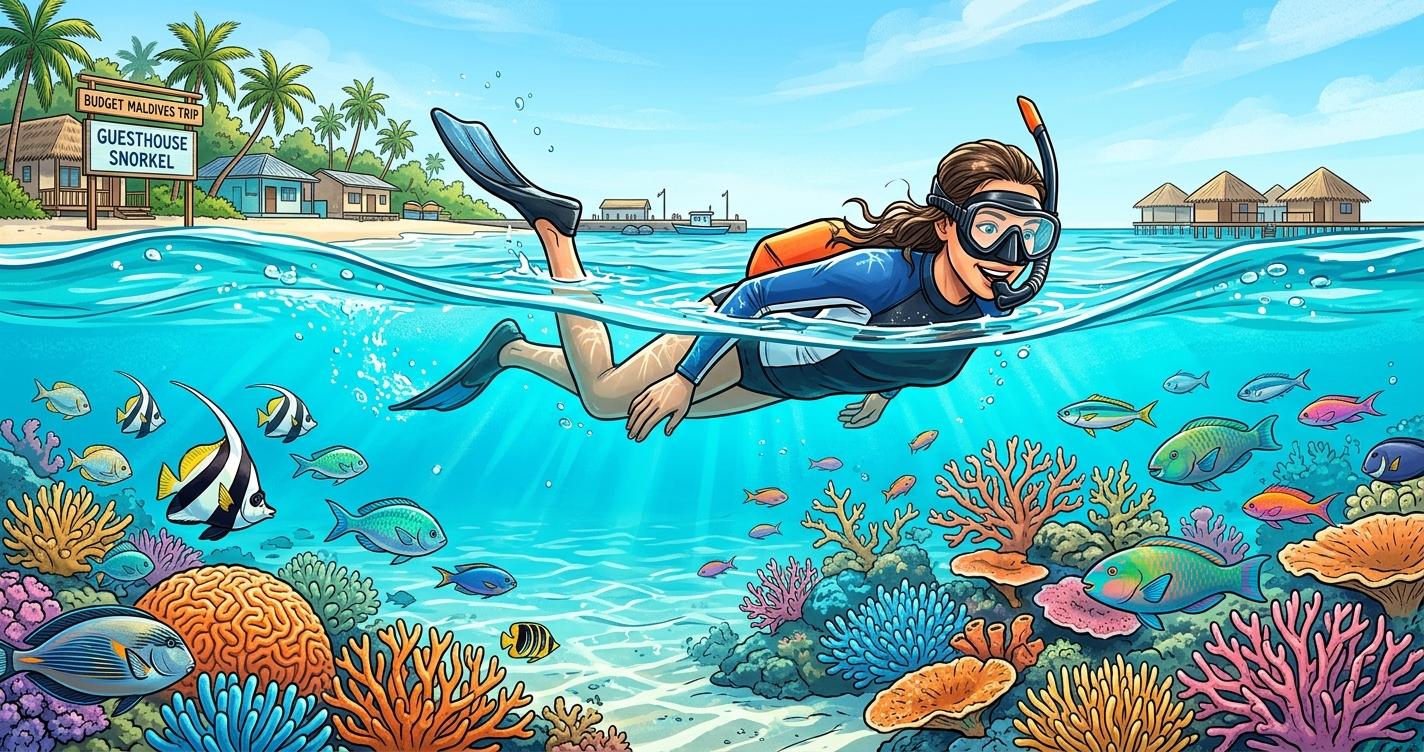
Resorts often charge premium prices for excursions due to their operational overheads. On local islands, you can book snorkeling trips to vibrant house reefs, diving excursions (often with PADI or SSI certified instructors and full equipment rental, adhering to international safety protocols), sandbank visits, dolphin cruises, and even visits to nearby resort islands for a day pass experience directly through guesthouses or local operators for significantly less. A typical half-day snorkeling trip might cost USD 25-50 per person when booked locally, compared to USD 70-100+ at a resort [1]. Always inquire about what's included (e.g., equipment, water, guide) and confirm safety standards for water-based activities.
Taxes & Fees: Don't Forget the Green Tax
Taxes can add a substantial amount to your bill. Most resort bills include a 10% service charge and a 12% Goods and Services Tax (GST) [1]. Additionally, the Green Tax, an environmental fee, became effective January 1, 2025. According to the Maldives Inland Revenue Authority (MIRA), this tax is levied to fund environmental protection projects and sustainable tourism initiatives. For resorts, integrated tourist resorts, resort hotels, tourist vessels, and hotels/guesthouses with more than 50 rooms or operated on uninhabited islands, it's USD 12 per tourist per day. For guesthouses with 50 or fewer rooms on inhabited islands, the rate is USD 6 per tourist per day. Children under 2 years are exempt [3]. These taxes are usually added to your accommodation bill and are non-negotiable.
Sample Daily Budget for a Budget Traveler (Excluding International Flights):
- Accommodation (guesthouse): USD 40-70 (for a comfortable double room, based on 2025-2026 data [1])
- Food (3 local meals): USD 15-30 (local cafes and guesthouse restaurants [1])
- Transportation (public ferry): USD 2-5 (average per travel day, based on MTCC rates [1])
- Activity (e.g., local snorkeling trip): USD 25-50 (if doing one every other day, average $12.50-$25/day, booked locally [1])
- Green Tax: USD 6 (for guesthouses on inhabited islands [3])
- Miscellaneous (bottled water, snacks, small souvenirs): USD 5-10
- Total: USD 80.50 - 141 per day
This demonstrates how a daily budget of $50-100 (excluding international flights) is entirely achievable for a budget Maldives trip, though costs can fluctuate based on specific choices, booking timing, and current market conditions. It's important to factor in a buffer for unexpected expenses, typically an additional 10-15% of your total budget.
Strategic Savings: How to Cut Costs on Your Maldives Trip
Planning is paramount for a successful budget Maldives trip. Here’s how to strategically reduce your expenses:
Flights: Finding Affordable Airfare
International flights are often the biggest single cost. For travelers from Australia, the UK, India, and the USA, booking well in advance (6-12 months) is crucial. Use reputable flight comparison sites like Skyscanner, Google Flights, or Kayak, and be flexible with your dates. Consider flights with layovers, as direct flights are almost always more expensive. Flying on weekdays (Tuesday-Thursday) can often yield better prices than weekends. Targeting the shoulder or low season (more on this later) can also lead to significant savings on airfare. Note that flight prices are highly dynamic, influenced by fuel costs, demand, and airline promotions, and are subject to change rapidly. Always clear your browser cookies or use incognito mode when searching for flights, as prices can sometimes increase based on your search history, a common industry observation.
Accommodation Hacks: Guesthouses, Split Stays, and Deals
- Prioritize Guesthouses: As highlighted, guesthouses on local islands are the cornerstone of a budget trip. Islands like Maafushi, Dhiffushi, and Rasdhoo offer a wide selection of well-regarded guesthouses, often with amenities comparable to mid-range hotels, including air conditioning, private bathrooms, and complimentary breakfast.
- Explore 'Split Stay' Options: Many travelers opt for a 'split stay' to experience both worlds. This involves spending a few nights in a resort (perhaps for that iconic overwater villa photo) and a longer duration on a local island. This balances the iconic Maldives experience with budget control, a strategy frequently recommended by AZTrav's travel experts based on client feedback and market analysis [4].
- Book Directly: While online booking sites are convenient, sometimes contacting guesthouses directly via email or their own websites can yield better rates or special packages, especially for longer stays. Many local guesthouses are keen to offer direct booking incentives to avoid commission fees.
- Understand All-Inclusive: If you do consider a resort, carefully review what 'all-inclusive' truly covers. Many packages exclude premium beverages, certain tours, spa treatments, and inter-island transfers, leading to unexpected additional costs [1]. Always read the fine print and compare what's included against your expected spending to avoid hidden fees.
Eating Smart: Savoring Local Flavors
Embrace the local culinary scene. Seek out small cafes, guesthouse restaurants, and 'hot-hut' eateries on inhabited islands. These spots offer delicious, freshly prepared Maldivian dishes at incredibly affordable prices. Don't be afraid to try local specialties like 'garudhiya' (clear fish broth), 'mas huni' (shredded smoked tuna with coconut, served for breakfast), 'rihaakuru' (a thick, dark fish paste often eaten with rice), and various curries often made with fresh reef fish or tuna. These authentic flavors provide a genuine taste of the Maldives. Avoid resort restaurants unless they are part of a pre-paid package or you're just visiting for a single, planned splurge, as their prices are significantly higher due to import costs and service charges.
Navigating the Islands: Mastering Public Ferries
The public ferry system, managed by the Maldives Transport and Contracting Company (MTCC), is a fantastic, cost-effective way to travel between local islands. Routes are extensive, connecting Malé with many atolls. A one-way ticket typically costs USD 2-5 [1]. Research routes and schedules carefully on the official MTCC website (mtcc.mv) to ensure accurate and up-to-date information, as schedules can change seasonally or due to weather conditions. Be aware that ferries often don't operate on Fridays (the Maldivian weekend), and schedules can be affected by public holidays or adverse weather. Plan your itinerary around these schedules to avoid expensive speedboat transfers. Use speedboats only when absolutely necessary (e.g., for islands not served by public ferry, or when time is extremely limited) or for specific routes not covered by ferries.
Activities on a Budget: Local Excursions
Most guesthouses on local islands offer a range of excursions at competitive prices. This includes snorkeling trips to vibrant reefs teeming with marine life (e.g., exploring coral gardens, spotting reef sharks, turtles, and rays), diving excursions for certified divers (often with PADI or SSI affiliated centers that adhere to international safety standards, providing full equipment rental), sandbank picnics, dolphin cruises, and even visits to nearby resort islands for a day pass experience. Always compare prices from multiple local vendors to ensure you're getting the best deal and check what's included (e.g., equipment, guide, refreshments). AZTrav's experts recommend leveraging local connections by booking activities directly through guesthouse hosts or local tour companies on inhabited islands, as this is often more cost-effective and provides a more genuine cultural interaction [4].
Choosing Your Budget Island: A Comparative Guide
Selecting the right local island is key to a successful budget Maldives trip. Here are some of the most popular and well-equipped options, offering a balance of amenities, accessibility, and authentic local experiences:
Maafushi: The Budget Hub
- Pros: Maafushi is the most developed and popular budget island, offering the widest range of guesthouses, restaurants (including international options), and tour operators. It boasts a designated 'Bikini Beach' where tourists can wear swimwear, and a lively atmosphere. Excellent for first-time budget travelers due to its robust infrastructure, frequent public ferry connections from Malé (approx. 1.5-2 hours, USD 2-3 [1]), and ease of access. It also serves as a convenient base for excursions to nearby sandbanks and snorkeling spots, including night snorkeling.
- Cons: Can feel more touristy and less 'authentic' than quieter islands. The main harbor area can be busy, and some travelers might find it less pristine or more commercialized than more remote islands.
Dhiffushi: Tranquility on a Budget
- Pros: A quieter, more relaxed island with beautiful, well-maintained beaches and a serene atmosphere. Ideal for couples or families seeking a peaceful escape. Still offers a good selection of guesthouses and local eateries, with a strong sense of local community and less commercial development. Its house reef offers good snorkeling opportunities, and the island is known for its pristine lagoon.
- Cons: Fewer dining and activity options compared to Maafushi. Public ferry connections might be less frequent (approx. 2.5-3 hours from Malé, USD 2-3 [1]), requiring more careful planning, especially for arrivals and departures.
Rasdhoo: Diving and Local Charm
- Pros: Known for its excellent diving and snorkeling opportunities with vibrant coral reefs, abundant marine life (including hammerhead sharks at specific dive sites like Hammerhead Point, often seen in early mornings), and proximity to stunning sandbanks. It has a lively local community, a good range of guesthouses, and several reputable dive centers (PADI/SSI certified). The island offers a blend of local life and tourist amenities, including a designated bikini beach.
- Cons: A bit further from Malé, requiring a longer public ferry (approx. 3 hours, USD 4-5 [1]) or speedboat journey (approx. 1 hour, USD 35-50 [1]). While it has a bikini beach, it's generally a quieter island than Maafushi, with fewer entertainment options.
Other Emerging Local Islands
Consider islands like Thulusdhoo (popular for surfing, especially during swell season from April to October, with consistent waves for various skill levels like Cokes and Chickens surf breaks), Gulhi (a small, charming island near Maafushi with pristine beaches and a very relaxed vibe, known for its traditional boat building), and Felidhoo (in Vaavu Atoll, known for its untouched beauty, traditional boat building, and proximity to famous dive sites like Fotteyo Kandu, renowned for its diverse pelagic life and strong currents). When choosing, always check the public ferry routes and travel times from Velana International Airport (MLE) to ensure easy and affordable access, consulting the MTCC website (mtcc.mv) for the latest schedules and route maps and considering the impact of Friday closures.
Sample Budget Itineraries for 2026
These itineraries provide a framework for your budget Maldives trip, showcasing how to combine experiences effectively. Costs are estimates based on early 2026 data and can vary based on booking timing, specific guesthouses, and personal spending habits. Always factor in a contingency budget of at least 10-15% for unexpected expenses.
5-Day Ultra-Budget Local Island Hopper
Focus: Maximize local island experience, minimal cost, cultural immersion.
- Day 1: Arrival & Maafushi. Arrive at Velana International Airport (MLE), take a public ferry to Maafushi (approx. 1.5-2 hours, USD 2-3 per person [1]). Check into your guesthouse (e.g., Arena Beach Hotel, Masaaree Boutique Hotel). Explore the island, enjoy dinner at a local cafe trying 'garudhiya' or a fresh fish curry.
- Day 2: Maafushi Snorkeling & Sandbank. Book a half-day snorkeling trip with a local operator (USD 25-35 [1]) including a visit to a pristine sandbank for sunbathing and photos. Relax on Bikini Beach in the afternoon.
- Day 3: Island Hopping to Gulhi. Take a short public ferry to Gulhi (approx. 30 mins, USD 1-2 per person [1]). Enjoy its pristine beach, explore the small village, and have lunch at a local eatery. Return to Maafushi in the afternoon.
- Day 4: Maafushi Free Day. Enjoy another snorkeling session, try a watersport like paddleboarding (USD 10-15/hour), or simply relax. Consider a sunset fishing trip (USD 20-30 [1]) for a traditional Maldivian experience, with your catch often cooked for dinner by your guesthouse.
- Day 5: Departure. Take the morning public ferry back to Malé (allow ample time for transfer to the airport ferry terminal) for your international flight. Note that ferries may not operate early enough for very early morning flights, potentially requiring a private speedboat transfer to Malé.
Estimated Total Cost (excluding international flights): USD 400-600 per person. This budget assumes shared accommodation and local meals, based on 2025-2026 average prices [1].
7-Day Mid-Budget Split Stay: Local & Luxury Taster
Focus: Experience local life and a taste of resort luxury, balanced budget.
- Day 1-4: Rasdhoo Immersion. Arrive at MLE, take a public speedboat to Rasdhoo (approx. 1 hour, USD 35-50 per person [1]). Check into your guesthouse (e.g., Rasdhoo View Inn, Rasdhoo Dive Lodge). Spend days diving/snorkeling in the renowned Rasdhoo Atoll, exploring the local village, and visiting nearby sandbanks. Enjoy local meals and perhaps a PADI-certified fun dive (approx. USD 60-80 per dive [1]) to explore the atoll's famous marine life.
- Day 5-6: Resort Experience. Transfer to a nearby affordable resort (e.g., by resort transfer or local speedboat if available) for 2 nights. This could be a 3-4 star resort or one offering good deals, such as Furaveri Maldives or Reethi Beach Resort. Enjoy the resort amenities, perhaps an overwater villa experience, and indulge in resort dining. Factor in the higher cost of resort transfers, which can be USD 100-200+ per person.
- Day 7: Departure. Enjoy a final resort breakfast, then transfer back to MLE for your flight. Resort transfers are typically arranged by the resort and can be costly, so factor this into your budget.
Estimated Total Cost (excluding international flights): USD 900-1500 per person (depending heavily on resort choice, room type, and transfer costs). This itinerary allows for a taste of luxury while maintaining a reasonable overall budget for your budget Maldives trip, based on 2025-2026 average prices [1].
Remember, these are just samples. Flexibility and customization based on your interests and budget are key. Always reconfirm ferry schedules, speedboat availability, and excursion prices locally upon arrival, as these can change due to weather, demand, or seasonal adjustments. Booking in advance, especially for guesthouses during peak season, is advisable.
When to Go: Timing Your Trip for Maximum Savings
The time of year you visit the Maldives significantly impacts both prices and weather. Choosing wisely can lead to substantial savings on your budget Maldives trip.
- Low Season (May-November): This is generally considered the monsoon season, characterized by higher chances of rain. However, "rain" often means short, intense tropical downpours followed by sunshine, rather than continuous bad weather. This is the best time for savings, with resorts and guesthouses often offering 30-50% discounts due to lower demand. It's also less crowded, offering a more peaceful experience, and often provides excellent conditions for certain marine life sightings (e.g., manta rays in specific atolls like Baa Atoll's Hanifaru Bay, particularly from June to November, due to plankton blooms). While seas can be choppier, making inter-island transfers potentially less comfortable, diving visibility can still be excellent.
- Shoulder Season (April, November): These months offer a good balance of weather and price. You'll still find significant discounts compared to peak season, with generally good weather, though the chance of rain starts to increase towards the end of April and throughout November. The seas are usually calmer than the peak monsoon months, making inter-island travel more comfortable. April can be quite hot and humid, marking the transition from dry to wet season.
- High Season (December-April): This is the dry season, offering the best weather (lots of sunshine, calm seas, low humidity). However, it's also peak tourist season, meaning the highest prices for flights, accommodation, and activities, and more crowded islands. Avoid if your budget is the primary concern, especially around Christmas, New Year, and Easter, when prices can be at their absolute highest.
AZTrav's expert insight, based on years of booking data and client feedback, confirms that visiting during the shoulder or low season can lead to significant cost reductions while still providing a rewarding experience, despite the possibility of occasional rain [4]. Travelers should be aware that tropical weather patterns can be unpredictable regardless of the season, and a few rainy days can occur even during the dry season. Always check a reliable weather forecast closer to your travel dates, but be prepared for sudden changes.
Essential Practical Tips for Your Budget Maldives Adventure
Preparing for your budget Maldives trip involves more than just booking flights and guesthouses. Here's what you need to know to ensure a smooth and enjoyable journey:
Visa & Entry Requirements (2026 Update)
- Visa: According to official guidelines from Maldives Immigration, most nationalities receive a free 30-day tourist visa upon arrival at Velana International Airport (MLE). The notable exception, effective April 2025, is Israeli passport holders, who are prohibited from entry into the Maldives [2].
- Entry Requirements: You must hold a passport with at least 1 month validity (6 months recommended for international travel to avoid issues with airlines or transit countries), have a confirmed return or onward ticket, a prepaid confirmed booking at a registered tourist facility or sufficient funds (approximately USD 100-150 per day for the intended duration of stay), and submit a completed Traveller Declaration form via the official IMUGA portal (imuga.immigration.gov.mv) within 96 hours prior to your flight time [2].
Money Matters: Currency, ATMs, and Cards
The US Dollar (USD) is widely accepted and often preferred throughout the Maldives, making it the most convenient currency for tourists for larger expenses like guesthouse payments or excursions [5]. Maldivian Rufiyaa (MVR) is used for smaller purchases on local islands, such as snacks, local transport, or small souvenirs. ATMs are available on larger local islands like Malé and Maafushi, but it's wise to carry some USD cash, especially for smaller islands or local vendors who may not accept cards. Credit cards are accepted at most guesthouses and resorts, but cash is king for small purchases and local excursions. Always inform your bank of your travel plans to avoid your card being blocked due to suspicious activity, and inquire about any foreign transaction fees. According to the Maldives Monetary Authority (MMA), foreign currency can be exchanged at banks in Malé and at the airport, though USD is generally accepted directly [5].
Cultural Sensitivity & Local Customs
The Maldives is a conservative Muslim nation. Respecting local customs is crucial, especially on inhabited islands. Women should dress modestly (shoulders and knees covered, avoiding overly revealing clothing) when outside of designated 'Bikini Beaches' or resorts. Alcohol is strictly prohibited on local islands and only available on licensed resorts and tourist boats. Same-sex relationships are illegal. Be mindful of local traditions and religious practices, particularly during prayer times or religious holidays like Ramadan, when local life slows down and many eateries may have altered hours. Always ask for permission before photographing local people, especially children, to show respect.
Prohibited Items
According to the Maldives Customs Service, tourists are strictly prohibited from bringing firearms, alcoholic beverages (outside licensed areas), pork products (outside licensed areas), pornography, idols of worship, and illegal drugs into the Maldives. A comprehensive ban on the import, possession, use, manufacturing, sale, promotion, and free distribution of vaporizer devices (including e-cigarettes and vapes) took effect from December 15, 2024, and travelers found with these items may face penalties including fines and confiscation [3]. Tobacco allowance is limited to 200 cigarettes, 25 cigars, or 250 grams of tobacco per person [3]. These regulations are strictly enforced upon arrival at Velana International Airport (MLE).
Packing Essentials
- Reef-safe sunscreen: Protect yourself and the delicate coral reefs. Look for sunscreens free of oxybenzone and octinoxate, which are harmful to marine ecosystems and are increasingly being regulated in sensitive environments.
- Insect repellent: Essential, especially in the evenings on local islands, to ward off mosquitoes.
- Light clothing: Breathable fabrics like cotton or linen for the tropical climate, suitable for modest dress on local islands.
- Swimwear: For resort beaches and designated 'Bikini Beaches' on local islands.
- Universal travel adaptor: To charge your devices (Type D and G are common in the Maldives).
- Basic first-aid kit: For minor cuts, scrapes, or ailments, including antiseptic wipes, pain relievers, and any personal prescription medications.
- Reusable water bottle: To reduce plastic waste, as many guesthouses offer water refills, aligning with sustainable tourism practices.
- eSIM: Utilizing an eSIM for data connectivity before arrival can offer more affordable internet access compared to expensive resort Wi-Fi or international roaming charges, as advised by AZTrav's experts, ensuring you stay connected without overspending [4].
Health & Safety
Always drink bottled water or filtered water provided by your accommodation to avoid waterborne illnesses. Be aware of strong currents when swimming or snorkeling, especially near reef channels or during tidal changes; always check local conditions and follow advice from guesthouse staff or tour operators. Familiarize yourself with local marine life (don't touch anything, as some species can be venomous or cause irritation!). Sun protection is paramount; the Maldivian sun is intense, so use high SPF sunscreen, wear hats, sunglasses, and seek shade during peak hours (10 AM - 4 PM). Travel insurance is highly recommended for any international travel, covering medical emergencies (including emergency evacuation, which can be very costly in remote locations), trip cancellations, lost luggage, and other unforeseen circumstances. Consult your doctor for any specific health advice or recommended vaccinations before traveling, especially regarding mosquito-borne diseases like Dengue fever, though outbreaks are rare.
Sustainable & Responsible Tourism: Supporting Local Communities
Choosing a budget Maldives trip focused on local islands offers a unique opportunity to engage in sustainable and responsible tourism. By staying in guesthouses, dining at local eateries, and utilizing local businesses for excursions and transport, you directly support Maldivian communities, helping to distribute the economic benefits of tourism more equitably across the archipelago. This approach counters the traditional resort model where economic benefits often remain concentrated within foreign-owned enterprises.
AZTrav's expert insights highlight that government initiatives, supported by the Ministry of Tourism, are actively promoting the expansion of local guesthouses to diversify tourism offerings and ensure economic benefits are distributed more equitably across local communities [4]. This approach also provides invaluable opportunities for cultural exchange, allowing you to learn about Maldivian life, traditions, and the Dhivehi language firsthand, fostering a deeper connection with the destination beyond just its pristine beaches.
The Maldivian tourism sector is increasingly committed to sustainability, with many initiatives focused on coral restoration, marine conservation, and waste management. As a responsible traveler, you can contribute by practicing eco-friendly habits: reduce plastic waste by using reusable bottles, respect marine life by not touching corals or animals (which can damage them or be dangerous to you), participate in organized clean-ups if available, and dispose of your waste properly. Every small action helps preserve this fragile paradise for future generations, ensuring its beauty endures for both locals and visitors.
Frequently Asked Questions (FAQ)
Is the Maldives safe for budget travelers?
Yes, the Maldives is generally very safe for travelers, including those on a budget. Local islands are welcoming, and crime rates are low, particularly against tourists. As with any destination, it's always wise to be aware of your surroundings, secure your valuables, and adhere to local customs, especially regarding dress code and alcohol consumption on inhabited islands. Emergency services are available, particularly on larger islands and in Malé, and guesthouse staff are typically very helpful in case of any issues.
Can I drink alcohol on local islands?
No, alcohol is strictly prohibited on local islands in the Maldives as it is a conservative Muslim nation. Importing alcohol is also forbidden by Maldives Customs [3], and any alcohol found upon arrival will be confiscated. Alcohol is only available on licensed resorts and tourist boats (often called 'safari boats' or 'liveaboards') that cater specifically to tourists. Attempting to bring alcohol onto local islands can lead to confiscation and potential penalties, so it's best to respect this local law.
What's the best way to get around Malé?
Malé, the capital city, is quite small and densely populated. The best ways to get around are by walking, using local taxis (which are readily available and inexpensive for short distances, typically around MVR 20-30), or local buses for longer routes. Many popular attractions, such as the Grand Friday Mosque, Sultan Park, and the Fish Market, are within walking distance of each other, making it easy to explore on foot. Ferries also connect Malé to the airport island of Hulhulé and the artificial island of Hulhumalé, which are convenient for transfers and exploring. Given its small size, renting a car is unnecessary and not recommended.
Are there ATMs on all local islands?
No, ATMs are primarily found on larger local islands like Malé, Maafushi, and Rasdhoo. Smaller, more remote islands may not have ATM facilities, and even on islands with ATMs, they can sometimes be out of service or run out of cash. It's advisable to carry sufficient US Dollars in cash for smaller purchases and excursions, especially if you plan to visit multiple islands without easy ATM access. Always inform your bank of your travel plans to avoid card issues and check for foreign transaction fees before withdrawing cash.
Do I need travel insurance for a budget trip?
Yes, travel insurance is highly recommended for any international trip, regardless of budget. It provides crucial coverage for unexpected medical emergencies (including emergency evacuation from remote islands, which can be very costly and not covered by standard health insurance), trip cancellations or interruptions, lost luggage, and other unforeseen circumstances that could otherwise lead to significant financial loss. Always read policy details carefully to understand your coverage, especially for adventure activities like diving or watersports, and ensure it covers the specific duration of your stay.
What is the Green Tax and how much is it?
The Green Tax is an environmental fee levied on tourists, effective January 1, 2025, to fund environmental protection projects in the Maldives. According to the Maldives Inland Revenue Authority (MIRA), it is USD 12 per tourist per day for stays at resorts, integrated tourist resorts, resort hotels, tourist vessels, and hotels/guesthouses with more than 50 rooms or on uninhabited islands. For guesthouses with 50 or fewer rooms on inhabited islands, the rate is USD 6 per tourist per day. Children under 2 years are exempt [3]. This tax is typically added to your accommodation bill and is a mandatory charge for all tourists.
Your Dream Maldives Trip on a Budget Awaits in 2026
The notion that the Maldives is solely a playground for the ultra-rich is a relic of the past. As we've explored, a truly unforgettable and authentic budget Maldives trip is not only possible but offers a unique window into the vibrant local culture and stunning natural beauty of this island nation. The shift towards local island tourism, supported by government initiatives and growing traveler demand, has democratized access to this paradise, making it more accessible than ever before.
By embracing local island guesthouses, savoring local cuisine, navigating with public ferries, and timing your visit smartly, you can experience the Maldives for a fraction of the cost. This approach doesn't just save you money; it connects you more deeply with the heart of the Maldivian way of life and supports local communities directly, fostering a more sustainable and enriching travel experience that goes beyond the confines of a private resort.
So, shed those old assumptions and start planning your affordable Maldivian adventure. The pristine beaches, turquoise waters, and warm hospitality of the Maldives are waiting for you in 2026, more accessible and rewarding than ever before. With careful planning and adherence to these strategies, your dream trip to this tropical haven can become a reality without breaking the bank.
About the Author
The AZTrav Editorial Team comprises experienced travel researchers and industry analysts with access to proprietary Maldives cost data from 2025–2026 booking data across 100+ resorts and guesthouses. Our insights are grounded in extensive market research, real-world travel planning expertise, and continuous monitoring of the Maldivian tourism sector, including official statistics and regulatory updates, to provide the most current, actionable, and authoritative advice for global travelers. Our sister site, amaldives.com, further enhances our expertise with over 200 in-depth resort reviews, offering unparalleled depth of knowledge on the destination.
Sources & References
- Maldives Ministry of Tourism & AZTrav Internal Data. (2025-2026). Tourism Statistics & Market Insights. (Data points on tourist arrivals, guesthouse bednights, guesthouse vs. resort occupancy rates, and general cost ranges for accommodation, food, transport, and activities are derived from official Ministry of Tourism statistics combined with AZTrav's internal verified booking data and comprehensive market analysis.)
- Maldives Immigration. (2025). Visa & Entry Requirements. (Official guidelines for tourist visas, passport validity, and the Traveller Declaration form, including the update on Israeli passport holders, retrieved from imuga.immigration.gov.mv.)
- Maldives Inland Revenue Authority (MIRA) & Maldives Customs Service. (2025). Tax & Customs Regulations. (Official information for Green Tax rates and effective dates, as well as regulations on prohibited items, tobacco allowance, and the vaping ban, retrieved from mira.gov.mv and customs.gov.mv.)
- AZTrav Editorial Team Expert Insights. (2025-2026). (Derived from the collective expertise, ongoing research, and analysis of client feedback by AZTrav's travel planning specialists, focusing on practical advice and strategic recommendations for budget travel in the Maldives, including split stays and local activity booking.)
- Maldives Monetary Authority (MMA). (2025). Foreign Currency Reporting Guidelines. (Information regarding accepted currencies, exchange rates, and financial regulations in the Maldives, retrieved from mma.gov.mv.)