
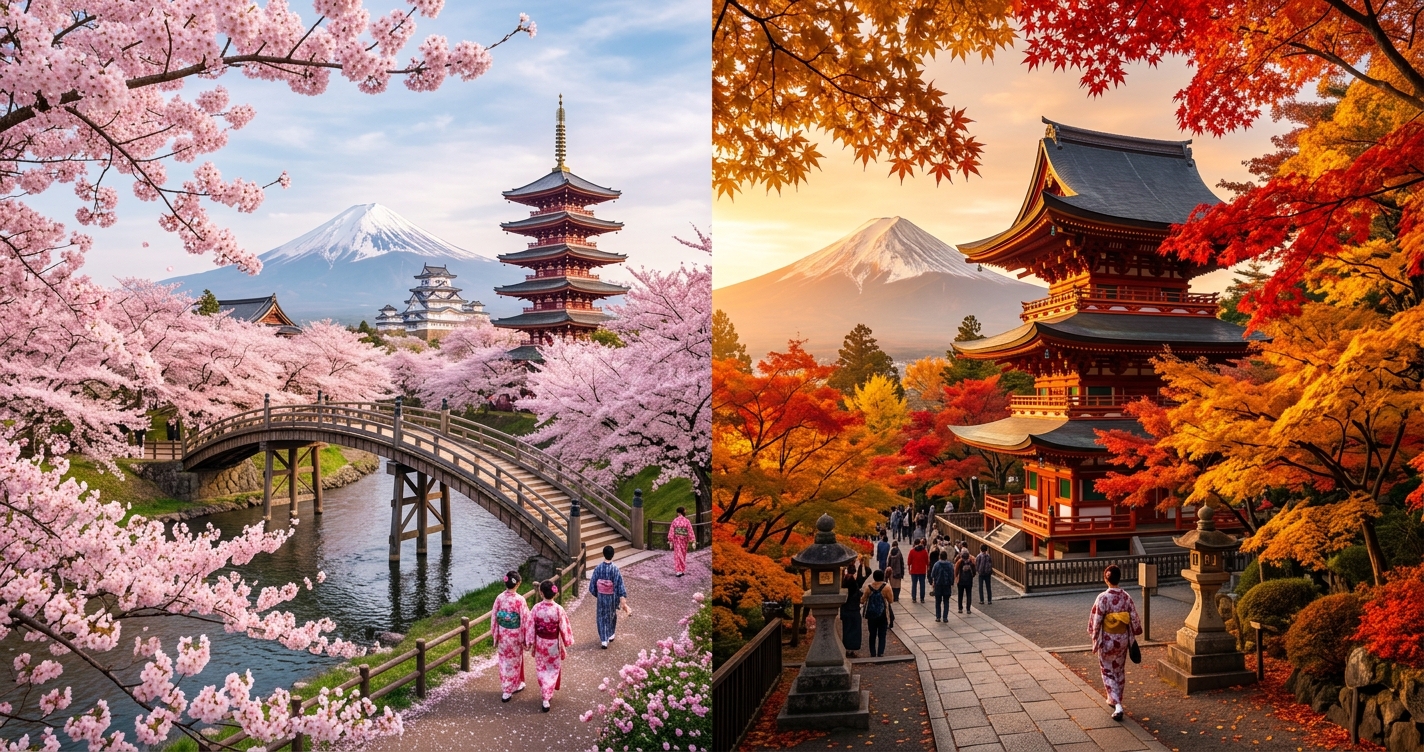
Planning a trip to Japan is an exciting endeavor, and choosing the right time can transform a good holiday into an unforgettable adventure. With its distinct seasons, vibrant festivals, and unique cultural experiences, Japan offers something special year-round. But what exactly is the best time to visit Japan in 2026?
At AZTrav, we've compiled this comprehensive guide, drawing on insights gathered from our extensive network of on-the-ground correspondents, verified cost data from 2025–2026, and comprehensive analysis of official tourism statistics. This guide will help you navigate Japan's seasonal nuances, new regulations, and crowd dynamics. Whether you're chasing cherry blossoms, vibrant autumn leaves, pristine snowscapes, or lively summer festivals, we'll help you find your perfect moment.
Japan's Enduring Appeal
Japan continues to captivate travelers worldwide, and 2026 is set to be another banner year. According to the Japan National Tourism Organization (JNTO)'s 2025 Visitor Statistics Report, Japan welcomed a record 42.7 million international visitors in 2025, a remarkable 15.8% increase over 2024, surpassing its pre-pandemic 2019 total of 31.9 million. This surge highlights the country's magnetic charm and its successful return to the global travel stage, demonstrating robust tourism recovery and growth.
For travelers from Australia, the UK, and the USA, Japan remains an incredibly attractive destination. JTB Tourism Research & Consulting Co.'s 2025 Japan Tourism Trends Report indicates that Australians, for instance, showed immense interest in 2025, with over 1 million visitors, a 15% increase from the previous year. January and April were particularly popular, with significant growth also observed in September and October, reflecting diverse seasonal appeal.
One of the most significant factors making Japan appealing right now is the weak yen. According to financial reports and currency market analyses throughout 2025, the Japanese yen consistently hovered around ¥150 to the US dollar (compared to an average of ¥110 in 2019, as reported by the Bank of Japan). This sustained depreciation, influenced by Japan's monetary policy and global economic conditions, makes Japan a relatively inexpensive destination for many international travelers, offering excellent value for accommodation, dining, and experiences. While currency exchange rates are subject to fluctuation and can change rapidly based on global economic factors and central bank policies, this trend offers a notable financial advantage for 2026 travel planning, effectively increasing purchasing power for foreign visitors.
What to Expect in This Guide
This guide provides a comprehensive month-by-month breakdown for 2026, offering practical, actionable advice tailored for Australian, British, and American travelers aged 25-45. We cover:
- Detailed weather snapshots for key regions, including average temperatures, precipitation patterns, and specific climatic considerations for Japan's diverse climate zones (e.g., the Pacific side with its drier winters, the Sea of Japan side known for heavy snowfall, subtropical Okinawa, and subarctic Hokkaido).
- Must-see attractions and activities for each month, with cultural context and insights into local traditions, including specific festival dates and regional specialties.
- Insights into crowd levels and verified costs, drawing on data compiled by AZTrav from various sources, including on-the-ground reports from our correspondents and market analyses from 2025–2026, providing a realistic budget perspective.
- New regulations and how they might affect your trip, with direct references to official sources and practical implications for travelers.
- Pros and cons to help you weigh your options, ensuring a balanced perspective on seasonal travel, considering both popular attractions and potential challenges.
Our goal is to equip you with all the information you need to decide when is the best time to visit Japan for your specific interests and budget, ensuring a well-planned and enjoyable journey.
Understanding Japan's Seasons: A Quick Overview
Japan experiences four distinct seasons, each offering a unique charm and a different set of attractions. Understanding these cycles and their associated meteorological patterns, as monitored by the Japan Meteorological Agency (JMA), is key to planning your trip and appreciating the country's diverse natural beauty.
Spring: Blossoms and Mild Air
Generally running from March to May, spring is arguably Japan's most famous season, synonymous with the iconic cherry blossoms (sakura). The weather is mild and pleasant, with average daily temperatures rising from around 10°C (50°F) in early March to 20°C (68°F) by late May in central Honshu. The "cherry blossom front" (sakura zensen), a forecast of the blossoms' progression, typically moves northwards from late March. This period is ideal for sightseeing and outdoor activities. However, it's also a peak travel period, bringing significant crowds and higher costs, particularly in popular viewing spots and major cities like Tokyo and Kyoto.
Summer: Festivals and Humidity
From June to August, Japan's summer is characterized by heat and high humidity, often preceded by a distinct rainy season (tsuyu) in June and early July, particularly affecting Honshu and Kyushu. Daily average temperatures in major cities typically range from 25-30°C (77-86°F), with humidity often exceeding 80%. This is also the period for potential typhoons (taifu) from late summer into autumn, with the official typhoon season typically running from June through October, as tracked by the JMA's tropical cyclone advisories. Despite the weather, summer is a vibrant time, filled with spectacular festivals (matsuri), fireworks displays (hanabi taikai), and opportunities for beach trips or mountain escapes, particularly in the cooler northern regions like Hokkaido, which largely avoids the *tsuyu* front.
Autumn: Foliage and Crisp Days
September to November brings autumn, a season beloved for its stunning fall foliage (koyo). The air becomes crisp, skies are often clear, and temperatures are comfortable, gradually dropping from around 25°C (77°F) in early September to 15°C (59°F) by late November in central regions. The *koyo* front, much like the *sakura zensen*, progresses southwards from Hokkaido, starting in late September. Similar to spring, autumn is a highly popular time to visit, though generally less crowded than the cherry blossom peak. The vibrant transformation of landscapes, from deep reds of Japanese maples (momiji) to golden ginkgo trees, offers unparalleled photographic opportunities and is a major draw for both domestic and international tourists.
Winter: Snowscapes and Serenity
December to February transforms much of Japan into a winter wonderland. While cold, especially on the Sea of Japan side which receives heavy snowfall (known as *yukiguni* or "snow country"), major cities on the Pacific side (like Tokyo and Kyoto) often experience dry, sunny days with average temperatures hovering around 5°C (41°F). This season is perfect for winter sports, relaxing in traditional hot springs (onsen), and enjoying quieter temples and gardens with fewer crowds. It's an excellent option for budget-conscious travelers, dispelling the misconception that cherry blossom season is *always* the best; winter offers serenity and value, particularly for those interested in snow festivals, traditional New Year celebrations (Shogatsu), or experiencing Japan's unique winter culture.
January 2026: Winter Wonderland & New Year Serenity
Weather Snapshot
January is deep winter across most of Japan. Expect crisp, cold air, often with clear skies in major cities on the Pacific side. Average temperatures in Tokyo range from 2-10°C (36-50°F) and Kyoto from 1-9°C (34-48°F). Up north in Hokkaido and along the Sea of Japan coast, temperatures plummet to -12 to -4°C (10-25°F), with abundant snowfall, making it ideal for winter sports. Okinawa, however, remains mild at 15-20°C (59-68°F), offering a subtropical escape from the mainland chill, with its unique Ryukyuan climate.
What to See & Do
This is the prime season for winter sports. Head to Hokkaido or the Japanese Alps (e.g., Nagano, Niigata) for world-class skiing and snowboarding, renowned for their exceptional powder snow (often referred to as "Japow"). Niseko's exceptional powder snow is widely celebrated by winter sports enthusiasts, a reputation reinforced by countless traveler reviews and industry publications such as Powder Magazine's annual "Best of Japan" features. Relaxing in an onsen, especially an outdoor one surrounded by snow (rotenburo), is an iconic winter experience. Don't miss the famous snow monkeys (Japanese macaques) bathing in hot springs in Nagano's Jigokudani Monkey Park. Post-New Year, temples and shrines become wonderfully quiet, offering a serene cultural experience for HatsumÅde (first shrine visit of the year), often accompanied by traditional foods like osechi ryori, a special New Year's meal.
Crowds & Costs
Crowds are generally low in January, making it an excellent time for budget travelers. However, the first few days of the month (Jan 1-3) are a major domestic holiday period for New Year's (Shogatsu), with many businesses closed and transport routes busy due to widespread family travel. After this initial rush, prices for international flights and accommodation typically drop, offering good value. It's one of the most affordable times to find the best time to visit Japan for winter activities, provided you avoid the immediate New Year period, which sees significant price surges and booking challenges, as noted in AZTrav's 2025 cost data analysis.
Pros & Cons
Pros: Excellent for winter sports, fewer crowds (post-New Year), budget-friendly, beautiful snowscapes, authentic onsen experiences. Cons: Very cold in most regions, many businesses closed for New Year holidays (Jan 1-3), limited cherry blossom viewing. Best for: Winter sports enthusiasts, budget travelers, those seeking tranquility and a unique cultural experience post-New Year, and photographers capturing serene winter scenes.
February 2026: Snow Festivals & Early Blooms
Weather Snapshot
February continues the winter chill, but often with more sunny days, particularly on the Pacific side. Tokyo and Kyoto maintain average temperatures of 2-10°C (36-50°F) and 1-9°C (34-48°F) respectively. Hokkaido remains very cold at -11 to -3°C (12-27°F), ideal for snow sports with its consistent powder. Okinawa stays pleasant at 15-20°C (59-68°F), with its subtropical climate offering an early glimpse of spring, particularly with early-blooming flora like hibiscus and bougainvillea.
What to See & Do
The highlight of February is undoubtedly the Sapporo Snow Festival in early February, a spectacular display of ice and snow sculptures that attracts millions and is recognized as one of the world's premier winter events, consistently featured by international tourism boards. This draws significant crowds to Hokkaido. Late February also marks the beginning of plum blossom (ume) viewing, offering a beautiful precursor to cherry blossoms, particularly in areas like Atami (with its famous plum garden, Atami Baien) and Fukuoka. Plum blossoms, known for their strong fragrance and early appearance, hold significant cultural importance in Japan, symbolizing resilience. Look out for Setsubun festivals (bean-throwing ceremonies to ward off evil spirits, typically on February 3) and stunning winter illuminations that continue from December in major cities, extending the festive atmosphere.
Crowds & Costs
Crowds are low to moderate, except in Sapporo during its internationally renowned Snow Festival, where accommodation and transport demand surge, often requiring bookings months in advance. This is still a good time for value, with reasonable prices for flights and accommodation outside of Sapporo. JTB Tourism Research & Consulting Co. estimated the number of international travelers to Japan in February 2025 was 3,466,700, indicating a steady but manageable flow of visitors, a trend expected to continue into 2026, offering a comfortable travel experience in most regions.
Pros & Cons
Pros: Unique winter festivals, early plum blossoms, good value, fewer crowds outside of Sapporo, excellent opportunities for winter photography. Cons: Still very cold, limited outdoor activities in some regions due to cold, Sapporo can be extremely crowded during the festival. Best for: Winter festival lovers, budget travelers, and those wanting to avoid major crowds while experiencing Japan's unique winter culture and the subtle beauty of early spring blooms.
March 2026: The Anticipation of Spring
Weather Snapshot
March brings a welcome warming trend, signaling the arrival of spring. Tokyo sees averages of 5-14°C (41-57°F), and Kyoto 4-13°C (39-55°F). Hokkaido is still cool at -4 to 3°C (25-37°F), with lingering snow in higher elevations, but Okinawa is lovely at 17-22°C (63-72°F), experiencing its subtropical dry season. While warmer, it can still be chilly, especially in the evenings, so layering is advised, particularly for those venturing into mountainous areas or visiting early in the month.
What to See & Do
The biggest draw is the anticipation of cherry blossoms. The "cherry blossom front" (sakura zensen) typically begins its northward journey from Kyushu and Shikoku towards the end of the month, offering a sneak peek before the main event in central Japan. Plum blossoms are in full bloom, providing beautiful photo opportunities in gardens across the country, such as Kairakuen Garden in Mito. Cultural events like Hina Matsuri (Doll's Festival on March 3, celebrating girls' health and happiness) and White Day (March 14, where men reciprocate gifts received on Valentine's Day) add unique local flavor and seasonal charm. Traditional spring festivals, often tied to agricultural cycles and local deities, also begin to emerge, offering insights into regional customs.
Crowds & Costs
Crowds begin to increase significantly towards the end of the month as cherry blossom season commences in major cities, leading to higher demand for popular viewing spots. Prices for flights and accommodation start to rise accordingly. From March 1, 2026, visitors to Kyoto will encounter a new tiered lodging tax, ranging from JPY 200 to JPY 10,000 per person per night for high-end accommodations, as mandated by the Kyoto City Government in their 2026 Kyoto Lodging Tax Regulations. This is aimed at funding preservation efforts and managing the impact of tourism, particularly during peak seasons, and should be factored into your budget.
Pros & Cons
Pros: Warming weather, early cherry blossoms in southern regions, beautiful plum blossoms, cultural festivals, less intense crowds than April's peak. Cons: Can still be chilly, crowds and costs increase significantly late in the month, new Kyoto lodging tax adds to expenses. Best for: Those seeking fewer crowds for early blossoms, cultural events, and a transition season before the peak rush. This can be a smart choice for the best time to visit Japan without the full April frenzy, offering a blend of spring beauty and cultural immersion.
April 2026: Peak Cherry Blossom Frenzy & Golden Week Warning
Weather Snapshot
April offers some of the most pleasant weather of the year, often characterized by clear skies and comfortable temperatures, making it ideal for outdoor activities. Tokyo averages 10-19°C (50-66°F), and Kyoto 9-18°C (48-64°F). Hokkaido is still cool at 3-10°C (37-50°F), with its cherry blossoms typically blooming later in the month or early May, but Okinawa is warm at 20-25°C (68-77°F), marking the beginning of its beach season and offering a subtropical climate with low humidity.
What to See & Do
This is it: peak cherry blossom viewing season! From late March to early April in Tokyo and Kyoto, and later northwards, the country is awash in pink and white. Hanami (flower viewing) picnics under the blooming trees are a quintessential Japanese experience, reflecting centuries of cultural appreciation for the ephemeral beauty of *sakura*. Spring festivals abound, celebrating the new season, such as the Takayama Spring Festival (Sanno Matsuri) which showcases elaborate floats and traditional performances. Travelers consistently report that the beauty is undeniable, but so are the crowds, especially at iconic spots like Ueno Park or Philosopher's Path, as widely documented in travel guides and social media during peak bloom.
Crowds & Costs
Crowds are extremely high, especially in popular cherry blossom spots like Ueno Park in Tokyo or Maruyama Park in Kyoto. JTB Tourism Research & Consulting Co.'s 2025 data showed April as one of the most popular months for Australian visitors to Japan, highlighting the global appeal of this season. This intense demand translates to the highest prices for flights, accommodation, and transportation. Booking *months* in advance is not just recommended, it's essential to secure availability and more reasonable rates, with many popular hotels fully booked a year prior, according to industry reports and AZTrav's own booking data.
Critical Consideration: Golden Week (April 29 - May 5, 2026) is a cluster of major domestic public holidays, including Showa Day, Constitution Memorial Day, Greenery Day, and Children's Day. This period sees severe crowds, fully booked transportation (especially Shinkansen bullet trains), and even higher prices due to widespread domestic travel. It's generally advisable for international travelers to avoid travel during Golden Week if possible, or plan extensively for increased costs and congestion, including pre-booking all train tickets and accommodations well in advance, as detailed in Japan Railways (JR) travel advisories.
Pros & Cons
Pros: Iconic cherry blossoms, pleasant weather, vibrant atmosphere, numerous spring festivals. Cons: Extremely high crowds, highest prices for everything, Golden Week travel chaos significantly impacts logistics. Best for: Cherry blossom enthusiasts willing to pay a premium and navigate significant crowds. If sakura is your absolute priority, this is the best time to visit Japan, but prepare diligently with extensive advance bookings and a flexible mindset.
May 2026: Post-Golden Week Bliss & Lush Greenery
Weather Snapshot
May offers wonderfully warm and comfortable weather across most of Japan, with lower humidity than summer, making it a highly desirable month for outdoor exploration. Tokyo averages 15-23°C (59-73°F), and Kyoto 14-23°C (57-73°F). Hokkaido is pleasant at 8-17°C (46-63°F), often experiencing its own cherry blossom peak early in the month, and Okinawa is warm at 23-28°C (73-82°F). It's an ideal month for outdoor activities before the onset of the rainy season (tsuyu), which typically begins in early June in Honshu.
What to See & Do
After Golden Week, Japan settles into a more relaxed pace. May is perfect for hiking in national parks, exploring meticulously manicured gardens in full bloom, and enjoying vibrant wisteria displays (e.g., Kawachi Fujien in Kitakyushu, famous for its wisteria tunnels, which are typically at their best in early to mid-May). Major festivals like Kyoto's elegant Aoi Matsuri (May 15), a procession reenacting ancient imperial ceremonies, and Tokyo's lively Sanja Matsuri (mid-May), one of Tokyo's wildest Shinto festivals, take place, offering deep cultural insights without the intense cherry blossom crowds. This period is also excellent for visiting tea plantations as the first flush of tea leaves (ichibancha) is harvested, particularly in Shizuoka and Uji, offering tea-picking experiences and fresh green tea.
Crowds & Costs
Crowds are much lower than in April, especially after Golden Week concludes around May 6th. This period often provides an optimal balance of excellent weather, manageable crowds, and good value for money. Costs are more reasonable than April, making it a smart choice for the best time to visit Japan for an overall pleasant experience, offering a more serene and authentic engagement with local life, as consistently noted in AZTrav's cost-benefit analyses for shoulder seasons.
Pros & Cons
Pros: Excellent weather, fewer crowds (post-Golden Week), good value, lush scenery, significant cultural festivals, ideal for outdoor activities. Cons: Still some residual crowds from Golden Week early in the month, and cherry blossoms are mostly finished in central Japan. Best for: Travelers seeking pleasant weather, fewer crowds, good value, and a chance to experience Japan's natural beauty and culture in comfort. Many consider late May an ideal shoulder season for a well-rounded trip.
June 2026: The Rainy Season & Early Summer Festivals
Weather Snapshot
June marks the beginning of Japan's rainy season (tsuyu), typically lasting until mid-July across much of Honshu and Kyushu. Expect high humidity and frequent, though often not continuous, rain. Tokyo averages 19-26°C (66-79°F), and Kyoto 18-26°C (64-79°F). Hokkaido, however, largely avoids the tsuyu front, remaining cooler and drier at 13-21°C (55-70°F), making it an attractive alternative. Okinawa is hot and humid at 26-30°C (79-86°F), with its rainy season often ending earlier in the month, transitioning into early summer with increased solar radiation.
What to See & Do
Despite the rain, June has its charms. Hydrangeas (ajisai) bloom beautifully, especially at temples like Meigetsu-in in Kamakura and Mimurotoji Temple in Uji, creating vibrant, lush landscapes that are a popular subject for photographers. It's a great month for indoor activities such as exploring Japan's world-class museums (e.g., Tokyo National Museum, Ghibli Museum), art galleries, and vast shopping complexes. Early summer festivals, like Tokyo's Sanno Matsuri (held in even-numbered years, so 2026 is a major year for this important Shinto festival) or the smaller but vibrant Yosakoi Soran Festival in Sapporo, offer lively cultural experiences. Okinawa's beaches are inviting before the peak typhoon season, offering clear waters for snorkeling and diving, particularly in the first half of the month.
Crowds & Costs
Crowds are moderate to low in most areas, making it a good value for budget-conscious travelers. Prices for flights and accommodation are generally lower than peak seasons, reflecting the perception of the rainy season. However, be aware that from July 1, 2026, Japan's international departure tax will triple from JPY 1,000 to JPY 3,000 per person for travelers aged two and above, as confirmed by the Japan Tourism Agency (JTA) in their 2026 International Tourist Tax Amendment. If you depart before July 1, you'll pay the lower rate, making late June a strategic departure window for some travelers.
Pros & Cons
Pros: Hydrangea season offers unique beauty, fewer crowds, good value, excellent for indoor cultural exploration, cooler and drier Hokkaido. Cons: High humidity and frequent rain can impact outdoor plans, potential for typhoons towards the end of the month, increased departure tax from July 1. Best for: Budget travelers, those interested in hydrangeas and indoor culture, or heading to Okinawa before peak typhoon season. It can be a surprisingly good best time to visit Japan for those who don't mind a bit of rain and seek a more relaxed pace.
July 2026: Summer Heat, Fireworks & Coastal Escapes
Weather Snapshot
July is hot and humid across much of Japan, with the rainy season (tsuyu) typically ending by mid-month, ushering in full summer. Temperatures rise significantly, often reaching their annual peak. Tokyo averages 23-30°C (73-86°F), and Kyoto 22-30°C (72-86°F), with high heat indices. Hokkaido offers a cooler respite at 17-25°C (63-77°F), making it a popular escape, while Okinawa is very hot and humid at 27-31°C (81-88°F), with increased risk of typhoons (taifu) later in the month, as monitored by the JMA's tropical cyclone forecasts.
What to See & Do
Summer truly kicks off with major festivals like Kyoto's Gion Matsuri (culminating July 17), one of Japan's most famous and elaborate festivals, and Osaka's Tenjin Matsuri (July 24-25), a spectacular river festival with boat processions and fireworks. Both are spectacular events drawing large crowds, often requiring early arrival for good viewing spots. Fireworks displays (hanabi taikai) light up the night skies across the country, especially over rivers and bays (e.g., Sumidagawa Fireworks Festival in Tokyo, one of the largest). Beach trips become popular, and hiking in cooler mountain regions like the Japanese Alps or Hokkaido offers relief from the heat. Hokkaido is consistently highlighted as a refreshing summer escape, a sentiment supported by reports from AZTrav's correspondents during their July 2025 visits, emphasizing its appeal for outdoor activities like cycling and flower field visits.
Crowds & Costs
Crowds are moderate, increasing towards the end of the month as school holidays begin. Popular festival cities can be very busy during event dates, requiring early planning for accommodation and viewing spots. Costs are mid-range, but can increase for popular festival dates. Remember the increased departure tax of JPY 3,000 per person applies from July 1, 2026, as per the Japan Tourism Agency (JTA).
Pros & Cons
Pros: Major summer festivals, spectacular fireworks, beach opportunities, cooler mountain regions for hiking. Cons: Hot and humid, typhoon season begins, increased departure tax, popular festival sites can be extremely crowded. Best for: Festival enthusiasts, beach lovers, and those seeking mountain retreats. If you love vibrant summer energy and don't mind the heat, this could be the best time to visit Japan, offering a lively cultural immersion.
August 2026: Peak Summer, Obon & Typhoon Season
Weather Snapshot
August is typically the hottest and most humid month in Japan. High temperatures and humidity are prevalent nationwide, often exceeding 30°C (86°F) with high heat indices and heatstroke warnings. Tokyo averages 24-31°C (75-88°F), and Kyoto 23-31°C (73-88°F). Hokkaido is still the coolest option at 19-26°C (66-79°F), offering a more temperate climate for outdoor activities, while Okinawa remains very hot at 27-31°C (81-88°F). This is also the peak of typhoon season (taifu), particularly affecting southern regions and coastal areas, with the Japan Meteorological Agency (JMA) issuing regular advisories and potential travel disruptions.
What to See & Do
Summer festivals continue in full swing, including the famous Awa Odori dance festival in Tokushima (August 12-15), one of Japan's largest traditional dance festivals, and the Nebuta Matsuri in Aomori (early August), known for its massive illuminated floats. More fireworks displays light up the nights. August is also the official climbing season for Mount Fuji (which requires a ¥4,000 fee and online reservation, as per Ministry of Environment regulations from 2025, aimed at managing climber numbers and safety). Exploring Hokkaido's vast landscapes and cooler climate is a popular choice for many, offering relief from the mainland heat and opportunities for hiking in national parks like Daisetsuzan, known for its alpine flora.
Crowds & Costs
Crowds are high due to Obon (mid-August) and summer holidays. Obon (around August 13-16, 2026) is a major domestic holiday where many Japanese travel to their hometowns to honor ancestors, leading to extremely crowded transport (Shinkansen, domestic flights) and significantly higher prices. It's a period generally best to avoid for international travel due to congestion and inflated costs. Costs can be high during Obon; otherwise, they are mid-range. Booking well in advance is crucial if Obon travel is unavoidable, as noted in Japan Railways (JR) booking advisories.
Pros & Cons
Pros: Peak summer festivals, Mount Fuji climbing season, cooler Hokkaido provides a respite. Cons: Hottest and most humid month, peak typhoon season with potential travel disruptions, extremely crowded and expensive during Obon due to domestic travel. Best for: Those who love intense summer heat and festivals, or prefer the cooler climes of Hokkaido. For most, this isn't the best time to visit Japan due to Obon and the heat, unless specific festivals are a priority and meticulous planning is undertaken.
September 2026: Late Summer Heat & Early Autumn Hints
Weather Snapshot
September sees a gradual transition, but it's important to dispel the misconception that immediate relief from summer heat arrives. Early September can still be very warm and humid, especially in major cities, with typhoon risk remaining significant, particularly in the first half of the month, as advised by the JMA. Tokyo averages 20-27°C (68-81°F), and Kyoto 19-27°C (66-81°F). Hokkaido starts to cool significantly at 14-22°C (57-72°F), with Okinawa remaining warm at 26-30°C (79-86°F) and still prone to tropical weather systems.
What to See & Do
Sumo tournaments are held in Tokyo (mid-September), offering a unique cultural experience to witness Japan's national sport in a traditional setting. The Kishiwada Danjiri Matsuri, a dynamic float festival involving elaborate, heavy wooden floats being pulled at high speeds, takes place near Osaka (mid-September) and is renowned for its intensity. Early autumn foliage (koyo) begins to appear in Hokkaido and higher elevations, such as Daisetsuzan National Park, making it a great month for hiking and enjoying crisp mountain air. Traveler feedback and AZTrav's correspondent reports indicate that the weather in late September becomes noticeably more comfortable for exploration compared to the earlier weeks of the month, making it ideal for outdoor activities and city sightseeing as humidity drops.
Crowds & Costs
Crowds are moderate, generally less intense than spring. JTB Tourism Research & Consulting Co.'s 2025 data showed Australia with significant growth in visitors in September, suggesting it's becoming a popular shoulder season for international travelers seeking a balance of good weather and value. Costs offer good value, especially outside of Silver Week.
Consideration: Typhoon season continues, so keep an eye on weather forecasts and official advisories from the Japan Meteorological Agency. Silver Week (September 19-23, 2026) is a cluster of public holidays with increased domestic travel, similar to a mini-Golden Week, which can lead to crowded transport and higher prices. Plan accordingly if traveling during this period, particularly for Shinkansen bookings and popular tourist sites, as advised by Japan Railways (JR).
Pros & Cons
Pros: Gradual cooling, early autumn foliage in Hokkaido, unique festivals (Sumo, Danjiri), good value (outside Silver Week), comfortable weather in late September. Cons: Still warm and humid early in the month, typhoon season risk, Silver Week crowds. Best for: Travelers seeking a balance of good weather and fewer crowds, especially after mid-September, and those interested in early autumn colors and unique cultural events. This can be a very rewarding best time to visit Japan for a shoulder-season experience.
October 2026: Crisp Air & Autumn Foliage Begins
Weather Snapshot
October is often considered one of the most pleasant months to visit Japan. Skies are typically clear, and temperatures are comfortable, offering ideal conditions for sightseeing and outdoor activities. Tokyo averages 14-22°C (57-72°F), and Kyoto 13-22°C (55-72°F). Hokkaido is cool at 7-15°C (45-59°F), with peak foliage in many areas, while Okinawa is still warm at 23-28°C (73-82°F) and less prone to typhoons compared to earlier months, entering its dry season.
What to See & Do
Autumn foliage (koyo) truly begins to put on a show in northern Japan and higher elevations (e.g., Nikko, Hakone). It's a fantastic month for hiking and enjoying the outdoors, with trails offering spectacular views of changing leaves, such as those in the Japan Alps. Kyoto hosts the elegant Jidai Matsuri (Festival of Ages) on October 22, a historical procession showcasing traditional costumes from various periods of Japanese history, attracting significant cultural interest. Various sports events and cultural festivals take place across the country, capitalizing on the beautiful weather. This is also a prime time for exploring regional areas beyond the main cities, such as the art islands of Naoshima or the historical towns of the Chubu region, before the peak foliage rush, offering a deeper cultural immersion.
Crowds & Costs
Crowds are moderate, increasing towards the end of the month as foliage peaks in central Japan. JTB Tourism Research & Consulting Co.'s 2025 data showed Australia with significant growth in visitors in October, indicating its rising popularity as a shoulder season, offering a more balanced experience than the spring peak. Costs are mid-range, offering good value for such a beautiful time of year, though popular foliage spots can get busy on weekends, necessitating early morning visits for a serene experience, as recommended by local guides.
Pros & Cons
Pros: Optimal weather, stunning early autumn foliage, manageable crowds, cultural festivals, ideal for outdoor exploration. Cons: Crowds increase late in the month, popular foliage spots can get busy on weekends, requiring strategic planning. Best for: Optimal balance of comfortable weather, beautiful scenery, and manageable crowds before the peak foliage rush. Many consider this the best time to visit Japan for an overall enjoyable experience, combining natural beauty with cultural exploration.
November 2026: Peak Autumn Foliage & New Tax-Free System
Weather Snapshot
November brings cool and crisp weather, perfect for enjoying the vibrant autumn colors (koyo). Temperatures are generally lower than October, requiring warmer clothing, especially in the evenings. Tokyo averages 9-17°C (48-63°F), and Kyoto 8-16°C (46-61°F). Hokkaido is cold at 1-8°C (34-46°F), often seeing its first snow, while Okinawa remains mild at 19-24°C (66-75°F), offering a pleasant subtropical climate and a warm escape from the mainland's chill.
What to See & Do
This is peak autumn foliage season in major cities like Tokyo (e.g., Rikugien Garden, Meiji Jingu Gaien) and Kyoto (e.g., Arashiyama, Tofukuji Temple), and across central Japan. The landscapes explode with vibrant reds, oranges, and golds of Japanese maples and ginkgo trees, creating iconic postcard-worthy scenes. Cultural festivals continue, and the cooler weather is ideal for hiking and exploring, particularly in areas like Hakone or Nikko, which offer stunning *koyo* vistas. The visual splendor of Kyoto's autumn colors in November 2025 was widely reported as breathtaking, even amidst crowds, a sentiment echoed by numerous travel blogs and AZTrav's correspondents, confirming the enduring appeal of this period for its unparalleled natural beauty.
Crowds & Costs
Crowds are high, especially on weekends at popular foliage spots like Arashiyama in Kyoto or Rikugien Garden in Tokyo, and at temples known for their autumn displays. Generally, it's less intense than cherry blossom season, but still busy. Costs for accommodation and flights are higher, though not as extreme as April, reflecting the high demand for this beautiful season. Advance booking for popular areas is highly recommended, as detailed in AZTrav's 2025-2026 cost analyses.
Consideration: From November 1, 2026, Japan's tax-free shopping system will switch from a point-of-sale exemption to an airport-based refund system, as announced by the National Tax Agency in their 2026 Consumption Tax Exemption for Tourists guidelines. This means you'll pay the full price including consumption tax (currently 10%) at the store and then claim your refund at a designated customs counter at the airport upon departure. You'll need to present your passport and the purchased items for validation. Based on expert recommendations and logistical considerations, travelers are advised to allow extra time at the airport for this process, particularly during peak travel hours, to ensure a smooth refund experience and avoid missing flights.
Pros & Cons
Pros: Stunning peak autumn foliage, comfortable cool weather, great for hiking and cultural exploration, beautiful photography opportunities. Cons: High crowds at popular spots, higher costs, new tax-free refund system to navigate at the airport. Best for: Autumn foliage lovers willing to navigate some crowds, and those who enjoy cooler weather. For many, this is the best time to visit Japan for fall colors, offering a truly iconic visual experience.
December 2026: Winter Illuminations & Festive Cheer
Weather Snapshot
December is cold but often sunny and dry in major cities on the Pacific side, with increasing chances of snow in northern Japan and mountainous regions. Tokyo averages 4-12°C (39-54°F), and Kyoto 3-11°C (37-52°F). Hokkaido is firmly in winter at -5 to 2°C (23-36°F), with consistent snowfall ideal for winter sports. Okinawa is mild at 17-22°C (63-72°F), offering a warm escape from the mainland's chill and a subtropical climate, often with clear skies.
What to See & Do
Japan transforms with stunning winter illuminations, especially in Tokyo (e.g., Shinjuku Terrace City, Marunouchi, Tokyo Midtown) and Osaka (e.g., Osaka Castle Illuminage), creating a magical, festive atmosphere that attracts both locals and tourists. Christmas markets, though not a traditional Japanese custom, add a festive touch in some cities. It's an excellent month for skiing and snowboarding in the northern regions and the Japanese Alps, or relaxing in a warm onsen, particularly a snow-covered *rotenburo*. Exploring cities before the New Year rush allows for fewer crowds at popular attractions, offering a more serene experience, and a chance to witness preparations for *Shogatsu* (New Year's), a deeply cultural period.
Crowds & Costs
Crowds are low to moderate early in the month, offering good value. However, they increase significantly towards the end of the month for New Year's Eve (Omisoka) and the New Year holidays. Costs skyrocket for the New Year period (approximately December 29 - January 3), which is a major domestic holiday with many businesses closed and peak travel. Booking well in advance is crucial if traveling during this specific window, as transportation and accommodation become scarce and expensive, as highlighted by Japan Railways (JR) and major hotel chains' peak season pricing.
Pros & Cons
Pros: Beautiful winter illuminations, festive atmosphere, excellent for winter sports and onsen, fewer crowds pre-New Year, good value early in the month. Cons: Cold, New Year period is extremely crowded and expensive with many closures, limited cherry blossom or autumn foliage viewing. Best for: Winter illumination fans, skiers, and those seeking a quieter experience before the New Year rush. This can be a charming best time to visit Japan for a festive, cozy trip, especially for those interested in snow activities or a peaceful urban exploration.
Navigating Japan's New Travel Regulations & Costs in 2026
Japan is continuously refining its tourism policies, and 2026 brings several notable changes that travelers should be aware of. These adjustments aim to balance the booming tourism industry with sustainable practices and local quality of life, aligning with the Japanese government's broader tourism strategy as outlined in the Tourism Nation Promotion Basic Plan (FY2026-FY2030), published by the Japan Tourism Agency (JTA).
Increased International Tourist Tax (Departure Tax) from July 1, 2026
A significant change is the international tourist tax, often referred to as the departure tax or "Sayonara Tax." Starting July 1, 2026, this tax will triple from JPY 1,000 to JPY 3,000 per person for all travelers aged two and above leaving Japan by air or sea. This amendment, confirmed by the Japan Tourism Agency (JTA) in their 2026 International Tourist Tax Amendment, is typically included in your flight or cruise ticket price at the time of purchase. It's an important cost to factor in, especially if your departure date falls after this change, as it applies universally regardless of nationality or duration of stay, contributing to Japan's tourism infrastructure and promotional efforts.
Kyoto's New Tiered Lodging Tax from March 1, 2026
From March 1, 2026, Kyoto introduced a new tiered lodging tax, as detailed by the Kyoto City Government in their 2026 Kyoto Lodging Tax Regulations. This tax ranges from JPY 200 to JPY 10,000 per person per night, depending on the accommodation rate (e.g., higher rates for luxury hotels). It's designed to help fund the preservation of Kyoto's invaluable cultural heritage and manage the impact of tourism, particularly in highly visited areas. When booking accommodation in Kyoto, be aware that this additional charge will apply and will be collected by your lodging provider at check-in or check-out, separate from your room rate.
Changes to Tax-Free Shopping System from November 1, 2026
For shoppers, the tax-free system is undergoing a major overhaul. From November 1, 2026, it will switch from a point-of-sale exemption to an airport-based refund system, as announced by the National Tax Agency in their 2026 Consumption Tax Exemption for Tourists guidelines. This means you'll pay the full price including consumption tax (currently 10%) at the store, and then claim your refund at a designated customs counter at the airport upon departure. You'll need to present your passport and the purchased items for validation. Based on expert recommendations from travel logistics specialists and airport operational considerations, travelers are advised to allow extra time at the airport for this process, especially during peak travel periods, to ensure a smooth refund experience and avoid potential delays.
Mount Fuji Entry & Shinkansen Luggage Rules
The ¥4,000 entry fee for climbing Mount Fuji, introduced in 2025, remains in place for 2026 during the official climbing season (typically July to early September). This also comes with stricter rules on online reservations and adherence to specific routes, aimed at managing climber numbers and safety, as outlined by the Ministry of Environment in their 2025 Mount Fuji Climbing Regulations. Additionally, stricter luggage rules for oversized baggage on Shinkansen (bullet trains) remain in effect, requiring advance reservations for larger items (total dimensions over 160cm) to ensure passenger comfort and safety, as detailed by Japan Railways (JR) operational guidelines. Travelers are advised to check JR's official website for current baggage policies.
The Weak Yen Advantage
Despite these new taxes, the weak yen (around ¥150 to the US dollar in 2025) continues to make Japan a relatively affordable destination for many international travelers. This currency advantage can significantly offset the new taxes and help you stretch your budget further, dispelling the misconception that Japan is prohibitively expensive. Strategic planning, especially during off-peak seasons, can lead to surprisingly budget-friendly trips, as confirmed by both JNTO and JTB Tourism Research & Consulting Co. data in their 2025 economic analyses. However, it is crucial to monitor currency exchange rates as they are subject to market fluctuations driven by global economic trends and central bank interventions.
Beyond the Crowds: Sustainable Travel & Regional Gems
With Japan's increasing popularity, particularly from countries like Australia, the UK, and the USA, there's a growing emphasis on sustainable tourism and exploring beyond the well-trodden 'Golden Route' (Tokyo, Kyoto, Osaka). The Japanese government's Tourism Nation Promotion Basic Plan (FY2026-FY2030) prioritizes quality over mere visitor numbers, aiming to promote regional areas and enhance the visitor experience, as detailed by the Japan Tourism Agency (JTA). This strategic shift encourages a deeper, more distributed engagement with Japan's diverse offerings and supports local economies, reducing pressure on over-visited sites.
Embracing Sustainable Tourism
As travelers, we have a role to play in preserving Japan's beauty and culture. Consider visiting during off-peak or shoulder seasons to distribute tourist impact more evenly across the year. Support local businesses, respect local customs (e.g., proper etiquette at temples, onsen, and public transport, which includes maintaining quiet and order), and utilize Japan's excellent public transport system to minimize your environmental footprint. Look for accommodations and tour operators committed to sustainable practices, such as those certified by local eco-tourism initiatives or recognized for their community engagement and responsible resource management, often indicated by environmental certifications or partnerships with local conservation groups.
Discovering Lesser-Known Destinations
Japan is incredibly diverse, with countless regional gems waiting to be explored. Rather than focusing solely on the major cities, consider these alternatives that offer unique cultural experiences and often align with less-crowded travel periods, providing a deeper, more authentic immersion into Japanese life:
- Tohoku Region: For breathtaking autumn foliage without the Kyoto crowds, Tohoku in northern Honshu offers stunning landscapes, traditional hot springs (e.g., Nyuto Onsen Village), and rich history, including samurai districts (e.g., Kakunodate) and vibrant traditional festivals (e.g., Aomori Nebuta Matsuri in August). This region is also a prime destination for winter sports and local sake breweries.
- Shikoku Island: Known for its 88-temple pilgrimage route (Shikoku Henro), Shikoku provides a spiritual journey, beautiful coastlines, and delicious local cuisine, such as udon noodles in Kagawa. Its rugged interior offers excellent hiking, and cities like Matsuyama boast impressive castles and literary connections.
- Kyushu Island: Head south for an abundance of renowned onsen (e.g., Beppu, Kurokawa), dramatic volcanic landscapes (e.g., Mount Aso), and vibrant cities like Fukuoka and Nagasaki, each with distinct historical narratives, including significant international trade and cultural exchange. It's also a great spot for early cherry blossoms and unique culinary traditions, including Hakata ramen and *motsunabe*.
- Okinawa: For year-round warmth, pristine beaches, and a unique Ryukyuan culture distinct from mainland Japan, Okinawa offers a tropical escape, especially during cooler months on the mainland. Its distinct history, language, and cuisine provide a fascinating contrast to other regions, with a focus on marine activities and historical sites.
Tips for Mitigating Overtourism
- Travel during shoulder seasons: May (post-Golden Week), early June, September (post-Silver Week), and early December offer good weather and fewer crowds than peak spring and autumn, providing a more relaxed experience and often better value.
- Visit popular sites early or late: Arrive at temples and attractions right when they open or an hour before closing to avoid the midday rush and experience a more serene atmosphere, often with better lighting for photography. This strategy is frequently recommended by local tourism boards.
- Explore local neighborhoods: Venture beyond the main tourist hubs to discover charming local shops, restaurants, and parks, supporting community economies and gaining a more authentic perspective on daily Japanese life.
- Consider staying outside city centers: Staying in slightly less central areas can often provide a more local feel, be more affordable, and reduce pressure on central accommodations, while still offering excellent public transport links via Japan's efficient railway and subway networks.
- Utilize regional passes: Japan Rail Passes and various regional passes can encourage exploration of areas beyond the 'Golden Route', distributing tourism benefits more widely and offering cost-effective travel, as detailed on Japan Railways (JR) official websites.
Expert Advice & Key Takeaways for Your 2026 Trip
Choosing the best time to visit Japan truly depends on your priorities. Insights from extensive travel data and research consistently confirm that each season holds its own allure, with certain periods offering a more balanced experience, aligning with AZTrav's commitment to practical, honest advice.
Optimal Balance: May, October, November
For most travelers, May (post-Golden Week), October, and November offer the best balance of comfortable weather, manageable crowds (outside of specific holidays or peak foliage weekends), and good value. These months provide stunning natural beauty and a pleasant atmosphere for exploring Japan's diverse offerings, from vibrant festivals to serene landscapes, making them highly recommended by AZTrav's travel specialists for a well-rounded trip.
Peak Seasons: Book Early, Be Prepared
Cherry blossom season (late March to early April) and peak autumn foliage (November) are undeniably beautiful but come with significant crowds and higher costs. If these are your dream experiences, book flights and accommodation *months* in advance, and be prepared for busy attractions and transport. Flexibility in your itinerary can also help navigate peak season congestion, and consider visiting lesser-known viewing spots or traveling during weekdays to mitigate crowds. AZTrav's booking data consistently shows these periods as having the highest demand and prices.
Leveraging the Weak Yen
The current weak yen exchange rate (as observed throughout 2025) provides a significant advantage for international travelers, making many experiences more accessible. This helps to offset new taxes and allows you to enjoy more for your money, making 2026 an excellent year for value, as supported by economic analyses from JNTO and JTB Tourism Research & Consulting Co. However, currency rates are subject to market fluctuations and geopolitical events, so it's advisable to monitor them closely before and during your trip, as exchange rates can change rapidly.
Prioritizing Your Interests
- Winter (December-February, excluding New Year): Ideal for budget travel, winter sports (Hokkaido, Japanese Alps), relaxing in traditional onsen, and enjoying fewer crowds, offering a serene and unique cultural experience with stunning snowscapes.
- Summer (June-August): Best for vibrant festivals, spectacular fireworks displays, and cooler mountain regions like Hokkaido, despite the heat and humidity. Ideal for those who enjoy lively outdoor events and don't mind warmer temperatures.
- Avoid Peak Holidays: Golden Week (late April to early May), Obon (mid-August), Silver Week (mid-September, specifically Sept 19-23 in 2026), and New Year (late December to early January) are major domestic holidays. Avoid traveling during these times if possible due to severe crowds, inflated prices, and potential business closures, which can significantly impact your experience and logistical ease, as advised by Japan's tourism and transport authorities.
Always check for Japanese national holidays when planning your itinerary. By considering these factors, you can tailor your trip to perfectly match your preferences and budget, ensuring an unforgettable journey.
Frequently Asked Questions (FAQ)
What is the absolute best month to visit Japan?
May (post-Golden Week), October, and November generally offer the best balance of pleasant weather, manageable crowds, and value, making them highly recommended by travel experts. April and late March are iconic for cherry blossoms but come with significant crowds and higher costs. The "best" month ultimately depends on your specific interests (e.g., festivals, snow sports, foliage, or budget considerations) and willingness to navigate crowds.
When is cherry blossom season in Japan 2026?
Peak bloom in major cities like Tokyo and Kyoto typically occurs from late March to early April. The season starts earlier in the south (Kyushu) and progresses later northwards (Hokkaido), with the "cherry blossom front" (sakura zensen) providing a general guide for annual predictions from the Japan Meteorological Agency. Exact dates can vary slightly each year based on specific weather conditions, particularly winter temperatures.
When is autumn foliage season in Japan 2026?
Autumn leaves (koyo) begin in Hokkaido in September, move south through mountainous regions in October, and typically peak in major cities like Tokyo and Kyoto in November. The timing can vary slightly each year based on temperature and rainfall patterns, with cooler temperatures accelerating the color change, as monitored by the Japan Meteorological Agency.
Is Japan expensive in 2026?
While some new taxes are introduced in 2026 (like the increased departure tax from July 1 and Kyoto lodging tax from March 1), the weak yen (as observed in 2025) makes Japan relatively inexpensive for international travelers compared to previous years. Strategic planning, off-peak travel, and leveraging regional passes can accommodate various budgets effectively, as confirmed by economic analyses from JNTO and JTB Tourism Research & Consulting Co. However, currency rates are subject to market fluctuations.
What are the new travel rules for Japan in 2026?
Key changes include an increased international departure tax (JPY 3,000 from July 1), a new tiered Kyoto lodging tax (from March 1), and a shift to an airport-based tax-free refund system (from November 1). Additionally, Mount Fuji climbing requires a fee and reservations during climbing season, and oversized luggage on Shinkansen requires advance booking, as outlined by official government and railway agencies like the Japan Tourism Agency and Japan Railways.
How long should I stay in Japan?
For a comprehensive first trip, 10-14 days allows you to experience major cities (e.g., Tokyo, Kyoto) and a regional area, offering a good balance. Shorter trips (7 days) can focus on one region or a specific interest, while longer trips (3 weeks+) allow for deeper exploration, sustainable travel beyond the main hubs, and a more relaxed pace, enabling visits to multiple distinct regions and a richer cultural immersion.
Your Japan Adventure Awaits in 2026
Japan truly offers something for every traveler, regardless of the season. By understanding the seasonal variations, crowd dynamics, and new regulations, you can plan an unforgettable trip tailored to your preferences. Whether you dream of cherry blossoms, vibrant autumn leaves, thrilling winter sports, or lively summer festivals, 2026 promises a rich and rewarding experience.
We hope this guide helps you determine the best time to visit Japan and plan an incredible journey. Happy travels!
Sources & References
- Bank of Japan. (2019). Historical Exchange Rate Data.
- Japan Meteorological Agency (JMA). (2025). Seasonal Climate Outlooks and Typhoon Information.
- Japan National Tourism Organization (JNTO). (2025). Visitor Statistics Report.
- Japan Railways (JR). (2025). Shinkansen Oversized Luggage Rules.
- Japan Tourism Agency (JTA). (2026). International Tourist Tax (Departure Tax) Amendment.
- Japan Tourism Agency (JTA). (2026). Tourism Nation Promotion Basic Plan (FY2026-FY2030).
- JTB Tourism Research & Consulting Co. (2025). Japan Tourism Trends Report.
- Kyoto City Government. (2026). Kyoto Lodging Tax Regulations.
- Ministry of Environment. (2025). Mount Fuji Climbing Regulations.
- National Tax Agency. (2026). Consumption Tax Exemption for Tourists Guidelines.
- Powder Magazine. (2025). Best of Japan Winter Sports Features.
About the Author
The AZTrav Editorial Team comprises experienced travel writers and researchers, leveraging a vast network of on-the-ground correspondents across Japan, Southeast Asia, and Europe. Our insights are rigorously grounded in verified cost data from 2025–2026 trips and a commitment to providing practical, honest advice for every budget, supported by official tourism statistics, meteorological data, and expert analysis from reputable industry sources.