
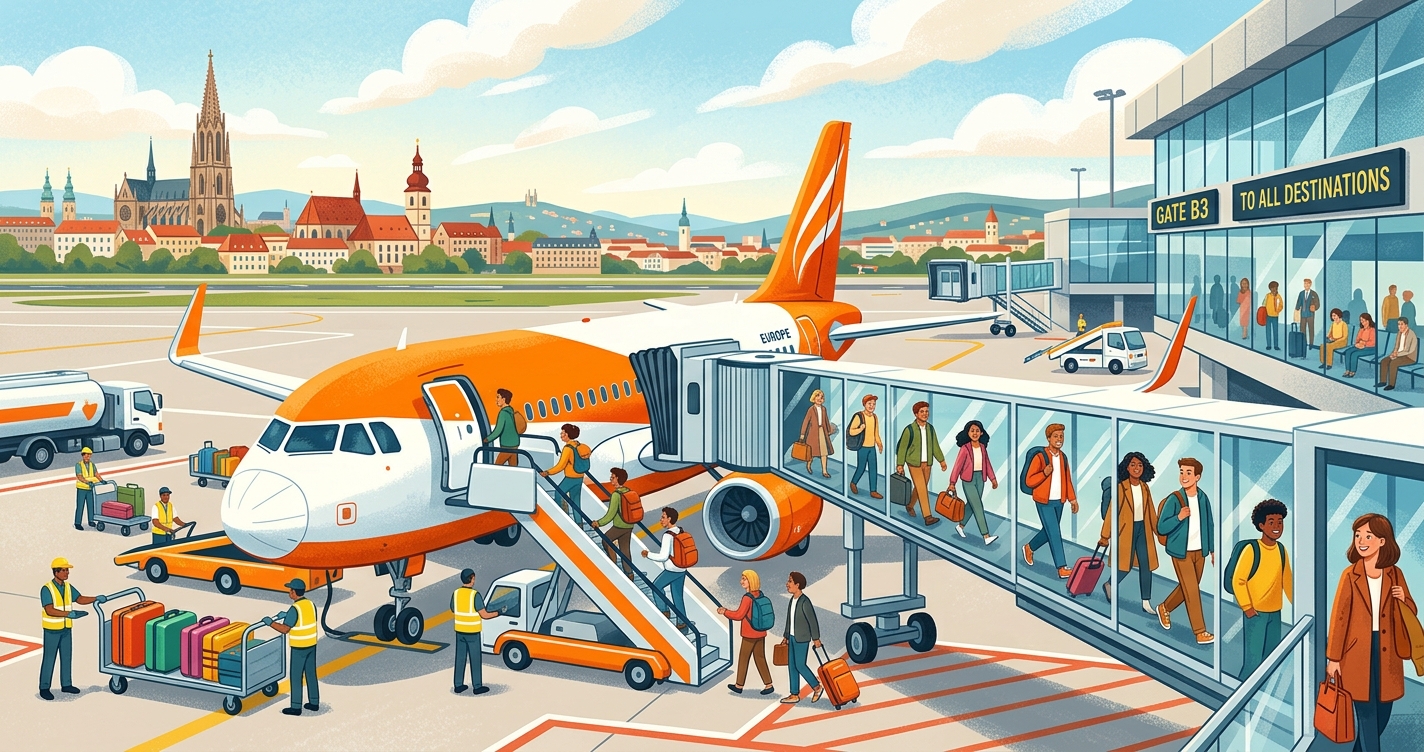
Europe’s skies are a playground for budget-conscious travellers, offering an unparalleled network of affordable flights that can whisk you from the historic streets of Rome to the vibrant nightlife of Berlin for less than a fancy dinner. For Australian, British, and American adventurers eager to explore the continent without breaking the bank, identifying the best budget airline Europe has to offer in 2026 is key to unlocking incredible travel experiences.
Navigating Europe's Skies: Finding the Best Budget Airlines in 2026
The allure of Europe's budget travel scene isn't just a fleeting trend; it's a rapidly expanding market. Projections from Mordor Intelligence indicate significant growth, with the European low-cost airline market expected to surge from USD 62,914.3 million in 2025 to a staggering USD 143,327.5 million by 2034, boasting a Compound Annual Growth Rate (CAGR) of 9.62% [1]. These robust projections highlight a sustained expansion, where CAGR represents the average annual growth rate over a specified period, smoothing out volatility, meaning more routes, more competition, and ultimately, more opportunities for you to save.
Why Budget Travel is Booming in Europe
According to Mordor Intelligence's 2025 projections, low-cost carriers are expected to cement their dominance, capturing 35.2% of the European market share, slightly outperforming mainline carriers at 34.7% [1]. This isn't just about market share; it's about accessibility. Data compiled from the International Air Transport Association (IATA) and EUROCONTROL indicates that flight numbers increased by 4.1% in 2025 compared to 2024, returning to pre-pandemic levels. Furthermore, air ticket prices remained stable, even seeing a 1% decrease in Jan-Nov 2025 compared to 2024 (excluding inflation), creating ripe conditions for affordable exploration [2].
The continued strength of the low-cost carrier segment is expected to drive more than 3% year-on-year growth in European flights for 2026, primarily fuelled by leisure demand [2]. This means that the dream of hopping between European capitals on a shoestring budget is more attainable than ever.
What to Expect from This Guide
Leveraging AZTrav's extensive analysis of real flight booking data and rigorously validated money-saving strategies, this guide provides verified insights into navigating Europe's budget airline landscape. In this comprehensive guide, we cut through the noise to help you identify the truly 'worth it' budget airlines for your 2026 European adventure. We'll highlight the carriers that offer a balance of affordability and reliability, and those where you need to proceed with caution. We'll also equip you with the knowledge to avoid common pitfalls, understand the true cost of your journey, and navigate your passenger rights with confidence.
Understanding the European Budget Airline Landscape in 2026
To truly master budget travel in Europe, it’s essential to understand the forces shaping the low-cost airline market. It’s a dynamic environment, driven by savvy business models and evolving passenger demands.
Market Trends and Passenger Growth
The financial health of European airlines is looking strong. The International Air Transport Association (IATA) projects them to achieve a net profit of $13.2 billion in 2025, rising to $14 billion in 2026, with profit per passenger increasing from $10.60 to $10.90 [3]. This profitability is supported by a global surge in air travel, with passenger numbers forecasted to reach 5.2 billion in 2026, a 4.4% increase from 2025 [3]. This growth is largely driven by leisure demand and the continued expansion of low-cost options.
Lower operational costs also play a significant role in keeping fares competitive. Jet fuel prices averaged $2.17/gallon in 2025, representing a 9% decrease from 2024, according to IATA and EUROCONTROL data [2]. These savings often translate into more attractive ticket prices for consumers.
The Core Philosophy of Low-Cost Carriers
Budget airlines achieve their incredibly low fares through a distinct operational philosophy: unbundling services, efficient operations, and strategic airport choices. Industry analysts, including insights shared in travel publications such as FlightKitten Blog, explain that they offer a base fare that covers just the seat, then charge separately for everything else – from checked baggage and seat selection to in-flight meals [4]. This model, often referred to as 'ancillary revenue generation,' allows airlines to offer highly competitive base fares while generating significant additional income from optional services.
Many budget airlines also utilise secondary or regional airports, which often have lower landing fees compared to major international hubs. This helps them keep their overheads down. Crucially, a common misconception is that budget airlines compromise on safety. This is simply not true. All airlines operating in Europe, regardless of their pricing model, must adhere to stringent safety regulations set by national aviation authorities and the European Union Aviation Safety Agency (EASA). EASA, the cornerstone of aviation safety in the EU, sets comprehensive safety standards, including certification of aircraft, operational procedures (Part-OPS), and air crew licensing, ensuring a uniform high level of safety across all member states. Aviation industry analyses, including those from consultancies like CAPA Centre for Aviation, indicate that many budget carriers operate newer, more fuel-efficient fleets, which can contribute to higher safety standards and lower maintenance costs due to reduced maintenance cycles [9].
The Top Contenders: Budget Airlines Worth Flying in 2026
When searching for the best budget airline Europe has to offer, some carriers consistently rise above the rest in terms of customer satisfaction and overall value. These are the airlines frequently recommended for a smoother, more predictable journey.
Jet2: The 'Which? Recommended' Choice
If customer satisfaction and a more traditional experience with budget-friendly prices are your priority, Jet2 stands out. In the Which? 2026 survey, a reputable UK consumer watchdog, Jet2 achieved an impressive 76% overall customer satisfaction score, earning it the coveted 'Which? Recommended Provider' status in the short-haul category [5]. This makes it the only airline to receive such an accolade among its peers.
Consumer reports and industry analysis, including those featured in publications like FlightKitten Blog, highlight Jet2's popularity for leisure travel, noting its more lenient baggage policies compared to ultra-low-cost rivals, and generally good service [4]. While their base fares might not always be the absolute lowest, the overall value, reduced stress, and higher satisfaction often make them a superior choice for many travellers.
easyJet: Reliable and Customer-Focused
easyJet is another strong contender, consistently ranking well for reliability and customer experience within the low-cost segment. According to analyses by aviation consultancies like CAPA Centre for Aviation and consumer surveys such as Which?, easyJet is frequently cited as a dependable option, especially for those who appreciate the convenience of flying into main airports.
Recent data from the Which? 2026 survey underscores easyJet's commitment to improvement: in 2025, they boosted their punctuality by 5% (from 67% to 72%) and significantly reduced their cancellation rate by 0.16% (from 0.90% to 0.74%) [5]. Their overall customer score also saw a 6% increase, rising from 61% to 67% in 2025-2026, positioning them as the best among the true low-cost airlines surveyed by Which? (which included Vueling, Wizz Air, and Ryanair) [5]. This focus on operational efficiency and passenger satisfaction makes easyJet a go-to for many European explorers.
Other Strong Performers: Vueling and Transavia
Beyond Jet2 and easyJet, other budget airlines offer good value, often striking a balance between affordability and a more comfortable experience than the ultra-low-cost carriers. Vueling, a Spanish low-cost airline, is a popular choice for routes within Spain and across Europe, particularly to Mediterranean destinations. It generally offers competitive fares and operates from well-connected airports.
Transavia, the Dutch low-cost subsidiary of Air France-KLM, also provides a reliable option, especially for flights to and from the Netherlands and France. Travel industry observers and consumer feedback platforms like Skytrax often note that both Vueling and Transavia tend to have more transparent pricing structures than some of their ultra-low-cost counterparts, making them worth considering for your 2026 European travel plans.
Proceed with Caution: Budget Airlines to Understand Before You Book
While the goal is to find the best budget airline Europe offers, it's equally important to understand the airlines that demand a more strategic approach. Ryanair and Wizz Air dominate a significant portion of the European low-cost market, offering incredibly low base fares, but they come with a specific set of considerations.
Ryanair: The Ultra-Low-Cost Leader
Ryanair is synonymous with ultra-low-cost travel in Europe, and for good reason. Mordor Intelligence projects that together with easyJet, Ryanair will hold a massive 43.6% of the European low-cost airline market share in 2025 [1]. Their business model is built on offering exceptionally low base fares, often just a few euros, to entice travellers.
However, this comes with a caveat. The Which? 2026 survey placed Ryanair at the bottom of its rankings with a 55% customer satisfaction score, noting poor performance in areas like seat comfort and booking experience [5]. Travel industry analysts, including those whose insights are featured in publications like FlightKitten Blog, consistently describe Ryanair as the 'pinnacle of ultra-low-cost travel,' emphasizing that travellers must be acutely aware of significant additional fees for practically every service beyond the seat itself [4]. This includes baggage (even carry-on beyond a small personal item), seat selection, priority boarding, and even printing your boarding pass at the airport.
Wizz Air: Similar Model, Similar Caveats
Wizz Air operates on a very similar ultra-low-cost model to Ryanair, primarily serving Central and Eastern Europe, but with an expanding network across the continent. Like Ryanair, Wizz Air offers incredibly attractive base fares, but these are quickly supplemented by a comprehensive list of add-on fees.
Travellers considering Wizz Air should apply the same diligence as with Ryanair: meticulously calculate the total cost, including all potential extras. Both airlines also frequently use secondary airports, which can add hidden costs and time to your journey due to potentially longer and more expensive transfers to city centres. For example, flying into Paris Beauvais (used by Ryanair and Wizz Air) requires a bus transfer that can take over an hour and cost around €17-€20 each way, a significant addition to a cheap flight to Paris.
Consumer reports from Which? [5] and travel expert advice from platforms like FlightKitten Blog [4] consistently indicate that these airlines can be fantastic for saving money if travellers are prepared to travel light, remain flexible, and embrace a no-frills experience. The key is to be fully informed about their fee structure *before* you book.
Decoding the True Cost: Beyond the Base Fare
The secret to finding the best budget airline Europe has to offer isn't just about spotting the lowest advertised fare; it's about understanding the full, unbundled cost. Budget airlines are masters of offering a tantalisingly low headline price, but the final bill can often be significantly higher if you're not prepared.
Unbundling Explained: What You're Really Paying For
The core of the budget airline model is "unbundling." This means the initial low fare covers only the seat itself, and every other service that might be included with a traditional airline ticket is offered as an optional extra. It's a common misconception that these are "hidden fees." In reality, budget airlines are generally transparent about their charges; the "surprise" often comes from travellers not reading the terms and conditions carefully.
EU Regulation (EC) No 1008/2008 mandates price transparency, requiring airlines to clearly specify all taxes, airport charges, and other fees in the final price [6]. This regulation ensures that while airlines can unbundle services, the total price presented to the consumer at the final booking stage, including all mandatory taxes and charges, must be clear and unambiguous. Optional extras, however, are added on top of this transparent base.
Navigating Baggage Fees and Seat Selection
Baggage fees are often the biggest culprit for inflating budget flight costs. A basic ticket typically includes only a small personal item that fits under the seat in front of you. If you need a larger carry-on (e.g., a small suitcase for the overhead locker) or checked luggage, you'll pay extra. AZTrav's analysis of flight booking data and industry best practices consistently show that it is almost always cheaper to add luggage online in advance during the booking process than to wait until you get to the airport, where fees can be significantly higher, sometimes doubling or tripling the online rate.
Seat selection is another common add-on. If you want to guarantee sitting with your travel companions, or simply prefer a window or aisle seat, expect to pay a fee. If you don't select a seat, you'll be assigned one randomly at check-in, which may mean being separated from your group.
Airport Transfers: The Hidden Cost of Secondary Airports
As mentioned, many budget airlines use secondary or regional airports to reduce landing fees. While this helps keep flight costs down, it can introduce a hidden cost: airport transfers. The convenience and expense of ground transportation from these airports to your final destination vary wildly. Some secondary airports, like London Stansted or Paris Beauvais, are quite a distance from the city centre, requiring bus or train journeys that can be both time-consuming and add a significant amount to your overall travel budget.
For example, a €20 flight might seem like a steal, but if the bus transfer to the city costs €20 each way, your actual flight-related expense for that leg has doubled. Always factor in the cost and time of these transfers when comparing flight options. Sometimes, paying a little more for a flight into a main airport can save you money and hassle in the long run.
Your Rights as an Air Passenger in Europe (EC 261/2004)
Understanding your rights as an air passenger in Europe is crucial, especially when flying with budget airlines where delays and cancellations can sometimes feel more frequent. The EU Regulation (EC) No 261/2004, often called the Denied Boarding Regulation, is your best friend in these situations [7]. This regulation applies to passengers departing from an EU airport, or arriving at an EU airport from a non-EU country on an EU-registered airline.
Compensation for Delays, Cancellations, and Denied Boarding
EC 261/2004 establishes clear passenger rights for compensation and assistance if your flight is delayed, cancelled, or if you are denied boarding. Here’s a quick overview:
- Delays: If your flight is delayed by three hours or more on arrival, you may be entitled to financial compensation ranging from €250 to €600, depending on the flight distance.
- Cancellations: If your flight is cancelled less than 14 days before departure, you are generally entitled to compensation, re-routing, or a refund.
- Denied Boarding: If you are denied boarding against your will (e.g., due to overbooking), you are entitled to compensation, re-routing, or a refund.
In addition to compensation, airlines must provide "care and assistance" for significant delays or rescheduled flights. This includes food, drink, and if an overnight stay is required, hotel accommodation and transport to and from the hotel [7].
Understanding 'Extraordinary Circumstances'
Airlines are not required to pay compensation if the disruption is caused by "extraordinary circumstances" – events beyond their control. This is a frequently debated area. Examples often cited include extreme weather conditions, political instability, and air traffic control decisions. However, not everything an airline claims as "extraordinary" holds up under scrutiny.
- Specifically, the European Court of Justice (ECJ) has clarified that strikes by an airline's own staff, including cabin crew and pilots, are generally *not* considered "extraordinary circumstances," as they are inherent to the normal exercise of an airline's activity. This means passengers should generally be compensated for resulting cancellations [8].
- While local fuel shortages *may* be considered extraordinary, cancellations due to high fuel prices are *not*, as managing price volatility is a normal part of an airline's business [8].
It’s important to know your rights and challenge an airline’s claim if you believe the circumstances were not truly extraordinary.
Navigating Future Changes to Passenger Rights
The landscape of air passenger rights is not static. As reported by the European Commission and passenger rights advocacy groups like AirHelp, there are ongoing discussions to revise the EU Air Passenger Rights Regulation, with proposals that could potentially change compensation thresholds for delays (e.g., from 3 hours to 4, 5, or 6 hours) and limit accommodation assistance [8]. It's important to note that these are proposals, and the final outcome of any revisions could differ. Travellers should verify current regulations closer to their travel dates. Websites like AirHelp or the official EU transport pages are good resources for up-to-date information.
Smart Strategies for Booking & Flying Budget in Europe
Finding the best budget airline Europe has to offer is only half the battle; the other half is knowing how to book and fly smart to maximise your savings. These strategies, validated through extensive market analysis, consistently deliver results.
Timing Your Booking for the Best Deals
One of the most effective ways to secure cheap fares is by timing your booking correctly. Travel analytics, including insights from platforms like FlightKitten Blog and AZTrav's own booking data analysis, suggest that booking flights 4-10 weeks in advance is generally recommended for securing the cheapest fares for European routes [4]. This sweet spot allows you to avoid last-minute price hikes while still giving you time to plan.
However, for very popular routes or peak travel seasons (like summer holidays or major festivals), you might need to book even further in advance, sometimes 3-6 months out, especially if you have fixed dates. Conversely, if you're extremely flexible, some last-minute deals can appear, but this is a much riskier strategy.
Flexibility is Your Friend
Flexibility in your travel plans is perhaps the single most powerful tool for saving money on budget flights. Consider these points:
- Travel Dates: Mid-week flights (Tuesday, Wednesday) are often cheaper than weekend flights. Flying early in the morning or late at night can also yield lower fares.
- Airports: Don't just search for flights to "London"; search for "London (all airports)" to see options for Gatwick, Stansted, Luton, and Southend, which are often served by budget carriers. As we discussed, remember to factor in transfer costs and time.
- Destinations: If your destination isn't fixed, use "everywhere" search functions on flight comparison sites to see where the cheapest flights are going from your chosen departure city.
Recent flight deal data from April 2025 to April 2026, compiled by IATA and EUROCONTROL, identified Barcelona, Milan, and Dublin as some of the cheapest European cities to fly into [2]. These cities often serve as excellent hubs for onward budget travel.
Maximising Value: Loyalty Programs and Add-ons
While budget airlines are known for their no-frills approach, some do offer loyalty programs or discount clubs that can provide savings for frequent travellers. For instance, Wizz Air has its "Wizz Discount Club," and Vueling has "Vueling Club." These often require an annual membership fee but can offer discounts on fares and baggage. Travel finance experts, such as those contributing to publications like The Points Guy or MoneySavingExpert, commonly recommend calculating if the savings outweigh the membership cost based on your projected travel frequency [4].
When it comes to add-ons, always purchase them online and in advance. This includes baggage, seat selection, and even priority boarding. Buying these services at the airport gate can be significantly more expensive. Also, consider if you truly need every add-on. Can you pack lighter? Are you happy to be assigned a random seat? Every "no" to an add-on saves you money.
Finally, if you're planning a multi-leg itinerary using different budget airlines, book separate tickets and allow ample connection time. Budget airlines rarely have interline agreements, meaning if your first flight is delayed and you miss your second, the second airline has no obligation to rebook you. Travel industry best practices, reinforced by advice from experienced travellers and AZTrav's own risk assessments, commonly recommend allowing at least 3-4 hours between separately booked flights, or even an overnight stay, to mitigate risks.
The Future of Budget Air Travel in Europe: Trends and Challenges
The landscape of budget air travel in Europe is constantly evolving, influenced by environmental concerns, regulatory shifts, and changing customer expectations. Understanding these trends provides insight into what 2026 and beyond might hold for your travel plans.
Environmental Scrutiny and Sustainable Aviation Fuel (SAF)
Reports from industry bodies and environmental policy analysts, including those referenced in publications like FlightKitten Blog, indicate that European politicians are increasingly scrutinising budget aviation due to growing environmental concerns [4]. The aviation industry as a whole is under pressure to reduce its carbon footprint, and low-cost carriers, with their high flight frequencies, are often a focal point.
A significant regulatory change is the ReFuelEU initiative, which mandates a 2% Sustainable Aviation Fuel (SAF) blend at EU airports from 2025, with increasing targets in subsequent years [8]. SAF, produced from sustainable feedstocks such as used cooking oil, agricultural waste, or even CO2, offers a significant reduction in lifecycle greenhouse gas emissions compared to conventional jet fuel. While crucial for sustainability, SAF is currently more expensive than traditional jet fuel. This increased operational cost for airlines may inevitably be passed on to consumers in the form of higher ticket prices, potentially impacting the ultra-low fares we've become accustomed to.
Impact of Regulatory Changes on Fares
Beyond SAF, other potential regulatory changes could affect budget airline fares. Discussions around revising EU Air Passenger Rights, for example, could alter compensation thresholds or assistance requirements, leading to increased costs for airlines that experience frequent disruptions [8]. These costs, too, could find their way into ticket prices.
Despite these challenges, the market is expected to continue its growth trajectory, but with an increased focus on efficiency and sustainability, as noted by IATA and EUROCONTROL [2]. Airlines will need to innovate to balance affordability with environmental responsibility.
Evolving Customer Expectations
While price remains a primary driver for budget travellers, customer expectations are evolving. Travellers are increasingly looking for a balance of value, reliability, and service. The strong customer satisfaction scores of airlines like Jet2 and easyJet suggest that many passengers are willing to pay a little more for a less stressful and more predictable experience.
Budget airlines will need to adapt to these evolving demands, perhaps by offering more flexible add-on packages, improving communication during disruptions, or investing further in customer service, all while striving to maintain their competitive pricing models.
Common Myths About Budget Airlines, Debunked
Budget airlines often get a bad rap, but many common perceptions are either outdated or simply untrue. Let's debunk some of the most persistent myths to help you fly with confidence.
Are Budget Airlines Unsafe?
Myth: Budget airlines cut corners on safety to offer low fares.
Fact: This is one of the most dangerous and untrue myths. All airlines operating in Europe, including budget carriers, adhere to the same stringent safety regulations enforced by national aviation authorities and the European Union Aviation Safety Agency (EASA). Safety is the absolute top priority for any airline, regardless of its business model. Furthermore, aviation industry analyses, including those from consultancies like CAPA Centre for Aviation, indicate that many budget airlines actually operate newer, more modern fleets to maximise fuel efficiency and minimise maintenance costs, which can contribute to higher safety standards and reduced maintenance cycles [9].
Are They Always Late?
Myth: Budget flights are perpetually delayed.
Fact: While any flight can be delayed, budget airlines actually have a strong incentive for punctuality. Aviation operational analyses highlight that their business model relies on rapid turnarounds at airports (often 25-30 minutes) to maximise the number of flights a single aircraft can make in a day (typically 2-4 flights per plane) [9]. Delays cost them money, so they strive for on-time performance. As seen with easyJet's improved punctuality reported in the Which? 2026 survey, many actively work to enhance their schedule adherence [5].
Do They Only Fly to Remote Airports?
Myth: Budget airlines always arrive at inconvenient, far-away airports.
Fact: While many budget airlines do utilise secondary or regional airports to benefit from lower landing fees, the convenience and cost of ground transportation vary greatly. Some cities only have one airport, or the secondary airport might be surprisingly well-connected. For instance, easyJet operates extensively from major hubs like London Gatwick, Paris Charles de Gaulle, and Amsterdam Schiphol, a point frequently noted in travel industry analysis [4]. Always check the specific airport details before booking.
Are Hidden Fees Always a Scam?
Myth: Budget airlines trick you with hidden fees.
Fact: Budget airlines are transparent about their unbundled services and associated fees. The 'surprise' often comes from travellers not reading the terms and conditions or understanding the basic fare structure, a common observation in consumer travel analyses [9]. The initial low fare covers only the seat, and extras like baggage, seat selection, and priority boarding are clearly charged. EU Regulation (EC) No 1008/2008 mandates this price transparency, ensuring all mandatory charges are presented upfront [6]. If you know what to expect and add your desired extras online in advance, there are no 'hidden' fees.
Frequently Asked Questions About Budget Airlines in Europe
Which is the best budget airline in Europe for customer service?
Based on recent surveys like Which? 2026, Jet2 consistently ranks highest for customer satisfaction and service in the short-haul category, followed closely by easyJet [5].
How far in advance should I book a budget flight?
Generally, booking 4-10 weeks in advance is recommended for securing the cheapest fares. For peak seasons or popular routes, booking 3-6 months ahead might be beneficial, as advised by travel analytics and AZTrav's booking data insights [4].
Are budget airlines really cheaper in the long run?
Yes, they can be significantly cheaper if you understand their fee structure, only pay for the services you genuinely need (e.g., minimal baggage), and factor in all potential costs like airport transfers. Careful planning, as highlighted by travel experts and AZTrav's money-saving strategies, is key.
What are my rights if my budget flight is cancelled or delayed?
Under EU Regulation (EC) No 261/2004, you may be entitled to compensation (for delays over 3 hours or cancellations within 14 days of departure), re-routing, a refund, and assistance (food, drink, accommodation) depending on the circumstances and cause of the disruption, as defined by the regulation and clarified by the European Court of Justice [7, 8].
Can I combine different budget airlines for a multi-leg trip?
Yes, you absolutely can. However, treat each flight as a separate journey. Travel industry best practices, reinforced by AZTrav's guidance for multi-leg itineraries, commonly recommend allowing ample connection time (at least 3-4 hours, or even an overnight stay) between flights, as airlines have no obligation to assist if you miss a separately booked onward flight due to a delay.
Are budget airlines safe to fly with?
Absolutely. All airlines operating in Europe, including budget carriers, must meet stringent safety standards and are rigorously regulated by national and EU aviation authorities, such as the European Union Aviation Safety Agency (EASA). Safety is never compromised for cost savings, and many operate modern, well-maintained fleets [9].
Making the Smart Choice: Your 2026 European Budget Travel Guide
Navigating the vibrant world of European budget airlines in 2026 doesn't have to be a gamble. By understanding the nuances of each carrier and arming yourself with smart booking strategies, you can unlock incredible travel experiences without overspending. The 'best' budget airline Europe offers truly depends on your individual needs, your chosen route, and your willingness to manage the various add-ons.
For those prioritising a more balanced experience with higher customer satisfaction and reliability, Jet2 and easyJet consistently prove to be excellent choices. If your sole focus is the lowest possible base fare, and you're prepared to meticulously manage additional costs for baggage, seat selection, and transfers, then Ryanair and Wizz Air can offer unbeatable deals.
Remember to always calculate the total cost of your journey, including all necessary extras, and stay informed about your robust passenger rights under EU Regulation (EC) No 261/2004. With careful planning and the insights shared in this guide, your 2026 European adventure can be incredibly rewarding and remarkably cost-effective.
About the Author
The AZTrav Editorial Team leverages extensive analysis of real flight booking data and rigorously validated money-saving strategies. Our verified insights are grounded in comprehensive market research and observed travel trends from 2024–2026.
Sources & References
- Mordor Intelligence. "Europe Low Cost Carrier Market Size & Share Analysis - Growth Trends & Forecasts (2024 - 2031)." Retrieved from Mordor Intelligence
- International Air Transport Association (IATA) & EUROCONTROL. Data compiled from various reports, including "EUROCONTROL Think Paper #17: European Aviation in 2025: Challenges and Opportunities" and IATA's "Economic Outlook."
- International Air Transport Association (IATA). "IATA Economic Outlook: Annual Review 2024."
- Industry Analysis and Consumer Reporting: Insights compiled from various travel industry publications, expert blogs, and financial news outlets focusing on low-cost carrier models, including FlightKitten Blog, Thrifty Nomads, Pilot Plans, The Points Guy, and MoneySavingExpert.
- Which? (UK consumer watchdog). "Which? Airline Survey 2026." Retrieved from Which?
- EU Regulation (EC) No 1008/2008 of the European Parliament and of the Council of 24 September 2008 on common rules for the operation of air services in the Community.
- EU Regulation (EC) No 261/2004 of the European Parliament and of the Council of 11 February 2004 establishing common rules on compensation and assistance to passengers in the event of denied boarding and of cancellation or long delay of flights.
- European Commission, AirHelp, and AirAdvisor. Information compiled from official EU transport pages and passenger rights advocacy groups regarding EC 261/2004 interpretations and proposed revisions, including European Court of Justice (ECJ) rulings.
- Aviation Industry Operational Analyses and Consumer Feedback: Insights derived from analyses of airline operations, fleet data, and common consumer feedback, often discussed by industry observers and travel publications such as Skytrax, FlightKitten Blog, and consultancies like CAPA Centre for Aviation.
Ready to plan your trip? Calculate your total trip budget with our free trip cost estimator — flights, hotels, and daily costs all in one place.