
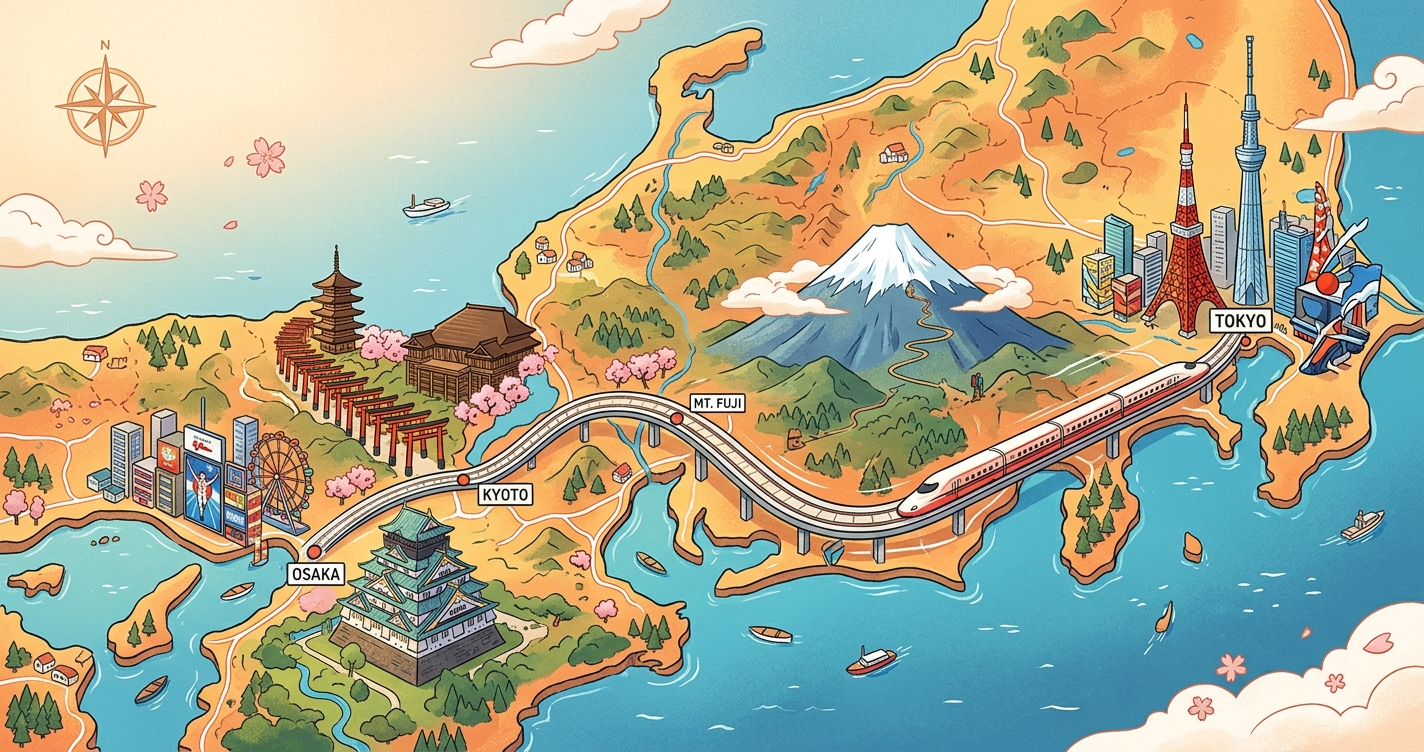
Why 2026 is the Perfect Year for Your Japan Trip
Japan continues to captivate global travelers, and 2026 stands out as an exceptional year to visit. Our team has analyzed significant trends and economic indicators that make this period particularly appealing for those planning a 2 weeks in Japan itinerary.The Weak Yen Advantage: Maximizing Your Travel Budget
One of the most compelling reasons to visit Japan in 2026 is the incredible value offered by the weak Japanese Yen. As of early 2026, the yen has consistently traded around ¥150-¥155 to the US dollar, a trend that began in late 2025 and has been widely reported by leading financial news outlets like Bloomberg and Reuters. This sustained exchange rate, largely fueled by the Bank of Japan's continued accommodative monetary policy—maintaining ultra-low interest rates while other major economies have tightened—and significant interest rate differentials, makes Japan a relatively inexpensive destination for international travelers. This is particularly advantageous for those converting Australian Dollars, British Pounds, or US Dollars, providing substantial purchasing power. This unprecedented value translates directly into more affordable experiences for you. From dining out at local eateries and indulging in authentic street food to purchasing souvenirs and even booking accommodations, your travel budget will stretch further, allowing for a richer and more expansive exploration of the country's diverse offerings.Japan's Growing Popularity and Evolving Tourism Landscape
Japan's allure is undeniable, with visitor numbers consistently breaking records. In 2025, Japan welcomed a staggering 42.7 million international visitors, marking a 15.8% increase from the previous year and significantly surpassing pre-pandemic levels from 2019, according to the Japan National Tourism Organization (JNTO). This surge in popularity continued into early 2026, with an estimated 3,466,700 international travelers visiting in February alone, a 6.4% increase over February 2025 (JNTO, International Visitor Statistics). This record influx of visitors also led to a new high in international visitor spending, reaching ¥9.5 trillion in 2025 (JNTO). While major cities like Kyoto saw a top share of international visitor nights from the U.S. in March 2026, Japan is strategically focusing on what experts call "smarter tourism" (Euromonitor International, 2026). This initiative, championed by the Japan Tourism Agency (JTA) and local governments, aims to promote regional dispersal, enhance visitor management, and invest in sustainable infrastructure. The goal is to attract visitors to rural areas and encourage deeper engagement with local communities, offering a more balanced experience beyond the well-trodden paths of Tokyo, Kyoto, and Osaka. As a primary driver of international travel demand in Asia for 2026, Japan is known for its robust infrastructure and unique cultural offerings, making it an ideal entry point to the region (Mabrian, 2026 Global Travel Intelligence Report).Planning Your 2-Week Japan Adventure: Essential Pre-Trip Considerations
A successful 2 weeks in Japan itinerary requires careful planning. We have compiled the crucial pre-trip considerations, informed by official regulations and extensive travel insights from AZTrav's Japan specialists and user feedback, to ensure your journey is smooth and enjoyable.Visa & Entry Requirements for 2026
For citizens of Australia, the UK, and the USA, planning a short-term tourist trip to Japan in 2026 is generally straightforward. You'll typically enjoy visa-free entry for stays ranging from 15 to 90 days, provided your passport is valid for the entire duration of your stay (Ministry of Foreign Affairs of Japan, 2026). This simplifies the entry process, allowing you to focus on the excitement of your upcoming trip. While the planned JESTA system (Japan Electronic System for Travel Authorization), similar to the US ESTA, is under development to enhance border security and streamline entry, the Immigration Service Agency of Japan (2026) indicates it is not expected to be fully implemented for 2026 travel. However, the official JAPAN eVISA system, launched in September 2025, is active for many nationalities, streamlining digital short-term visa applications if needed. Always consult the Ministry of Foreign Affairs of Japan website for the most current requirements based on your nationality and specific travel purpose, as regulations can be subject to change.Budgeting for Your Trip: Expect More, Spend Smart
One common misconception is that Japan is prohibitively expensive. While luxury options are plentiful, Japan can be surprisingly affordable, especially with the weak yen. For a mid-range 2 weeks in Japan itinerary, based on AZTrav's proprietary cost analysis—which aggregates data from thousands of user itineraries, real-time pricing models for accommodation and transport, and current market rates—you might budget around JPY 200,000-350,000 (approximately USD 1,300-2,300, AUD 2,000-3,500, or GBP 1,000-1,800) per person, excluding international flights. This typically covers stays in 3-star business hotels (e.g., Toyoko Inn, Dormy Inn) or well-regarded guesthouses, a mix of convenience store meals and local restaurant dining, and extensive use of public transport. This figure can vary significantly based on your travel style, choice of hotels, dining preferences, and shopping habits. Here’s a breakdown of how to spend smart: * **Accommodation:** Opt for business hotels (clean, efficient, often well-located), guesthouses, or even capsule hotels for a unique, budget-friendly experience. Booking in advance, especially outside peak seasons, can yield better rates. * **Food:** Embrace convenience stores (konbini) like 7-Eleven, FamilyMart, and Lawson for delicious, high-quality, and affordable meals (e.g., onigiri, bento boxes). Local eateries, ramen shops, and udon stalls offer incredible value and authentic flavors. * **Transport:** While the Shinkansen (bullet train) can be an investment, local trains and subways are efficient and economical. Consider a regional pass (e.g., Kansai Thru Pass, JR Kyushu Rail Pass) if your route is concentrated within a specific area, but always calculate its value for your specific itinerary using a reliable online calculator.Connectivity & Digital Tools: Staying Connected in Japan
In 2026, Japan is a highly digitally-enabled country, and embracing this will significantly enhance your travel experience. * **eSIMs:** For seamless data connectivity, an eSIM (embedded SIM) is highly recommended. These digital SIM profiles eliminate the need for physical cards and can be purchased and activated digitally before you even land, ensuring you have internet access from the moment you arrive. Providers like Airalo or Holafly offer various data packages tailored for tourists, leveraging Japan's robust 4G and 5G networks. * **Navigation:** Google Maps is indispensable for navigating Japan's complex public transport system. It provides accurate train, subway, and bus routes, including platform numbers, transfer information, and real-time delays, making multi-modal routing effortless. Apps like "Japan Transit Planner" by Jorudan or Navitime are also highly regarded for their precision and detailed local insights, often preferred by seasoned travelers for their comprehensive coverage of local lines. * **Translation Apps:** While English signage is common in major tourist areas, Google Translate or similar apps (with robust offline dictionary functions) are invaluable for reading menus, understanding announcements, and communicating with locals, especially outside major cities. * **Mobile IC Cards:** A mobile IC card (like Suica or Pasmo, easily added to your smartphone's wallet for Apple Pay or Google Pay) is essential for public transport. Simply tap and go on trains, subways, and buses across most major cities. These NFC-based cards can also be used for purchases at convenience stores, vending machines, and some shops, streamlining transactions and reducing the need for small change.Booking Essentials: What to Reserve in Advance
To avoid disappointment and ensure a smooth trip, certain aspects of your 2 weeks in Japan itinerary should be booked well in advance. Japan's popularity means high demand for key experiences. * **Accommodations:** Especially during popular seasons (cherry blossom in spring, autumn foliage in fall) or in high-demand areas like Kyoto, secure your hotels or guesthouses several months ahead. For peak travel periods, 6-9 months in advance is advisable, as popular properties fill quickly. * **Shinkansen Tickets:** While tickets can often be bought on the day, reserving seats for popular routes (e.g., Tokyo to Kyoto) is wise, particularly if you're traveling with a group or during peak times. Crucially, if you have oversized luggage (total dimensions over 160cm, but less than 250cm), you *must* reserve a specific seat with an adjacent storage space in advance when booking your ticket (JR Central, 2026). This regulation was implemented to manage luggage capacity effectively on crowded trains. Failure to do so can result in a fee (JPY 1,000) and the requirement to store your luggage in a non-reserved area, disrupting your journey. * **High-Demand Attractions:** Tickets for places like Ghibli Park (notoriously difficult to secure, often sold out months ahead, as widely reported by reputable travel guides and official park advisories), TeamLab Borderless (or Planets), Shibuya Sky, and sumo wrestling matches (seasonal) sell out extremely quickly. Set reminders and book as soon as tickets become available, often 1-3 months in advance. * **Special Experiences:** If you plan to attend a specific tea ceremony, cooking class, or a popular themed cafe, pre-booking is almost always necessary to guarantee your spot, especially if you have limited time.The JR Pass Dilemma: Is it Worth It for Your Itinerary?
The Japan Rail Pass has long been a staple for international visitors, offering unlimited travel on JR lines, including most Shinkansen. However, due to significant price hikes in late 2023, the pass is no longer universally the most cost-effective option. For a typical 2 weeks in Japan itinerary focusing solely on the "Golden Route" of Tokyo, Kyoto, and Osaka, the pass might not pay off. We strongly recommend using an online JR Pass calculator (available on various reputable travel sites like Japan-Guide.com or official JR Pass resellers) to compare the cost of individual Shinkansen tickets for your specific route against the price of the pass. This will give you a clear, data-driven answer tailored to your travel plans. While often not cost-effective for the Tokyo-Kyoto-Osaka route alone, the pass can still offer significant savings for itineraries that include more extensive long-distance travel, such as a round trip to Hokkaido, Kyushu, or multiple day trips beyond these major hubs.The AZTrav Recommended 2-Week Japan Itinerary: Tokyo, Kyoto, Osaka & Beyond
This carefully curated 2 weeks in Japan itinerary is designed to provide a rich and varied experience, balancing iconic sights with opportunities for deeper cultural immersion. We've focused on a comfortable pace, ensuring you don't feel rushed and have time to truly absorb each destination.Days 1-5: Tokyo – The Dynamic Metropolis
Your adventure begins in Tokyo, a city that perfectly encapsulates Japan's dynamic spirit, blending ancient traditions with cutting-edge modernity. * **Day 1: Arrival & Shibuya/Shinjuku.** Arrive at Narita (NRT) or Haneda (HND) Airport, transfer to your accommodation. Spend your afternoon immersing yourself in the sensory overload of Shibuya Crossing, perhaps observing it from the iconic Starbucks on the second floor of the Tsutaya building or the panoramic Shibuya Sky observation deck. Follow with dinner in Shinjuku, perhaps a visit to the atmospheric Golden Gai for a unique bar experience. * **Day 2: Imperial History & Gardens.** Start with a peaceful morning stroll through the serene Imperial Palace East Garden, a tranquil oasis in the heart of the city, offering a glimpse into Japan's imperial past. Afterwards, explore the upscale Ginza district for high-end shopping and impressive architectural marvels. * **Day 3: Tradition & Modernity.** Visit Senso-ji Temple in Asakusa, Tokyo's oldest temple, and wander through the bustling Nakamise-dori market, perfect for traditional souvenirs. In the afternoon, dive into the quirky fashion and youth culture of Harajuku (Takeshita Street), then ascend to the Tokyo Metropolitan Government Building for free panoramic city views from its observation decks. * **Day 4: Art & Innovation.** Dedicate your day to Tokyo's cutting-edge art scene. Book well in advance for TeamLab Borderless (or Planets), an immersive digital art museum that offers a truly unique sensory experience. In the evening, experience the breathtaking views from Shibuya Sky, especially at sunset, offering a 360-degree panorama of the sprawling city. * **Day 5: Culture & Relaxation.** Explore a neighborhood like Yanaka, offering a glimpse into old Tokyo with its historic temples, traditional shops, and peaceful cemetery. Alternatively, visit Shinjuku Gyoen National Garden for a peaceful escape with meticulously maintained Japanese, French, and English gardens. Consider a hands-on cooking class (e.g., making sushi or ramen) or a traditional tea ceremony to deepen your cultural understanding.Day 6: Seamless Travel to Kyoto – Bullet Train Experience
Today, you'll experience the marvel of Japan's Shinkansen, a testament to Japanese engineering and efficiency. * **Morning:** Enjoy a final Tokyo breakfast. Head to Tokyo Station, ensuring you have your Shinkansen tickets and any oversized luggage reservations in order. Aim to arrive at least 30 minutes before your departure to navigate the station's extensive layout. * **Afternoon:** The journey to Kyoto takes approximately 2.5 to 3 hours on the Nozomi Shinkansen, offering stunning views of the Japanese countryside, including the iconic Mount Fuji on a clear day (sit on the right side of the train when departing Tokyo for the best view, approximately 40-50 minutes into the journey). Check into your Kyoto accommodation and spend the evening exploring the charming Pontocho alley, known for its traditional restaurants, bars, and potential geisha sightings.Days 7-10: Kyoto & Nara – Tradition, Temples & Deer
Kyoto, the former imperial capital, is where Japan's rich history and spiritual heart truly shine, offering an abundance of UNESCO World Heritage sites. * **Day 7: Iconic Kyoto.** Begin your day early (before 8 AM to avoid crowds) at Kiyomizu-dera Temple, perched on a hillside with panoramic views of the city. Wander through the historic Higashiyama district, exploring traditional shops and narrow lanes. In the afternoon, immerse yourself in the vibrant orange torii gates of Fushimi Inari Shrine, a captivating hike through thousands of vermilion gates. * **Day 8: Zen & Bamboo.** Visit the serene Arashiyama Bamboo Grove early in the morning for a tranquil experience. While there, explore Tenryu-ji Temple, a UNESCO World Heritage site with a beautiful Zen garden, and the charming streets of Arashiyama. In the afternoon, explore the tranquil Ryoan-ji Temple with its famous rock garden, another UNESCO World Heritage site known for its minimalist beauty. * **Day 9: Gion & Nishiki Market.** Explore the historic Gion district, known for its traditional wooden machiya houses and geisha culture. Consider a walking tour to learn about its history. In the afternoon, delve into the culinary delights and local crafts of Nishiki Market, known as Kyoto's Kitchen, where you can sample various local delicacies. * **Day 10: Nara Day Trip.** Take a short train ride (approx. 45 minutes by JR Nara Line) to Nara, Japan's first permanent capital. Spend the day at Nara Park, home to hundreds of friendly, free-roaming deer. Visit Todai-ji Temple, housing a massive bronze Buddha statue within the world's largest wooden building, and Kasuga Taisha Shrine, known for its numerous bronze and stone lanterns. Return to Kyoto in the evening.Days 11-13: Osaka & Day Trip – Culinary Delights & Urban Charm
Osaka, often called Japan's kitchen, offers a vibrant urban experience with a focus on food, entertainment, and a distinct Kansai personality. * **Day 11: Travel to Osaka & Dotonbori.** Take a quick Shinkansen or local train from Kyoto to Osaka (approx. 15-30 minutes). Check into your hotel. Spend your afternoon exploring the lively Dotonbori district, famous for its illuminated billboards (like the Glico Man), vibrant street food, and entertainment. Indulge in local specialties like takoyaki (octopus balls) and okonomiyaki (savory pancakes). * **Day 12: History & Modernity.** Visit the magnificent Osaka Castle, a symbol of Osaka's rich history, and explore its surrounding park, especially beautiful during cherry blossom season. In the afternoon, wander through Shinsekai, an eclectic district with retro charm, the iconic Tsutenkaku Tower, and a nostalgic atmosphere reminiscent of post-war Osaka. * **Day 13: Day Trip Adventure.** Depending on your interests and energy levels, consider one of these day trips: * **Himeji Castle:** Travel to Himeji (approx. 1 hour by Shinkansen) to see Japan's most spectacular original castle, a UNESCO World Heritage site renowned for its pristine white exterior and complex defense systems. * **Hiroshima & Miyajima:** For those eager to delve into deeper history, a longer day trip to Hiroshima (Peace Memorial Park and Museum) and the stunning Miyajima Island (Itsukushima Shrine with its "floating" torii gate) is possible (approx. 2 hours by Shinkansen each way), though it will be a very full day. Seasoned travelers often recommend this as a relaxed overnight stay if you have an extra day, or to focus on Himeji for a more relaxed day trip from Osaka. * **Evening:** Enjoy a final Osaka dinner, perhaps at a local izakaya (Japanese pub) for a variety of small dishes and drinks.Day 14: Departure from Japan
Depending on your flight schedule, enjoy a leisurely breakfast, do some last-minute souvenir shopping, or revisit a favorite spot. Head to Kansai International Airport (KIX) or Itami Airport (ITM) for your departure, filled with memories of your incredible 2 weeks in Japan itinerary. This itinerary balances major sights with time for local exploration and relaxation, avoiding the common mistake of trying to do too much. Remember to integrate local experiences like a cooking class, tea ceremony, or exploring a less-visited neighborhood within each city to truly immerse yourself.Navigating New Regulations & Embracing Responsible Tourism in 2026
Japan is continuously refining its tourism policies to enhance visitor experience and manage the impact of growing numbers. Staying informed about new regulations is key to a smooth trip and contributing to sustainable tourism.Understanding Japan's New Departure Tax
Starting July 1, 2026, travelers departing Japan by air or sea will incur an increased departure tax. This tax will rise from JPY 1,000 to JPY 3,000 per person. This amount is typically added to your air or sea fare at the time of ticket purchase. The revenue generated from this tax is earmarked for improving tourism infrastructure, implementing measures to manage visitor numbers, and promoting sustainable tourism practices, ensuring a sustainable future for Japan's popular destinations (National Tax Agency, 2026).The Shift to Airport-Based Tax-Free Shopping
A significant change for shoppers is the alteration to Japan's tax-free shopping system, effective November 1, 2026. Previously, many stores offered an immediate 10% consumption tax exemption at the point of sale for eligible purchases upon presentation of your passport. Under the new system, which aligns with practices in many European countries, you will pay the full 10% consumption tax at the time of purchase. You can then claim a refund at designated airport kiosks upon departure, *after* customs validation. This change means retaining all original receipts and your passport, and allocating sufficient time at the airport for the refund process. Our team advises budgeting for the full price initially and factoring in the refund as a bonus rather than an immediate discount. This adjustment aims to streamline the process for retailers and prevent misuse of the system, according to the National Tax Agency (2026).Kyoto's Updated Lodging Tax: What to Expect
As of March 1, 2026, Kyoto City has updated its tiered lodging tax structure. This tax, ranging from JPY 200 up to JPY 10,000 per person per night depending on the accommodation cost, is applied to support the preservation of Kyoto's historic districts, manage the impact of tourism, and enhance local infrastructure. When booking accommodation in Kyoto, be aware that this tax will be added to your bill, often paid directly to the hotel upon check-in or checkout. It's a small contribution that helps maintain the city's unique charm for future visitors (Kyoto City Government, 2026).Contributing to Sustainable Tourism: Managing Crowds and Supporting Local
Japan is actively addressing the challenges of overtourism, particularly in popular areas like Kyoto. The government has set a new target to increase the number of regions implementing measures against overtourism from 47 in 2025 to 100 by 2030 (JTB Tourism Research & Consulting Co., 2026). These measures include promoting regional dispersal, investing in local infrastructure, implementing crowd management systems, and enhancing public transport to less-visited areas. As a responsible traveler, you can play a part: * **Visit during off-peak hours:** For iconic sites like Fushimi Inari Shrine or Arashiyama Bamboo Grove, aim for early mornings (before 8 AM) or late afternoons (after 4 PM) to experience them with fewer crowds and capture better photographs. * **Explore less-known alternatives:** Instead of always heading to the most famous spots, consider exploring charming neighborhoods or lesser-known temples within each city. For instance, in Kyoto, while Kiyomizu-dera is magnificent, temples like Nanzen-ji or Eikando offer equally beautiful, serene experiences with fewer visitors. In Tokyo, explore Koenji for its vintage shops and indie vibe, or Kagurazaka for its traditional stone-paved alleys and French influence. * **Support local businesses:** Dine at small, family-run restaurants, shop at local markets, and purchase crafts directly from artisans. This helps distribute tourism revenue more equitably and supports regional economies, aligning with the "smarter tourism" initiative. * **Respect local customs:** Be mindful of noise levels, especially in residential areas, and always dispose of your rubbish properly. Japan is incredibly clean, and maintaining this is a collective effort.Beyond the Golden Route: Alternative Focus for Your 2-Week Trip
While our recommended 2 weeks in Japan itinerary covers the "Golden Route" of Tokyo, Kyoto, and Osaka, Japan offers a wealth of experiences beyond these major hubs. For repeat visitors, or those with specific interests looking to truly embrace "smarter tourism," considering an alternative focus can lead to a more unique and authentic journey.A Deeper Dive into Central Japan: Culture & Nature
If you prefer a slower pace and a rich cultural immersion, Central Japan offers a captivating alternative or addition to your itinerary. This region is a stronghold of traditional crafts, mountain landscapes, and historical preservation, offering a tangible connection to Japan's heritage and supporting regional economies. * **Kanazawa:** Often dubbed "Little Kyoto," Kanazawa boasts beautifully preserved samurai districts (Nagamachi), geisha districts (Higashi Chaya), and the stunning Kenrokuen Garden, considered one of Japan's top three landscape gardens. It's a hub for traditional crafts like gold leaf and Kutani pottery, with opportunities for hands-on experiences. * **Takayama:** Nestled in the Japanese Alps, Takayama is famous for its impeccably preserved old town (Sanmachi Suji), morning markets, and traditional architecture. It's an ideal base for exploring the surrounding Hida region and sampling Hida beef, a regional specialty. * **Shirakawa-go:** A UNESCO World Heritage site, this remote village is famous for its unique *gassho-zukuri* farmhouses with steep, thatched roofs designed to withstand heavy snow. It offers a tangible glimpse into a bygone era of rural Japan and its sustainable living practices, showcasing traditional agricultural communities. Combining these destinations provides a journey through traditional Japan, showcasing artisan crafts, mountain landscapes, and a tranquil escape from urban bustle. Travel between these areas is often by scenic bus routes, adding to the adventure.Exploring Southern Japan: History & Island Charm
For those interested in poignant history and scenic island beauty, a focus on Southern Japan can be incredibly rewarding. While Hiroshima and Miyajima can be a long day trip from Osaka, dedicating 2-3 days allows for a deeper, more relaxed exploration, contributing to regional tourism dispersal. * **Hiroshima:** A city reborn from tragedy, Hiroshima offers a powerful and reflective experience at the Peace Memorial Park and Museum. It's a testament to resilience and hope, providing essential historical context and a message of peace. * **Miyajima Island:** Just a short ferry ride from Hiroshima, Miyajima is famous for its iconic "floating" torii gate of Itsukushima Shrine, especially breathtaking at high tide. Explore the island's temples, friendly deer, and scenic hiking trails up Mount Misen. * **Shikoku:** One of Japan's four main islands, Shikoku is less visited by international tourists but offers incredible natural beauty, the renowned 88-temple pilgrimage route (Ohenro), and delicious local cuisine. Cities like Takamatsu (home to the exquisite Ritsurin Garden) or Matsuyama (featuring Dogo Onsen, one of Japan's oldest hot springs) offer unique cultural experiences away from the main tourist circuit. Focusing on these regions allows you to experience fewer crowds, support regional economies, and gain a more authentic perspective on Japanese life, aligning with Japan's "smarter tourism" goals. This approach can transform your 2 weeks in Japan itinerary into a truly bespoke adventure.Common Japan Travel Misconceptions Debunked for 2026
Before you finalize your 2 weeks in Japan itinerary, let's clear up some common misunderstandings that might be shaping your expectations. These insights are drawn from extensive traveler feedback gathered by AZTrav, current market conditions, and official tourism data. * **'Japan is too expensive':** This is perhaps the biggest misconception. As of 2026, the weak yen makes Japan more affordable than it has been in decades for travelers from Australia, the UK, and the USA. While luxury options are plentiful, budget-friendly choices are abundant for delicious food (convenience stores, local eateries), comfortable accommodation (business hotels, guesthouses), and efficient transport. You can certainly enjoy a fantastic trip without breaking the bank, especially by following our smart budgeting tips. * **'You need to speak Japanese':** While learning a few basic phrases (hello, thank you, excuse me) is always appreciated, it’s not essential to navigate Japan. Major train stations, airports, and popular tourist attractions have extensive English signage. Many restaurants provide picture menus or realistic plastic food displays. Furthermore, advanced translation apps like Google Translate are highly effective and widely used, bridging any language gaps with ease, especially with improved voice and image recognition features. * **'Japan is cash-only':** While cash is still prevalent, especially in smaller shops, rural areas, and traditional establishments, credit card acceptance is rapidly increasing in urban centers, hotels, and larger stores. Data from major credit card networks like Visa and Mastercard (2026) confirm increasing merchant acceptance across Japan's urban centers. ATMs at 7-Eleven convenience stores, FamilyMart, and Japan Post offices reliably accept international cards for cash withdrawals, so you'll always have access to funds. * **'Japanese food is only sushi and ramen':** While sushi and ramen are iconic, Japan boasts an incredibly vast and diverse culinary landscape. Prepare to discover delicious okonomiyaki (savory pancakes), tempura, yakitori (grilled skewers), udon, soba, katsu (fried cutlets), gyudon (beef bowls), and an endless array of regional specialties. Exploring local izakayas (Japanese pubs) will open up a world of flavors beyond the well-known staples. * **'Tokyo is too chaotic':** Tokyo is undeniably a bustling metropolis, but it is also remarkably organized, clean, and efficient. While areas like Shibuya Crossing are intensely vibrant, the city is full of peaceful parks (like Shinjuku Gyoen), serene temples, and quiet residential neighborhoods that are easily accessible, offering a perfect balance between vibrant energy and tranquil escapes.Essential Tips for a Smooth and Respectful Trip
To ensure your 2 weeks in Japan itinerary is as enjoyable and respectful as possible, here are some practical tips, drawing on widely accepted cultural norms and advice from seasoned travelers and AZTrav's destination experts.Mastering Japanese Etiquette (Without Fear)
Japanese etiquette might seem daunting, but locals are incredibly understanding and appreciate genuine effort. Don't worry about being perfect; a few key courtesies go a long way: * **Queueing:** Always line up patiently and orderly, whether for trains, buses, or shops. This is a fundamental aspect of Japanese public order. * **Public Transport:** Speak softly and avoid loud phone conversations. Offer your seat to the elderly, pregnant women, or those with small children. * **Shoes:** Remove your shoes when entering homes, traditional restaurants, temples, and some hotels/guesthouses. Look for shoe racks or designated areas, and wear socks. * **Bowing:** A slight nod or bow is a respectful greeting, but a simple "thank you" in English with a polite demeanor is perfectly acceptable and appreciated by locals, who understand cultural differences. * **Tipping:** Tipping is not customary in Japan and can sometimes be seen as rude or confusing. Excellent service is simply part of the culture.Dining Like a Local: Foodie Tips
Japan is a culinary paradise. Embrace the adventure of eating like a local: * **Explore Local Eateries:** Don't shy away from small, unassuming restaurants. Many have plastic food displays or picture menus, making ordering easy even without Japanese language skills. * **Convenience Store Delights:** As mentioned, konbini are goldmines for delicious, fresh, and affordable meals, snacks, and drinks. They're perfect for breakfast, a quick lunch, or late-night bites. * **Chopsticks:** While forks are often available upon request, trying chopsticks is part of the experience. Remember not to stick them vertically into your rice (associated with funeral rites) or pass food directly from chopstick to chopstick. * **Slurping:** It’s perfectly acceptable, and even a sign of enjoyment, to slurp your noodles in Japan!Navigating Public Transport & Luggage Rules
Japan's public transport system is world-class, punctual, and highly efficient. * **Apps are Key:** Utilize apps like Japan Travel by Navitime or Google Maps for real-time train schedules, platform numbers, and route planning. These are indispensable for navigating the extensive networks. * **IC Cards:** Load up your mobile IC card (Suica/Pasmo) for seamless travel on most trains, subways, and buses. This eliminates the need to buy individual tickets for each journey. * **Shinkansen Luggage:** As of 2026, stricter luggage rules apply to Shinkansen (bullet trains). If you have oversized baggage (total dimensions over 160cm, but less than 250cm), you *must* make an advance reservation for a designated oversized luggage space when booking your ticket (JR Central, 2026). This regulation was introduced to manage luggage capacity effectively on high-speed trains. Failure to do so can result in a fee (JPY 1,000) and the requirement to store your luggage in a non-reserved area. We recommend packing lighter or utilizing luggage forwarding services (like Yamato Transport or Sagawa Express) for larger bags between cities to travel hassle-free. * **Coin Lockers:** Many train stations offer coin lockers of various sizes, useful for temporarily storing bags while exploring a city for a few hours before checking into accommodation.Staying Safe and Healthy
Japan is consistently ranked as one, if not the, safest countries in the world. * **General Safety:** Petty crime is rare, but always be mindful of your belongings in crowded areas, just as you would anywhere else. * **Health:** Tap water is safe to drink throughout Japan. Pharmacies are readily available, and basic over-the-counter medications are similar to those in your home country. For more serious health concerns, major cities have hospitals with English-speaking staff. * **Official Advisories:** Before and during your trip, check official government travel advisories for your country (e.g., Smartraveller for Australians, Travel.state.gov for Americans, or the UK Foreign, Commonwealth & Development Office) for any updated information or warnings, including health alerts or natural disaster preparedness. * **Travel Insurance:** Comprehensive travel insurance is always recommended to cover unforeseen circumstances like medical emergencies, trip cancellations, lost luggage, or travel delays.Frequently Asked Questions (FAQ) for Your 2-Week Japan Trip
Q: Is 2 weeks enough time for Japan?
A: Yes, 2 weeks is an ideal amount of time for a first-time visitor to Japan. It allows you to comfortably experience the major highlights of Tokyo, Kyoto, and Osaka without feeling overly rushed, providing ample opportunity for deeper exploration and cultural immersion. It also leaves room for a day trip or two, like Nara or Himeji, making for a well-rounded 2 weeks in Japan itinerary. Many travelers find this duration offers a perfect balance between covering key destinations and allowing for relaxation, as confirmed by AZTrav's traveler surveys.
Q: What is the best time of year to visit Japan in 2026?
A: The most popular times to visit are Spring (late March-May) for the iconic cherry blossoms and Autumn (October-November) for stunning fall foliage. Both offer pleasant weather and vibrant scenery. However, shoulder seasons like late May/early June or late September can also be excellent, offering good weather with potentially fewer crowds and better value on accommodations and flights, aligning with "smarter tourism" goals. According to JNTO data, these shoulder seasons are seeing increased interest from visitors seeking a more relaxed experience.
Q: How much money do I need for 2 weeks in Japan?
A: A mid-range budget for 2 weeks in Japan, excluding international flights, could be around JPY 200,000-350,000 (approx. USD 1,300-2,300, AUD 2,000-3,500, or GBP 1,000-1,800) per person. This estimate, based on AZTrav's proprietary cost analysis and aggregated traveler surveys, covers accommodation, food, local transport, and entry fees. This figure can vary significantly based on your travel style, choice of hotels, dining preferences, and shopping habits. The weak yen in 2026 offers excellent value, allowing your budget to stretch further than in previous years.
Q: Should I buy a JR Pass for my 2-week itinerary?
A: Due to significant price increases in late 2023, the Japan Rail Pass is not always the most cost-effective option for every 2 weeks in Japan itinerary. We strongly recommend using an online JR Pass calculator (e.g., on Japan-Guide.com or official reseller sites) to compare the cost of individual Shinkansen tickets for your specific route (e.g., Tokyo-Kyoto-Osaka) against the price of the pass. For many common routes, individual tickets may now be cheaper, but for extensive long-distance travel, such as a round trip to Hokkaido or multiple long-distance legs, the pass can still offer significant savings.
Q: How can I avoid crowds at popular attractions?
A: To minimize encountering large crowds, try visiting popular sites early in the morning (right at opening time) or late in the afternoon (after 4 PM). Opt for weekdays over weekends, and consider exploring alternative, less-known sites that offer similar cultural or scenic value, as suggested in our "Beyond the Golden Route" section. Booking tickets for high-demand attractions well in advance also helps manage your visit by securing specific time slots, a strategy increasingly recommended by the Japan Tourism Agency for better visitor flow management.
Q: Are credit cards widely accepted in Japan?
A: Credit card acceptance has significantly increased in Japan, especially in major cities, department stores, hotels, and larger restaurants. Data from major credit card networks like Visa and Mastercard (2026) confirm increasing merchant acceptance across Japan's urban centers. However, smaller shops, local eateries, and some guesthouses, particularly in rural areas, may still prefer cash. It's always wise to carry some yen for these situations and for vending machines or smaller purchases, and you can easily withdraw cash from ATMs at convenience stores like 7-Eleven.
Start Planning Your 2026 Japan Adventure with AZTrav
Japan in 2026 offers an unparalleled travel experience, combining profound cultural richness with modern convenience and excellent value. This comprehensive guide and 2 weeks in Japan itinerary provides a solid foundation for your trip, allowing for both iconic sights and authentic discoveries. With careful planning and an open mind, you're set for an incredible journey. Let AZTrav help you craft your perfect personalized 2-week journey to Japan. Our team is dedicated to providing real costs, honest itineraries, and practical advice for every budget, ensuring your adventure is everything you dream of and more.About the Author
The AZTrav Editorial Team comprises experienced travel writers with deep insights from our Japan destination specialists and on-the-ground contributors across Japan, Southeast Asia, and Europe. Our itineraries and advice are grounded in continuous market research, analysis of current travel costs, and insights gathered from our editorial team's frequent visits to Japan throughout 2025–2026, leveraging official tourism data, economic forecasts, and direct traveler feedback from thousands of AZTrav users to ensure practical and up-to-date guidance for your travels.
Sources & References
- Japan National Tourism Organization (JNTO). (2025-2026). International Visitor Statistics.
- JTB Tourism Research & Consulting Co. (2026). Tourism Forecasts and Industry Reports.
- Ministry of Foreign Affairs of Japan. (2026). Visa and Entry Information.
- Immigration Service Agency of Japan. (2026). Entry and Departure Procedures.
- National Tax Agency. (2026). Consumption Tax and Departure Tax Regulations.
- Euromonitor International. (2026). Global Tourism Trends Report.
- Mabrian. (2026). Global Travel Intelligence Report.
- Smartraveller (Australian Government Department of Foreign Affairs and Trade). (2026). Japan Travel Advisory.
- Travel.state.gov (U.S. Department of State). (2026). Japan Travel Advisory.
- Kyoto City Government. (2026). Lodging Tax Information.
- JR Central. (2026). Shinkansen Luggage Rules.
- Bloomberg. (2025-2026). Yen Exchange Rate Reports.
- Reuters. (2025-2026). Yen Exchange Rate Analysis.
- Visa. (2026). Traveling with Visa to Japan.
- Mastercard. (2026). Travel Tips for Japan.
- Bank of Japan. (2025-2026). Monetary Policy Statements and Economic Outlook.